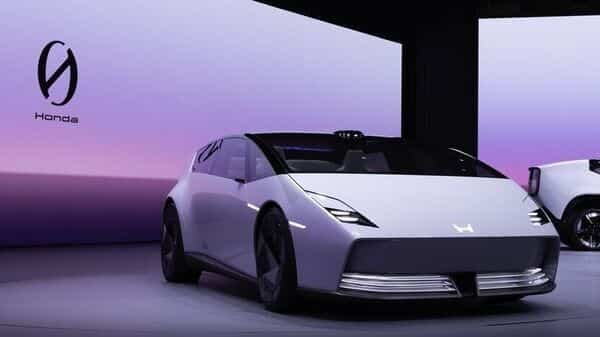
Japanese automaker Honda Motor Co. has announced that it expects a major financial setback after deciding to scale back parts of its electric vehicle (EV) strategy. The company revealed that it may record a net loss of up to ¥690 billion as it restructures its EV program and cancels several planned models for the North American market.
Following the announcement, Honda’s foreign-listed shares dropped sharply, reflecting investor concerns about the company’s costly shift in electric vehicle strategy. The automaker attributed the decision to the growing uncertainty surrounding the global transition toward electric vehicles, including fluctuating demand and rising development costs.
According to Honda, the company expects to record charges of up to ¥2.5 trillion (approximately ₹1.44 trillion) largely related to its EV investment strategy. These charges significantly affect the company’s financial outlook for the fiscal year ending in March.
As a result, Honda has revised its projections and now expects an operational deficit ranging between ¥270 billion and ¥570 billion. The company also warned that the overall financial impact could push its annual net loss to as high as ¥690 billion.
Industry analysts believe the automaker’s decision to book large losses now may help it avoid longer-term financial strain. Julie Boote, an analyst at London-based research firm Pelham Smithers Associates, noted that absorbing the losses early might be a strategic move.
“Booking large losses now is probably the better option than suffering from poor performances over many years,” Boote said in a research report. However, she also cautioned that Honda’s ability to strengthen its traditional internal combustion engine (ICE) business remains uncertain in a rapidly changing automotive market.
Honda Shares Fall After Announcement
The financial warning had an immediate impact on investor sentiment. Honda Motor Co.’s shares dropped as much as 5.9% during trading in Tokyo, marking the company’s largest intraday decline since April of the previous year.
The stock market reaction highlighted concerns among investors who were surprised by the scale of the charges tied to Honda’s EV program. Although the company had previously hinted at rising costs associated with electric vehicle development, the magnitude of the financial hit exceeded market expectations.
As part of its restructuring strategy, Honda confirmed that it will halt the development and launch of three electric vehicle models originally planned for North America. These vehicles were part of the company’s broader effort to expand its EV presence in the region.
Chief Executive Officer Toshihiro Mibe explained that the global EV landscape has evolved much faster than the company had anticipated.
“The situation changed far more rapidly than we expected,” Mibe said while addressing the decision. He added that Honda struggled to maintain a competitive edge due to growing competition and changing government policies.
“We could not offer sufficiently attractive models or sustain our competitiveness because of strong competition in china and the suspension of EV subsidies in North America,” Mibe noted.
Global Automakers Reassess Electric Vehicle Investments
Honda’s move reflects a broader trend across the global automotive industry, where several major manufacturers are reassessing their aggressive investments in electric vehicles. The shift comes as automakers face slowing EV demand, rising production costs, and increased competition from new players.
Many traditional car manufacturers initially accelerated their EV plans in response to environmental regulations and consumer demand for cleaner transportation. However, recent economic pressures and uneven market growth have forced companies to reconsider their timelines and spending.
- Stellantis has taken more than €22 billion in charges related largely to adjustments in its EV strategy.
- Ford Motor Co. has also recorded around $19.5 billion in restructuring costs linked to its electric vehicle operations.
Analysts say Honda’s financial impact is particularly significant because the company had been among the more aggressive investors in EV development for the North American market.
Because Honda invested heavily in building its EV lineup for that region, scaling back those initiatives now results in large accounting charges and restructuring expenses.
Challenges From US Tariffs and China’s Growing Competition
Beyond its EV strategy, Honda is also facing broader challenges in the global automotive industry. trade policies, including US tariffs, have added cost pressures to the company’s operations.
At the same time, the automaker is losing ground in several Asian markets, particularly in China, where local brands have rapidly gained market share.
Chinese manufacturers have made significant progress in electric vehicle technology and production, offering competitive pricing and advanced features that appeal to local consumers. This shift has helped companies such as BYD become dominant players in the EV market.
BYD recently overtook many global competitors to become one of the largest electric vehicle manufacturers in the world. The rapid rise of Chinese EV companies has intensified competition for traditional automakers like Honda.
Honda Shifts Focus to Hybrids and Emerging Markets
In response to these challenges, Honda plans to rebalance its strategy by increasing its focus on hybrid vehicles rather than relying solely on fully electric models. Hybrid technology is seen as a more flexible transition strategy that combines traditional engines with electric power.
The company also sees significant growth opportunities in emerging markets, particularly India, where demand for both passenger vehicles and motorcycles continues to expand.
Honda’s motorcycle division remains a strong performer globally and continues to generate steady revenue. This segment has helped offset some of the financial pressure affecting the company’s automobile division.
Looking ahead, Honda announced that it will unveil an updated global business strategy in May. The new plan is expected to outline how the company intends to restore profitability while adapting to the rapidly changing automotive landscape.
The revised strategy will likely focus on balancing investments between electric vehicles, hybrid technologies, and traditional combustion engines while strengthening Honda’s presence in high-growth markets.
| Key Financial and Strategic Details | Information |
|---|---|
| Expected Net Loss | Up to ¥690 billion |
| EV Strategy Charges | Up to ¥2.5 trillion |
| Projected Operating Deficit | Between ¥270 billion and ¥570 billion |
| Stock Market Impact | Shares dropped up to 5.9% in Tokyo trading |
| Cancelled EV Models | Three electric vehicles planned for North America |
| Main Challenges | EV demand uncertainty, rising costs, Chinese competition |
| Strategic Shift | Greater focus on hybrid vehicles and emerging markets |
| Growth Markets | India and expanding motorcycle business |
| Next Business Strategy Update | Expected announcement in May |
Honda’s decision highlights the difficult balance automakers must strike as the global auto industry transitions toward electrification. While EVs remain central to long-term environmental goals, companies like Honda are now reassessing how quickly they should invest and expand in the rapidly evolving electric vehicle market.
For breaking news and live news updates, like us on Facebook or follow us on Twitter and Instagram. Read more on Latest Automobile on thefoxdaily.com.

COMMENTS 0