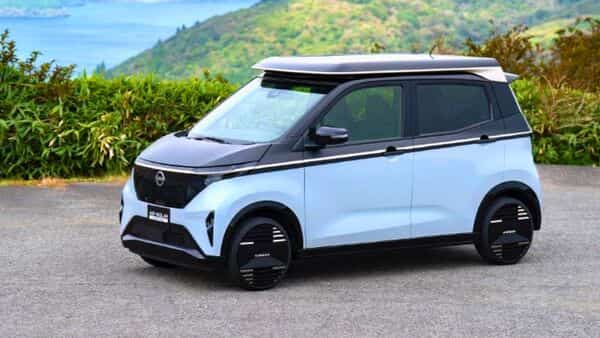
In a major policy shift, President Donald Trump announced that the U.S. will now pave the way for Japan’s tiny Kei cars to be manufactured and sold domestically. The decision follows Trump’s apparent fascination with the compact vehicles he saw during his recent trip to Japan, even though these cars have historically been considered too small and underpowered for America’s high-speed roadways.
“I thought, ‘How would that do in this country?’ because they’re so tiny and adorable,” Trump told reporters at the White House on Wednesday while outlining his administration’s plan to roll back strict Biden-era fuel efficiency regulations.
‘Check Out These Cars,’ Says Trump
Trump revealed that he has authorized U.S. Transportation Secretary Sean Duffy to approve the domestic production of Kei cars, declaring, “We’re not allowed to make them in this country, and I think you’re gonna do very well with those cars, so we’re gonna approve those cars.”
While Kei cars enjoy immense popularity in Asian markets, they have never met U.S. regulatory standards for new vehicles—particularly in terms of crash safety requirements and engine performance thresholds.
Despite these limitations, they have gained a cult following among American automobile enthusiasts. A special exemption allowing vehicles older than 25 years to be imported into the U.S.—even if they do not meet federal safety rules—has made vintage Kei cars highly sought after by collectors.
Still, their road use remains heavily restricted. Many states allow them only at low speeds on private property or controlled environments, and others Ban them outright due to their size, minimal horsepower, and vulnerability alongside America’s large SUVs and trucks.
“Business viability is the reason Japanese automakers don’t make or sell Kei cars in the U.S.,” said Tatsuo Yoshida, senior auto analyst at Bloomberg Intelligence. According to him, “The market is too niche. Costs and pricing don’t match,” making mass adoption unlikely.
In Japan, however, Kei cars are a dominant force—accounting for nearly one-third of all new vehicle sales thanks to their affordability, efficiency, and suitability for narrow roads and dense urban environments.
Transportation Secretary Sean Duffy confirmed that his department has “cleared the deck” for Toyota Motor Corp. and other automakers to design, produce, and market “smaller, more fuel-efficient” vehicles in the U.S. under Trump’s updated regulatory direction.
A spokesperson for Toyota declined to comment on the new policy shift.
Trump’s sudden enthusiasm for Kei cars marks the latest instance of passenger vehicles becoming a geopolitical tool in U.S.–Japan relations. Automotive regulations and import opportunities have been key points of debate in this year’s bilateral trade negotiations.
Earlier trade discussions saw Japan offering to increase imports of American vehicles—an unexpected proposal given Japan’s long-standing preference for domestic brands. While the idea of selling U.S.-made pickup trucks in Japan raised eyebrows, Trump was intrigued by the idea of “reverse-importing” Japanese-brand vehicles built in America—such as Toyota and Honda models—back into Japan.
For breaking news and live news updates, like us on Facebook or follow us on Twitter and Instagram. Read more on Latest Automobile on thefoxdaily.com.

COMMENTS 0