- Who, What, When, Where, Why, and How
- A Leadership Exit at a Crucial Moment
- The Turnaround Vision Under Tata Group
- Search for a Successor Already in Motion
- Leadership Vacuum at Air India Express
- Past Controversies Continue to Cast a Shadow
- Analysis: What This Means for Air India
- The Bigger Picture: Aviation Industry Pressures
- What Comes Next?
- Conclusion
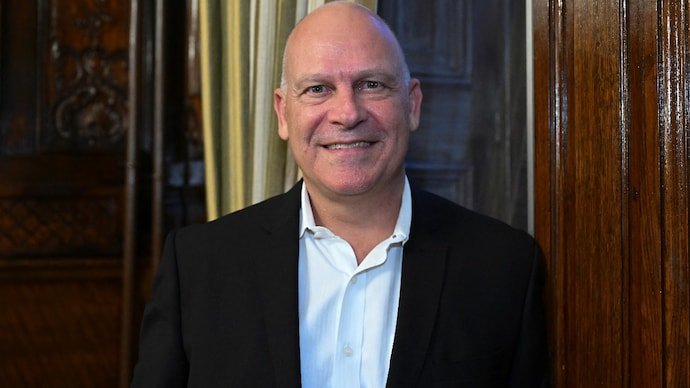
Air India Chief Executive Officer and Managing Director Campbell Wilson has resigned from his position, marking a significant Leadership shift at the Tata Group-owned airline. The resignation, confirmed by sources, comes at a time when the airline is in the middle of an ambitious transformation plan aimed at reviving its global reputation and operational strength.
Wilson, who took charge in July 2022 after the Tata Group regained control of Air India earlier that year, had been tasked with leading one of the most complex aviation turnarounds in recent History. His exit now raises key questions about continuity, strategy, and the future direction of the airline.
The development also comes amid reports that the Tata Group had already begun searching for a successor, suggesting that leadership changes may have been under consideration even before the resignation.
Who, What, When, Where, Why, and How
Who: Campbell Wilson, CEO and Managing Director of Air India.
What: Resigned from his leadership position.
When: Resignation confirmed recently, with transition expected soon.
Where: Air India, headquartered in India under Tata Group ownership.
Why: Official reasons remain unclear, though leadership transition discussions were reportedly underway.
How: Wilson conveyed his decision to the Board before stepping down.
A Leadership Exit at a Crucial Moment
Wilson’s resignation comes at a particularly sensitive time for Air India. The airline is undergoing a large-scale transformation that includes fleet modernization, service upgrades, and operational restructuring. These efforts are part of Tata Group’s broader strategy to reposition Air India as a competitive global carrier.
Leadership stability is often critical during such transitions. A sudden exit at the top can create uncertainty, especially when key decisions and long-term strategies are still being implemented.
In simple terms, changing the captain mid-flight is rarely ideal—especially when the aircraft is already navigating turbulence.
The Turnaround Vision Under Tata Group
After reacquiring Air India in January 2022, the Tata Group set out an ambitious roadmap to revive the airline. The plan focused on improving operational efficiency, enhancing customer experience, and expanding the fleet to compete with international carriers.
Under Wilson’s leadership, several initiatives were launched:
- Fleet expansion and aircraft orders
- Cabin upgrades and service improvements
- Integration of operations across group airlines
- Efforts to rebuild brand perception globally
While progress has been made, the transformation is far from complete. The resignation introduces a new variable into an already complex equation.
Search for a Successor Already in Motion
Reports suggest that the Tata Group had initiated a search for a new leader earlier this year. Wilson’s tenure was originally expected to continue until 2027, but the early transition indicates a possible shift in strategy or priorities.
Finding the right successor will be critical. The next CEO will need to balance operational expertise, strategic vision, and the ability to manage a large-scale transformation in a highly competitive industry.
The role is not just about running an airline—it’s about rebuilding one.
Leadership Vacuum at Air India Express
The situation is further complicated by leadership gaps at Air India Express, the airline’s low-cost subsidiary. The position of Managing Director has been vacant since March 19, following the completion of Aloke Singh’s tenure.
This dual leadership gap raises concerns about coordination and decision-making across the group’s operations. In an industry where timing and efficiency are critical, even small delays can have significant ripple effects.
Think of it like a relay race—if two runners are missing at the same time, the baton doesn’t just slow down, it risks being dropped.
Past Controversies Continue to Cast a Shadow
Wilson’s tenure was not without challenges. One of the most serious incidents occurred in June last year, when a London-bound Air India flight crashed shortly after takeoff from Ahmedabad. The tragedy, involving a Boeing 787-8 aircraft, resulted in the loss of 241 lives out of 242 onboard.
The incident brought intense scrutiny on the airline’s operations, safety protocols, and management practices. While investigations and reforms followed, the impact on public perception and internal operations was significant.
Such events often leave a lasting imprint, influencing both leadership decisions and organizational priorities.
Analysis: What This Means for Air India
Wilson’s resignation highlights both the challenges and the complexities of turning around a legacy airline. While leadership changes are not uncommon in large organizations, timing plays a crucial role.
At this stage, Air India faces multiple simultaneous challenges:
- Completing its transformation strategy
- Strengthening operational efficiency
- Restoring customer trust
- Managing leadership transitions
The combination of these factors makes the current phase particularly critical.
However, it is also an opportunity. A new leader can bring fresh perspective, renewed energy, and possibly a different approach to tackling existing challenges.
The key will be ensuring continuity while embracing change—a balance that is easier said than done.
The Bigger Picture: Aviation Industry Pressures
The Global Aviation industry is undergoing rapid changes, with increasing competition, rising operational costs, and evolving customer expectations. Airlines are expected to deliver high-quality service while maintaining efficiency and profitability.
For Air India, the challenge is even greater. It must not only compete with established international carriers but also redefine its identity after years of underperformance.
Leadership plays a central role in navigating these pressures. The next CEO will need to address both internal restructuring and external competition simultaneously.
What Comes Next?
The immediate focus will be on appointing a successor who can continue the transformation process without significant disruption. The Tata Group’s choice will signal its priorities and long-term vision for the airline.
In the meantime, maintaining operational stability will be crucial. Employees, stakeholders, and customers will be watching closely to see how the transition unfolds.
And here’s a practical observation: airlines run on schedules, but leadership transitions rarely do. The challenge is to ensure that one does not disrupt the other.
Conclusion
Campbell Wilson’s resignation marks a turning point for Air India at a time when the airline is still in the midst of a major transformation. While his tenure saw important steps toward modernization, the journey is far from complete.
The leadership transition introduces both uncertainty and opportunity. The next phase will depend on how effectively the Tata Group manages this change and continues to drive its turnaround strategy.
Ultimately, the success of Air India’s revival will not be defined by one leader alone, but by the consistency of its vision and execution over time.
For breaking news and live news updates, like us on Facebook or follow us on Twitter and Instagram. Read more on Latest Business on thefoxdaily.com.




COMMENTS 0