- How Oil Became a Geopolitical Weapon
- The Strategic Importance of the Strait of Hormuz
- Why Oil Prices Are Rising Now
- How Oil Price Surges Affect the Global Economy
- Why India Is Particularly Vulnerable
- Industries Most Affected by Oil Price Shocks
- The Risk of Rising Global Inflation
- The Politics of Oil in Global Strategy
- Oil Remains a Powerful Global Force
Modern warfare often involves drones, cyberattacks, Artificial Intelligence, and sophisticated defense systems. Yet one of the most powerful tools in global conflicts does not explode or create dramatic battlefield scenes.
That weapon is oil.
For nearly a century, oil has shaped global economies, political alliances, and international conflicts. When supply disruptions occur, financial markets react immediately, inflation rises, and governments rush to protect their economies.
The world is witnessing that scenario once again as escalating tensions in the Gulf and West Asia send shockwaves through global energy markets.
Crude oil prices recently surged past $110 per barrel, one of the sharpest increases in recent years, causing investors and policymakers to closely monitor developments in the region.
How Oil Became a Geopolitical Weapon
The idea of using oil as a geopolitical weapon is not new. One of the most dramatic examples occurred during the 1973 Arab-Israeli conflict.
At the time, Arab oil-producing nations imposed an oil embargo on countries that supported Israel. The move triggered one of the largest economic shocks in modern history.
Oil prices quadrupled within months, leading to fuel shortages across Europe and the United States. Long queues formed at petrol stations, governments introduced fuel rationing, and several economies entered recession as inflation surged.
That crisis demonstrated how control over energy supplies could rival military power in influencing global politics.
| Major Historical Oil Shocks | Impact on Global Economy |
|---|---|
| 1973 Oil Embargo | Prices quadrupled, global recession and fuel shortages |
| 2008 Commodity Boom | Oil prices peaked around $147 per barrel |
| 2022 Energy Crisis | Russia–Ukraine conflict pushed prices above $120 |
| Current Gulf Conflict | Prices surged above $110 amid supply concerns |
The Strategic Importance of the Strait of Hormuz
Today, global attention has once again shifted to a narrow but critical waterway known as the Strait of Hormuz.
Located between Iran and Oman, the strait connects the Persian Gulf with major international shipping routes.
Despite being only about 40 kilometers wide at its narrowest point, it carries nearly one-fifth of the world’s oil supply.
Millions of barrels of crude oil from countries such as Saudi Arabia, Iraq, Kuwait, and the United Arab Emirates pass through the strait every day on tankers heading to markets in Asia, Europe, and beyond.
Because such a large portion of global oil travels through this single corridor, even the threat of disruption can send prices soaring.
Recent tensions and security concerns have already affected shipping in the area, raising fears of supply disruptions and driving crude prices above $100 per barrel.
Why Oil Prices Are Rising Now
The latest spike in crude prices is directly linked to geopolitical tensions in West Asia.
According to Aamir Makda, a commodity and currency analyst at Choice Broking, oil markets reacted quickly to fears of supply disruptions.
US WTI crude oil reportedly climbed to around $115 per barrel, a roughly 26 percent jump from earlier levels near $98.
Analysts say concerns increased after reports that Iran had taken steps that could disrupt tanker movement through the Strait of Hormuz.
At the same time, reduced oil production in several countries, including Iraq, Kuwait, and Qatar, tightened supply forecasts and pushed prices even higher.
However, markets also remain highly sensitive to political developments. Oil prices fell sharply after comments from US President Donald Trump suggesting that the Middle East conflict could soon ease.
Brent crude futures briefly dropped nearly 10 percent, falling below $90 per barrel during early trading.
How Oil Price Surges Affect the Global Economy
Oil remains a central component of the modern global economy.
It fuels transportation networks, powers industries, and serves as a raw material for producing plastics, chemicals, fertilizers, and synthetic fibers.
When crude prices rise sharply, the effects spread quickly through multiple sectors.
- Transportation costs increase for trucking and shipping companies
- Airlines face higher aviation fuel expenses
- Manufacturing costs rise due to energy and raw material prices
- Shipping and logistics become more expensive
Eventually, these higher costs are passed on to consumers, contributing to rising inflation worldwide.
Why India Is Particularly Vulnerable
For India, the impact of rising oil prices is especially significant.
The country imports approximately 85 percent of its crude oil, making it one of the world’s most oil-dependent major economies.
Even small increases in global crude prices can significantly affect India’s economy.
According to estimates from Axis Securities, every $1 increase in crude oil prices raises India’s annual import bill by roughly $1.5 to $2 billion.
Analysts say a $10 rise in crude prices could increase India’s current account deficit by about 0.35 to 0.5 percent of GDP.
Additionally, because oil imports are paid for in US dollars, higher crude prices increase demand for the dollar, which can weaken the Indian Rupee.
| Impact of Rising Oil Prices on India | Economic Effect |
|---|---|
| Higher Import Bill | $1.5–2 billion increase for every $1 price rise |
| Current Account Deficit | Could rise by 0.35–0.5% of GDP for $10 increase |
| Inflation | Estimated 20 basis point increase for 10% price rise |
| Currency Pressure | Higher dollar demand weakens the rupee |
Industries Most Affected by Oil Price Shocks
Oil price spikes affect industries differently depending on their reliance on fuel or petroleum-based raw materials.
The aviation sector is among the most vulnerable because fuel accounts for roughly 30 to 40 percent of airline operating costs. Rising crude prices typically lead to higher aviation turbine fuel costs and increased ticket prices.
Other sectors heavily affected include paints, chemicals, plastics, and tire manufacturers, which depend on crude oil derivatives as key raw materials.
Transportation and logistics companies also face higher costs due to increased diesel prices, while cement manufacturers may experience higher energy expenses because of their reliance on fuel sources such as pet coke.
However, some companies benefit from rising oil prices. Upstream oil producers such as ONGC and Oil India generally see higher profits when crude prices increase.
The Risk of Rising Global Inflation
Economists warn that sustained increases in oil prices can quickly translate into broader economic stress.
Dr. V K Vijayakumar, Chief Investment Strategist at Geojit Investments Limited, described the latest surge as a major shock to global markets.
“Brent crude has surged above $115, causing a significant oil shock to markets and economies. Big oil importers like India will be hit hard if the West Asian conflict continues and crude prices remain high,” he said.
Even if governments attempt to shield consumers from higher fuel prices through subsidies or tax adjustments, inflationary pressures are likely to increase.
The Politics of Oil in Global Strategy
Oil has always played a central role in international politics and strategic decision-making.
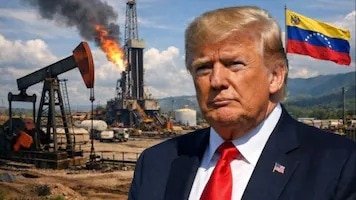
Since returning to office in 2025, US President Donald Trump has placed significant emphasis on energy supply and oil markets as part of his economic and geopolitical strategy.
The US administration has encouraged increased domestic oil production while also applying pressure on rival producers through sanctions and enforcement measures against countries such as Venezuela.
At the same time, policymakers in major economies are closely monitoring the current market situation.
French Finance Minister Roland Lescure recently stated that the Group of Seven (G7) countries are not yet ready to release emergency oil reserves, although they remain prepared to act if necessary to stabilize markets.
Oil Remains a Powerful Global Force
While nuclear weapons often dominate headlines, oil continues to wield enormous influence over the global economy.
Unlike traditional weapons, oil does not explode or create visible destruction. Yet disruptions in supply can shake financial markets, slow economic growth, and drive inflation across continents.
Even in an era defined by renewable energy and technological innovation, global economic stability still depends heavily on oil supply routes, pipelines, and tanker shipments.
Every conflict in the Gulf region serves as a reminder that oil remains one of the most powerful forces shaping global politics and economic stability.
For breaking news and live news updates, like us on Facebook or follow us on Twitter and Instagram. Read more on Latest Business on thefoxdaily.com.





COMMENTS 0