The GST 2.0 reforms, implemented on September 22, have led to a sharp rise in sales of electronics and consumer goods, lower prices for essential items, and an overall boost in consumption, which may reflect in the GDP figures for the fiscal year 2025–26.
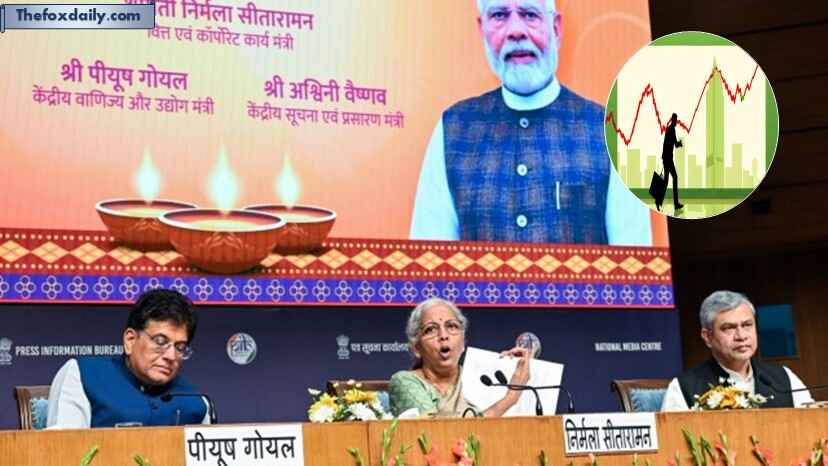
During the GST Bachat Utsav joint conference, organized by Finance Minister Nirmala Sitharaman, Commerce and Industry Minister Piyush Goyal, and Information & Broadcasting Minister Ashwini Vaishnaw, the government emphasized that consumers are already benefiting from the reduced GST rates, leading to higher spending and encouraging investments.
Sitharaman explained, “The consumption narrative is not seasonal. Tax reductions are needed to make the system more nimble. Better collections allow us to pass on benefits to consumers.” India is approaching Rs 2 lakh crore in gross monthly GST collections, enabling such reductions.
Monitoring of 54 Key Commodities
Since the introduction of GST 2.0, authorities have been tracking the prices of 54 everyday-use products. Sitharaman confirmed that, except for a few Portland-type cement brands, all items have benefited from tax cuts.
| Category | Expected Price Benefit (%) | Actual Price Benefit (%) |
|---|---|---|
| Shampoo | 11.02% | 12.36% |
| Face Powders | 11.02% | 12.22% |
| Talcum Powders | 11.02% | 11.77% |
| Clinical Diapers | 6.25% | 10.38% |
| Toys (Tricycles, Scooters) | 6.25% | 8.93% |
| Solar Cookers | 6.25% | 6.96% |
| Umbrellas | 6.25% | 9.19% |
The GST 2.0 reforms replaced the earlier four slabs (5%, 12%, 18%, 28%) with a streamlined two-slab system: 18% standard rate and 5% merit rate, alongside a 40% rate for demerit items. Classification-related uncertainties have also been resolved, simplifying compliance.
Impact on Consumer Spending and GDP
According to Minister Vaishnaw, electronics manufacturing experienced record sales during Navratri, while food items have been deflationary for the past four months. Electronics demand is driving a double-digit CAGR in manufacturing, directly employing around 25 lakh people. India has surpassed its neighbor in smartphone exports to the US this year, and the second semiconductor plant began production recently.
Higher consumption, boosted by GST reductions, may also reflect in GDP figures. Last year, India’s GDP was Rs 335 lakh crore, with Rs 202 lakh crore from consumption and Rs 98 lakh crore from investment. GST reforms are expected to increase consumption by over 10%, potentially adding Rs 20 lakh crore more in consumer spending compared to the previous year. Increased consumption is also expected to drive higher investment, strengthening economic growth momentum.
Sitharaman emphasized that the government is not speculating on GDP growth, currently estimated at 6.3–6.8% for FY2025-26, but the upward trend in consumption is evident.
Reform Rationale and Implementation
Responding to opposition criticism, Sitharaman highlighted that the GST reforms were planned over 1.5 years, independent of india-us trade negotiations. “This is not a corrective measure but a deliberate policy to benefit the public,” she said. The reforms aim to reduce complexity, cut slabs, streamline registration, and resolve classification issues that previously caused legal disputes and delays.
Commerce Minister Goyal added that the indirect tax system impacts 140 crore Indians, and the multiplier effect of GST reductions is already visible in business, industry, and investment. Most businesses have passed on benefits, while consumer affairs authorities may take action against any non-compliant e-commerce platforms.
Boost to Automotive Sector
| Vehicle Type | September 2024 Sales | September 2025 Sales | YoY Change |
|---|---|---|---|
| Three-wheelers | 79,683 | 84,077 | +5.5% |
| Two-wheelers | 20.2 lakh | 21.6 lakh | +6.7% |
| Passenger Vehicles | 3.57 lakh | 3.72 lakh | +4.4% |
| Tractors | 70,000 | 1.46 lakh | +108.6% |
Rate cuts, slab reductions, and registration streamlining have collectively simplified GST compliance while encouraging higher consumer spending. Launching these reforms during Navratri and before Deepavali helped ensure rapid adoption and widespread public acceptance.
In summary, GST 2.0 reforms have already lowered the prices of essential commodities, boosted sales in multiple sectors, and strengthened consumption, signaling a positive impact on India’s economic growth and investment environment.
For breaking news and live news updates, like us on Facebook or follow us on Twitter and Instagram. Read more on Latest Business on thefoxdaily.com.






COMMENTS 0