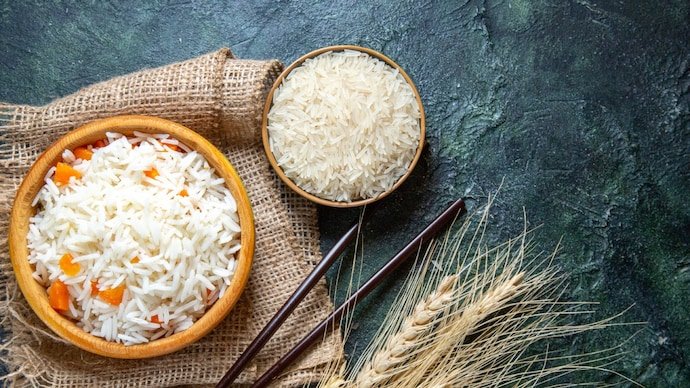
For decades, china was widely regarded as the undisputed leader in global rice production. That long-held perception has now changed. India has officially overtaken China to become the world’s largest producer of rice, marking a historic shift in global Agriculture.
India today accounts for more than 28% of total global rice production, a milestone that underscores the scale and transformation of its agricultural sector. This achievement has also been formally acknowledged by the United States Department of Agriculture (USDA), adding international credibility to India’s rise.
According to the USDA’s December 2025 assessment, India produced approximately 152 million metric tonnes of rice, surpassing China’s output of 146 million metric tonnes. With this, India has effectively assumed the title of the world’s leading rice producer.
This development challenges decades-old assumptions that placed China firmly at the top of the rice production hierarchy. An intriguing dimension of India’s rise is the historical role played by Taiwan in boosting Indian rice productivity—despite the ongoing geopolitical tensions between China and Taiwan.
India’s association with rice dates back to ancient times. The country is often cited as one of the birthplaces of rice cultivation. Of the estimated 123,000 rice varieties found worldwide, nearly 60,000 are native to India, highlighting the nation’s extraordinary biodiversity.
Despite this rich genetic diversity, India had long lagged behind China in total rice output. That gap has now been decisively closed, with India surpassing China in production for the first time in history.
Dr Sudhanshu Singh, Director of the South Asia Regional Centre at the International Rice Research Institute (IRRI), describes India’s emergence as the world’s top rice producer as a landmark achievement. He notes that rice, exported to as many as 172 countries, has become an important tool of India’s agricultural diplomacy and global trade strategy.
Rice Exports and Economic Gains
Rice has also become a cornerstone of India’s export economy. In the financial year 2024–25, India exported agricultural products worth a record Rs 4,50,840 crore, with rice accounting for nearly 24% of the total value.
Through the export of both basmati and non-basmati rice, India earned approximately Rs 1,05,720 crore in foreign exchange in a single year. These figures underline the critical role rice plays in strengthening India’s economy and supporting millions of farming households.
Taiwan’s Crucial Contribution
At the time of Independence, India produced just 20.58 million metric tonnes of rice annually. By 2025, that figure had surged to 152 million metric tonnes—a transformation driven by the tireless efforts of farmers, scientists, and policymakers.
One often-overlooked factor in this success story is Taiwan’s contribution to India’s rice revolution. In the 1960s, India faced severe food grain shortages. Traditional long-stem rice varieties dominated cultivation, yielding barely 800 kg per hectare.
While fertilizers like urea were available, India lacked dwarf and strong-stem rice varieties capable of supporting higher fertilizer use. The long-stem varieties tended to lodge, or collapse, under increased water and nutrient input, limiting productivity.
To overcome this challenge, India needed dwarf rice varieties. Taiwan answered this need by providing Taichung Native-1 (TN1), a semi-dwarf rice variety that transformed Indian agriculture. TN1 is widely regarded as the world’s first semi-dwarf rice variety and played a pivotal role in India’s Green Revolution.
IR-8: The “Miracle Rice”
Another breakthrough came in 1968, when the International Rice Research Institute introduced IR-8 to India. Known globally as “Miracle Rice,” IR-8 triggered a dramatic surge in rice yields and became a symbol of agricultural transformation.
Indian scientists began cross-breeding these high-yielding varieties in 1969. One major outcome was “Jaya,” India’s first indigenous dwarf rice variety, developed in Odisha by crossing a local variety, T-141, with Taichung Native-1.
By reducing stem height from around 150 cm to just 90 cm, Jaya significantly improved yield stability and productivity. Following this breakthrough, Indian rice cultivation entered a new era of sustained growth.
The Global Success of Basmati Rice
India is not only the world’s largest producer of rice but also the leading producer of basmati rice. Basmati exports alone have crossed Rs 50,000 crore, with Indian varieties commanding a premium in international markets.
India also holds the record for producing the world’s longest rice grain. Pusa Basmati-1121 (PB 1121) achieves this distinction, with grain length expanding from about 9 mm to between 15 and 22 mm after cooking.
Beyond basmati, at least fifteen other Indian rice varieties have received Geographical Indication (GI) tags, further strengthening India’s position in global rice trade.
Challenges Ahead for India
Despite leading the world in rice production and exports, India still faces a significant challenge: low per-hectare yield compared to global standards. Although India has a larger rice-growing area than China, its productivity remains lower.
According to the Union Agriculture Ministry, India’s rice yield stood at just 668 kg per hectare in 1950–51. With the introduction of dwarf varieties and greater fertilizer use, yields rose to 1,235 kg by 1975–76.
The upward trend continued, reaching 1,901 kg per hectare in 2000–01 and 2,809 kg in 2021–22. USDA projections estimate that India’s average rice yield will reach 4,390 kg per hectare in 2025–26.
While this progress is significant, it still falls short of the global average and remains well below China’s yield of around 7,100 kg per hectare. Closing this gap will be crucial, especially as rice cultivation is highly water-intensive.
India’s rise as the world’s top rice producer is a remarkable agricultural achievement. Whether it can sustain this position will depend on smarter water management, continued innovation, and bridging the yield gap—challenges that will define the next chapter of India’s rice story.
For breaking news and live news updates, like us on Facebook or follow us on Twitter and Instagram. Read more on Latest Business on thefoxdaily.com.






COMMENTS 0