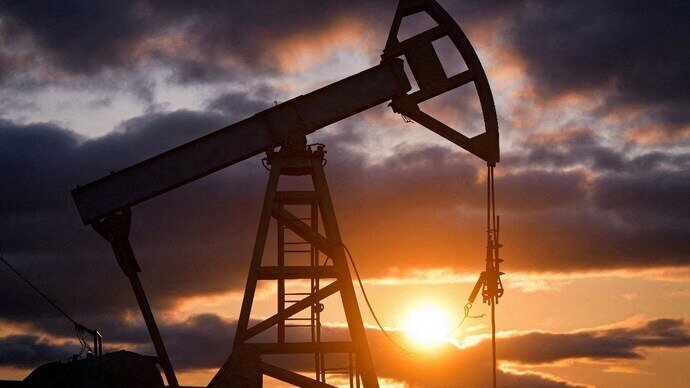
Amid escalating geopolitical tensions in the Middle East and rising global crude oil prices, government sources have confirmed that India currently holds sufficient oil reserves to last approximately 50 days. This includes around 25 days of crude oil stocks and an additional 25 days of refined petroleum products.
Officials also stated that India is actively exploring alternative sources for importing crude oil, LPG, and LNG to safeguard supplies, especially as uncertainty grows around shipping routes through the Strait of Hormuz.
Importantly, sources clarified that there is no immediate plan to increase petrol or diesel prices at this stage.
India’s Current Oil Stock Position
According to official estimates, India’s combined crude and petroleum product inventory provides a buffer against short-term global supply disruptions.
| Category | Stock Availability | Remarks |
|---|---|---|
| Crude Oil | ~25 Days | Stored in strategic and commercial reserves |
| Petroleum Products (Petrol, Diesel, ATF) | ~25 Days | Refined fuels ready for distribution |
| Total Combined Stock | ~50 Days | Sufficient to handle temporary disruptions |
India, the world’s fourth-largest refiner and third-largest crude oil importer, maintains both strategic petroleum reserves and commercial inventories to cushion against global shocks.
Strait of Hormuz ‘Closed’, Claims Iran’s IRGC
Tensions intensified after Iran’s Islamic Revolutionary Guard Corps (IRGC) reportedly declared the Strait of Hormuz “closed” for shipping traffic. Iranian state media quoted officials warning that any vessel attempting to cross the key waterway could face direct action.
The Strait of Hormuz is one of the world’s most critical oil transit chokepoints, with nearly one-fifth of global oil trade passing through it. Any disruption there has immediate global implications.
This announcement marks a sharp escalation in the ongoing conflict involving Iran on one side and Israel and the United States on the other.
Airstrikes and Escalating Regional Conflict
On Monday, the United States and Israel expanded Airstrikes targeting Iranian positions. Reports also indicated Israeli military action in Lebanon. In response, Iran allegedly launched strikes on energy infrastructure in Gulf nations and targeted vessels operating in the Strait of Hormuz.
As a result, commercial shipping through the narrow waterway has become increasingly risky. Several oil tankers and container ships are reportedly rerouting to avoid the region.
Insurance companies have either raised premiums sharply or withdrawn coverage altogether for vessels navigating the high-risk zone, further complicating maritime trade.
Global Oil Prices Climb for Third Consecutive Session
Oil prices rose globally for the third straight session on Tuesday as traders reacted to the growing uncertainty in the Middle East.
At 0400 GMT:
- Brent crude rose by $1.70 (2.2%) to $79.44 per barrel. It had earlier touched $82.37 — its highest level since January 2025 — before settling 6.7% higher on Monday.
- US West Texas Intermediate (WTI) crude increased by $1.17 (1.6%) to $72.40 per barrel. It had earlier reached its highest level since June 2025 and closed 6.3% higher in the previous session.
Shipping and freight costs for oil and gas have also surged sharply as companies reassess operational risks.
Government Assures Energy Security
The Indian government moved quickly to reassure citizens that the country’s energy supplies remain stable and closely monitored.
According to the Press Information Bureau (PIB), Petroleum and Natural Gas Minister Hardeep Singh Puri stated that India is well-prepared to manage temporary supply disruptions arising from geopolitical instability.
Officials highlighted that India has significantly diversified its crude oil sourcing strategy in recent years. Supplies are now routed through multiple channels, reducing dependency on any single chokepoint, including the Strait of Hormuz.
To ensure real-time monitoring, the Ministry has set up a round-the-clock control room to track fuel stocks and distribution nationwide. Authorities described the current inventory situation as “reasonably comfortable.”
No Immediate Impact on Petrol and Diesel Prices
Government sources emphasized that there is currently no urgent proposal to revise petrol or diesel prices. Consumer interests remain a priority, and authorities are closely tracking global price movements.
However, officials cautioned that future developments will depend heavily on how the situation around the Strait of Hormuz evolves in the coming days.
While India’s 50-day oil stock buffer provides short-term relief, prolonged instability in the Middle East could influence Global energy markets and freight costs.
India’s Strategic Energy Position
India stands as:
- The 4th-largest oil refiner globally
- The 3rd-largest crude oil importer
- The 5th-largest exporter of petroleum products
This diversified and large-scale energy infrastructure provides the country with resilience during periods of global supply uncertainty.
For now, authorities maintain that there is no immediate cause for alarm. The situation is being closely monitored, and incremental steps will be taken if required to protect India’s energy security and consumers.
For breaking news and live news updates, like us on Facebook or follow us on Twitter and Instagram. Read more on Latest Business on thefoxdaily.com.





COMMENTS 0