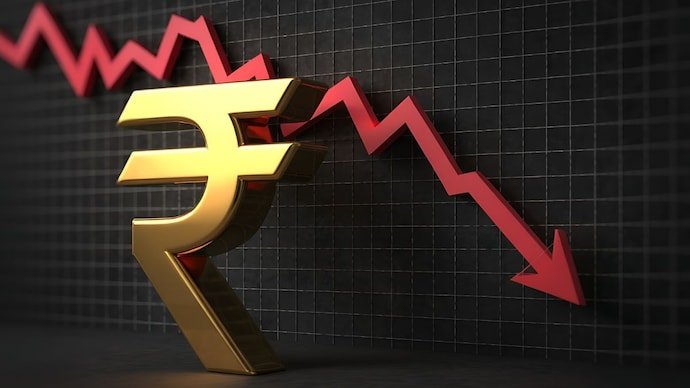
The Indian Rupee has slid to a record low against the US dollar on Thursday, weighed down by weak foreign capital inflows and a surge in dollar-hedging demand, despite strong domestic economic growth. The currency fell 2% so far this year, and around 5% since the imposition of high US tariffs on Indian exports.
In the latest trading session, the rupee breached its previous all-time low of Rs 91.9650 and traded at Rs 91.9850, signaling its approach toward the psychologically significant Rs 92 mark in the spot market. Analysts attributed this depreciation to external pressures overshadowing India’s robust economic performance, with GDP growth reported at 8.2% in the quarter ending September 30.
Market participants believe the Reserve Bank of India (RBI) likely intervened ahead of Thursday’s market opening to prevent sharp volatility. A foreign bank dealer cited by Reuters noted that RBI interventions aim to avoid abrupt swings rather than defending any specific level.
In recent weeks, the rupee’s depreciation has been rapid. Just six trading sessions ago, it broke past Rs 91 for the first time, edging closer to Rs 92 amid global market turbulence.
Factors Behind the Rupee’s Decline
The rupee has been under pressure due to multiple factors:
- High US tariffs on Indian goods
- Significant withdrawals by international portfolio investors
- Increased import of bullion
- Corporate hedging activities amid fears of future currency depreciation
Despite India’s strong economic fundamentals, including being one of the fastest-growing major economies and signing a free trade agreement with the European Union, the rupee has weakened. It has lost 7.5% against both the euro and the Chinese yuan since the US tariffs were imposed.
RBI data shows that India’s trade-weighted real effective exchange rate fell to 95.3 in December, its lowest level in the past decade. Analysts at Goldman Sachs, cited by Reuters, noted that the prolonged high tariffs are straining India’s external balances and expect the rupee to weaken further, potentially reaching Rs 94 per dollar over the next 12 months.
Additionally, changes in corporate hedging practices are intensifying pressure. Importers and firms exposed to foreign currency risk have increased hedging to protect against further rupee depreciation, while exporters have restricted forward dollar sales. This has reduced the supply of dollars, adding further stress on the currency.
Experts also point out that the RBI seems comfortable allowing greater rupee flexibility. While interventions may supplement foreign exchange reserves to prevent sharp appreciation, the currency remains sensitive to global shocks and capital flow volatility.
Even with these pressures, the rupee has outperformed most of its Asian peers in 2025, highlighting the resilience of India’s macroeconomic fundamentals amid global uncertainty.
For breaking news and live news updates, like us on Facebook or follow us on Twitter and Instagram. Read more on Latest Business on thefoxdaily.com.


COMMENTS 0