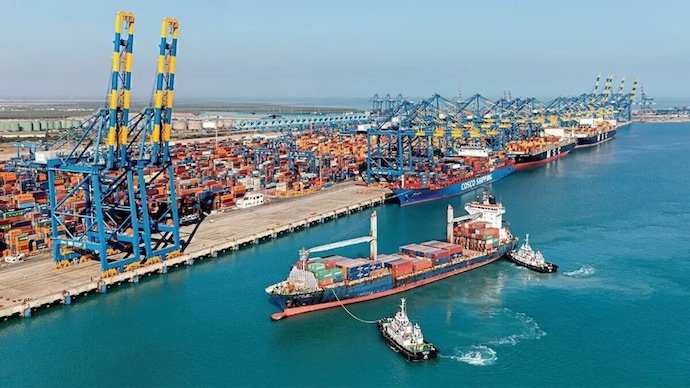
Ports have long been the backbone of economic growth, and in India, their importance has only grown stronger over time. Cities that have developed strong connections between ports and industrial ecosystems have consistently emerged as powerful economic hubs across the country.
With nearly 95% of India’s trade by volume conducted via sea routes, maritime infrastructure plays a vital role in shaping industrial output, employment generation, and regional prosperity. Efficient ports not only facilitate international trade but also act as catalysts for broader economic activity.
The relationship between ports and industries goes beyond logistics. Port-led industrialization creates a multiplier effect—boosting small businesses, enhancing supply chains, and generating employment opportunities across sectors.
Port-Led Development: The Foundation of Economic Growth
Across India, several cities demonstrate how strategic port development can transform regional economies. For instance, Jawaharlal Nehru Port in Mumbai has played a crucial role in building one of the country’s largest export and logistics networks.
Similarly, Chennai Port and Kamarajar Port have supported the rapid growth of Tamil Nadu’s automobile manufacturing corridor, turning Chennai into a major global hub for vehicle exports.
In Gujarat, Mundra Port has emerged as one of India’s most commercially significant ports, attracting large-scale investments in manufacturing, energy, and logistics infrastructure.
| Port | Location | Key Contribution |
|---|---|---|
| Jawaharlal Nehru Port | Mumbai, Maharashtra | Major export hub and logistics backbone |
| Chennai Port & Kamarajar Port | Tamil Nadu | Supports automobile and EV export ecosystem |
| Mundra Port | Gujarat | Drives industrial investment and energy logistics |
| V.O. Chidambaranar Port | Thoothukudi, Tamil Nadu | Key maritime gateway for southern India |
Thoothukudi: A Historic Maritime Powerhouse
Thoothukudi, located on the southeastern coast of Tamil Nadu, has historically served as a vital maritime gateway for southern India. Its trading roots date back to as early as 123 AD, highlighting its long-standing importance in regional commerce.
Today, the V.O. Chidambaranar Port carries forward this legacy, with an annual cargo handling capacity of approximately 82 million tonnes. Its strategic location along major international shipping routes connecting Asia, Europe, and the Middle East provides a natural logistical advantage for industries reliant on imports and exports.
The Role of Industry in Strengthening Ports
Industries that depend heavily on bulk imports and exports naturally gravitate toward port cities. Lower logistics costs and seamless integration with global supply chains make these locations highly attractive.
One such example is the copper refining industry. Copper concentrate is typically imported from mining regions worldwide, processed locally, and then either exported or supplied to domestic industries. As a result, copper smelters are often located near ports to ensure efficient movement of raw materials and finished goods.
Before its closure in 2018, the Sterlite Copper Plant in Thoothukudi played a critical role in this ecosystem. The plant accounted for nearly 36% of India’s copper production and contributed over 3% to Tamil Nadu’s GDP, according to industry estimates.
Its operations were deeply integrated with port logistics, driving cargo movement and attracting 10–12 vessels each month at its peak. The plant also supported downstream industries and created significant employment opportunities in the region.
Impact of Industrial Decline on Port Growth
Following the closure of the Sterlite plant, Thoothukudi experienced a noticeable slowdown in port-linked industrial activity. This highlights how closely port performance is tied to the strength of its industrial ecosystem.
Comparative data further illustrates this trend. While Chennai Port has seen steady growth—ranging between 7.46% and 8.31% annually from 2020 to 2024—Thoothukudi’s growth has remained relatively modest, between 5.75% and 5.87% during the same period.
Prior to 2018, both ports had similar growth trajectories. However, the divergence since then underscores the impact of industrial decline on maritime expansion.
India’s Rising Demand and Strategic Importance of Copper
India’s transition from a net exporter to a net importer of copper after 2018 marks a significant shift in its industrial landscape. Copper remains a critical resource for infrastructure, electronics, renewable energy, and electric vehicles.
Demand for copper in India is projected to exceed 3.24 million tonnes by 2030, driven by rapid industrialization and the push toward green energy solutions.
The Road Ahead: Reviving Port-Industry Synergy
The proposed reopening of the Sterlite Copper facility in a more sustainable, environmentally responsible form could play a transformative role in reviving Thoothukudi’s industrial ecosystem.
A green restart has the potential to restore cargo flow, strengthen supply chains, and generate employment while aligning with environmental standards. Rebuilding this synergy between port infrastructure and industrial capacity could reposition Thoothukudi as a key maritime-industrial hub.
As India continues to focus on port-led development, strengthening these linkages will be crucial for achieving long-term economic resilience, enhancing global competitiveness, and ensuring robust supply chains.
Ultimately, ports are not just gateways for trade—they are engines of growth that power India’s economic future.
For breaking news and live news updates, like us on Facebook or follow us on Twitter and Instagram. Read more on Latest Business on thefoxdaily.com.





COMMENTS 0