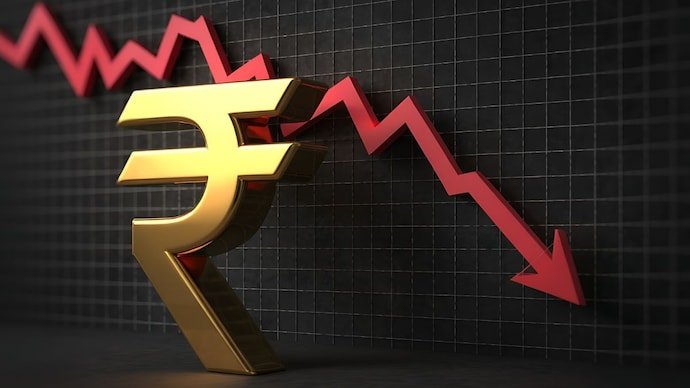
The Indian Rupee dropped to a new record low on Monday as global financial markets reacted to rising geopolitical tensions and a sharp surge in crude oil prices. Investors across the world shifted toward safe-haven assets such as the US dollar, increasing pressure on emerging market currencies including the rupee.
The rupee weakened by about 0.6% against the US dollar, reaching 92.3350. This move surpassed the previous record low of 92.3025 recorded just a week earlier. The currency has been under sustained pressure since military operations involving Israel and the United States against Iran escalated tensions in West Asia.
The conflict has created significant uncertainty in Global energy markets, pushing crude oil prices sharply higher and raising concerns for countries heavily dependent on imported oil.
During Asian trading hours, Brent crude oil was trading near $116.4 per barrel after briefly surging by nearly 26.4% to reach $117.16 per barrel. This sudden jump in oil prices has raised economic concerns for large oil-importing economies like India.
Why Oil Prices Are Crucial for India
India is the third-largest importer of crude oil in the world, making the country highly vulnerable to fluctuations in global energy prices. Since most international oil transactions are conducted in US dollars, changes in both oil prices and currency exchange rates have a direct impact on India’s economy.
When crude oil prices increase, India must spend significantly more to import the same amount of energy. If the rupee simultaneously weakens against the dollar, the cost rises even further because more rupees are required to purchase each dollar.
This dual pressure can significantly increase India’s import bill and widen the country’s trade deficit.
| Key Economic Factor | Impact on India |
|---|---|
| Rising Crude Oil Prices | Higher energy import costs for India |
| Weakening Rupee | More rupees required to buy oil priced in dollars |
| Trade Deficit | Higher import bills widen the gap between imports and exports |
| Foreign Exchange Pressure | Greater demand for dollars puts additional pressure on the rupee |
Because of these dynamics, currency markets often react quickly whenever oil prices surge.
Impact on Inflation and Consumer Prices
One of the most immediate consequences of rising oil prices and a weaker rupee is increased inflation.
Fuel plays a critical role in transportation, logistics, and manufacturing. When oil prices increase, the cost of producing and transporting goods across the country rises as well.
Higher fuel costs often lead to increases in petrol and diesel prices. This raises transportation costs for businesses, which may then pass these expenses on to consumers.
As a result, everyday goods such as food, groceries, and household items can become more expensive.
If inflation rises sharply, it may reduce household purchasing power and slow down consumer spending, which is a major driver of economic growth in India.
Pressure on Government Finances
Higher crude oil prices can also create challenges for government finances. India imports a large portion of its energy needs every year, and rising prices can significantly increase the country’s total import bill.
This can widen the current account deficit, which measures the difference between a country’s imports and exports of goods and services.
At the same time, a weaker rupee raises the cost of importing other essential goods such as fertilizers, chemicals, machinery components, and electronic parts.
If oil prices remain elevated for a prolonged period, the combined effect could make fiscal management more difficult for the government.
| Sector | Possible Economic Impact |
|---|---|
| Energy Imports | Higher national spending on crude oil purchases |
| Government Budget | Increased fiscal pressure due to rising import costs |
| Subsidy Burden | Potential increase in fuel subsidies if prices rise sharply |
| Trade Balance | Growing current account deficit |
Impact on Markets and Foreign Investors
Currency weakness can also affect investor sentiment toward emerging markets. During periods of global uncertainty, investors often move their capital into safer assets such as US Treasury bonds or the US dollar.
This shift in capital flows can lead to foreign investors withdrawing money from equity and debt markets in developing economies.
If such outflows increase, the demand for dollars rises further, putting additional downward pressure on the rupee.
Stock markets may also experience volatility as investors react to rising oil prices and geopolitical risks.
Can a Weaker Rupee Benefit Some Sectors?
While a weaker currency creates challenges for import-heavy industries, it can also provide advantages for export-oriented sectors.
Companies that earn revenue in foreign currencies may benefit when the rupee weakens because their dollar earnings convert into higher rupee income.
Industries that could potentially benefit include:
- Information Technology (IT) services
- Pharmaceutical exports
- Textile and garment manufacturing
- Business process outsourcing (BPO)
However, these advantages may be limited if global economic uncertainty reduces international demand for exports.
What the Reserve Bank of India Can Do
The Reserve Bank of India (RBI) closely monitors sharp currency movements and financial market volatility.
If the rupee experiences excessive fluctuations, the central bank can intervene in the foreign exchange market by selling US dollars from its foreign currency reserves.
Such interventions help stabilize the market and reduce sudden volatility in the exchange rate.
However, central bank interventions typically aim to smooth short-term movements rather than completely reverse long-term currency trends.
The future direction of the rupee will largely depend on global oil prices, geopolitical developments, and international capital flows into emerging markets.
For now, the rupee’s record low highlights the economic pressures facing India as global energy prices rise and geopolitical tensions continue to create uncertainty in financial markets.
For breaking news and live news updates, like us on Facebook or follow us on Twitter and Instagram. Read more on Latest Business on thefoxdaily.com.






COMMENTS 0