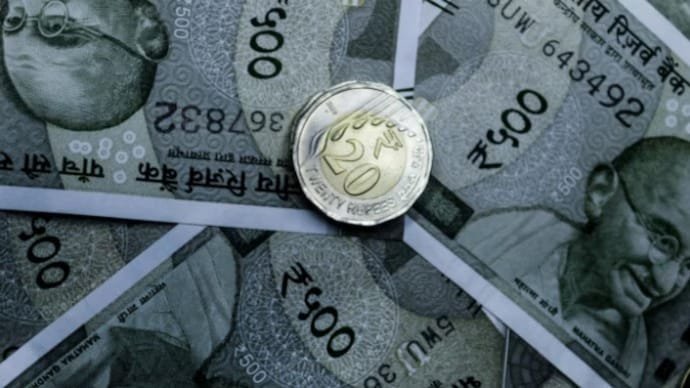
The Indian Rupee staged a strong comeback on Monday, recovering below the ₹94 mark against the US dollar after hitting a record low in the previous session. The sudden rebound has brought temporary relief to currency markets, though underlying risks remain.
After touching an all-time low of ₹94.84 on Friday, the rupee appreciated nearly 1% to around ₹93.85 in early trade, marking one of its sharpest single-day recoveries in recent times.
Why Did the Rupee Recover?
The primary driver behind this sharp recovery is the swift intervention by the Reserve Bank of India (RBI), which stepped in to stabilize the currency.
RBI’s Key Action Explained
The RBI directed banks to cap their net open foreign exchange positions at $100 million by the end of each trading day. This move effectively forced banks holding excess US dollars to reduce their positions.
In simple terms, banks that had accumulated large dollar reserves were compelled to sell dollars in the market. This increased the supply of dollars, leading to a strengthening of the rupee.
| Factor | Impact on Rupee |
|---|---|
| RBI Position Limits | Forced banks to sell excess dollars |
| Increased Dollar Supply | Strengthened rupee |
| Arbitrage Trade Unwinding | Triggered rapid currency movement |
Short Covering Accelerates the Rally
The RBI’s move also triggered what traders call short covering.
Many banks and traders had previously bet on further depreciation of the rupee. However, as the currency began strengthening, they rushed to exit these positions by buying back rupees and selling dollars.
This sudden unwinding of positions added momentum to the rally, causing a rapid appreciation in a short span of time. Market estimates suggest that these positions could be worth tens of billions of dollars, amplifying the scale of the rebound.
Is This Recovery Sustainable?
Despite the sharp rebound, experts caution that the recovery may be temporary and largely technical rather than driven by strong economic fundamentals.
Several external pressures continue to weigh on the rupee:
- Rising crude oil prices: Higher oil prices increase India’s import bill, raising demand for dollars.
- Strong US dollar globally: A stronger dollar puts pressure on emerging market currencies.
- Foreign investor outflows: Capital exiting Indian markets weakens the rupee.
| Risk Factor | Effect on Rupee |
|---|---|
| Crude Oil Price Surge | Increases dollar demand, weakens rupee |
| Global Uncertainty | Triggers capital outflows |
| Geopolitical Tensions | Adds volatility to currency markets |
Oil Prices Remain the Biggest Concern
India is heavily dependent on crude oil imports, making the rupee highly sensitive to global oil price movements. With ongoing geopolitical tensions in West Asia, oil prices have surged significantly, creating persistent pressure on the currency.
As oil becomes more expensive, India needs more dollars to pay for imports, which weakens the rupee over time.
Recent Performance Snapshot
The rupee has had a challenging month, declining over 4% in March alone—its worst monthly performance in years—before this sudden recovery.
Conclusion: Relief for Now, Uncertainty Ahead
While the RBI’s timely intervention has provided short-term relief and stabilized the rupee, the broader outlook remains uncertain. The recovery is largely driven by technical factors such as dollar selling and position unwinding, rather than a shift in economic fundamentals.
Going forward, the trajectory of the rupee will depend heavily on crude oil prices, global market sentiment, and foreign investment flows. Until these pressures ease, volatility in the currency market is likely to persist.
For breaking news and live news updates, like us on Facebook or follow us on Twitter and Instagram. Read more on Latest Business on thefoxdaily.com.






COMMENTS 0