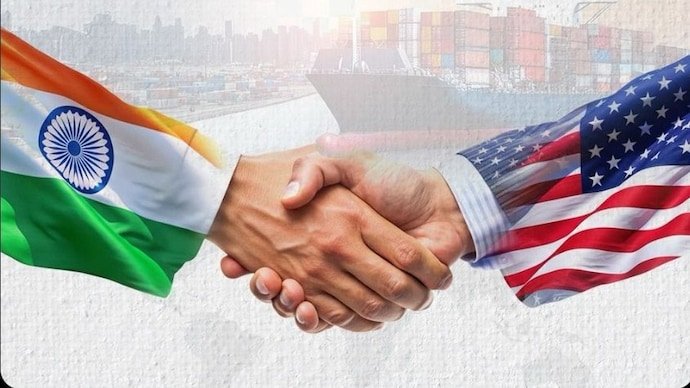
An interim trade agreement between India and the United States has brought major relief to Indian exporters by sharply lowering tariff barriers in the US market. A wide range of Indian goods that previously faced cumulative tariffs of close to 50% will now be taxed at 18%.
The higher duties had come into effect last year after Washington imposed an additional 25% surcharge on Indian exports. With that surcharge now removed, Indian products regain competitiveness in one of the world’s largest consumer markets.
Beyond easing immediate pressure, the interim deal also lays the foundation for a broader India–US Bilateral trade agreement, while delivering tangible benefits to export-heavy sectors in the short term.
Key Export Categories Now at 18% Tariff
The tariff relief is expected to be felt most strongly in labour-intensive and high-volume export sectors.
Products now subject to the reduced 18% tariff include textiles and garments, leather and footwear, plastic and rubber goods, organic chemicals, handicrafts and home décor items, as well as select industrial and machinery products.
The US is a critical market for these sectors, and the rollback of punitive tariffs restores India’s price competitiveness against global rivals.
Duty-Free Access for Generic Medicines
One of the most significant wins for India is zero-duty access for generic pharmaceuticals.
India is a global leader in generic drug manufacturing, supplying up to 40% of the generic medicines sold in the United States. Duty-free entry strengthens India’s cost advantage and benefits both large pharmaceutical firms and smaller manufacturers.
Zero Tariffs on Aircraft Parts, Gems, and Diamonds
Two additional high-value sectors receive a major boost under the deal.
The gems and jewellery industry, which employs millions—particularly in Gujarat and Maharashtra—will benefit from zero tariffs in the US market, improving competitiveness against hubs such as Belgium and the UAE.
India’s fast-growing aerospace components sector also gains duty-free access, supporting the country’s ambitions to become a global manufacturing and MRO hub.
Why Were Tariffs So High Earlier?
The earlier near-50% tariff burden resulted from two overlapping US measures: a reciprocal tariff hike on Indian imports and an additional 25% surcharge linked to India’s continued purchases of Russian Oil.
Together, these measures made Indian exports largely uncompetitive. With the surcharge removed and reciprocal tariffs lowered, the effective rate has now been reset to 18%.
What Is Still Excluded?
Some products remain outside the scope of the interim agreement, particularly those subject to US national security tariffs, such as steel, aluminium, and certain copper products.
These items are expected to be addressed separately during negotiations for the comprehensive Bilateral Trade Agreement.
What This Means for Indian Exporters
While tariff cuts alone do not guarantee an export boom, they remove the most significant hurdle faced by Indian exporters over the past year.
The initial impact is expected in export clusters such as Tiruppur, Panipat, Agra, Kanpur, Moradabad, Jaipur, and Surat—regions where pricing sensitivity is high and even modest duty changes can shift order flows.
With tariffs falling from 50% to 18%, many US buyers are likely to return to Indian suppliers.
Overall, the interim deal offers much-needed relief after a turbulent year, strengthens sectors where India already enjoys global competitiveness, and restores momentum to India–US Trade ahead of a more comprehensive agreement.
For breaking news and live news updates, like us on Facebook or follow us on Twitter and Instagram. Read more on Latest Business on thefoxdaily.com.






COMMENTS 0