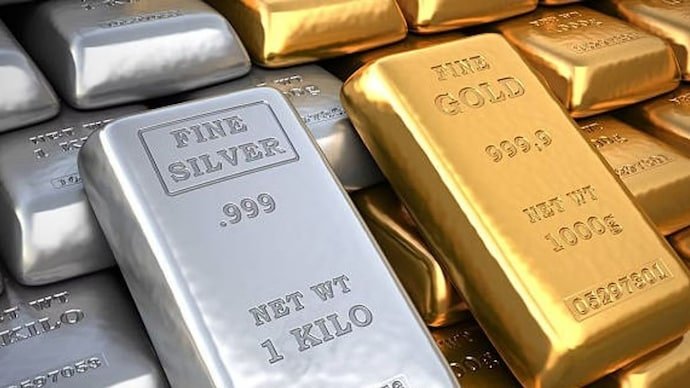
In a surprising market move, Gold and Silver prices witnessed a sharp decline on Tuesday, leaving investors confused. Traditionally considered safe-haven assets during times of conflict, both metals fell significantly even as geopolitical tensions continued in West Asia.
Gold prices dropped between ₹2,000 and ₹2,500 per 10 grams, while silver prices plunged nearly ₹8,000–₹10,000 per kilogram on the Multi Commodity Exchange (MCX). At the time of reporting, silver had declined by nearly 4%, while gold slipped around 1.58%.
This marks a continuation of the previous session’s losses, raising a key question among investors: why are safe-haven assets falling during a war?
Why Are Gold and Silver Falling?
Although gold is widely viewed as a protective asset during uncertain times, several macroeconomic factors are currently outweighing geopolitical concerns.
1. Strong US Dollar Reducing Gold’s Appeal
One of the primary reasons behind the fall in gold prices is the strengthening of the US dollar. Since gold is globally priced in dollars, a stronger dollar makes it more expensive for international buyers, reducing demand and pushing prices lower.
2. Rising Bond Yields Attracting Investors
Another critical factor is the rise in US bond yields. Unlike gold, which does not generate regular income, bonds offer fixed returns. As yields increase, investors shift their money toward bonds, making gold less attractive.
3. Higher Interest Rate Expectations
Markets are increasingly expecting interest rates to remain higher for a longer period. This environment discourages heavy investment in non-yielding assets like gold, even during times of uncertainty.
4. Profit Booking After Recent Rally
Gold and silver had recently witnessed a strong price rally, leading to overbought conditions. Investors are now booking profits, which has contributed to the current price correction.
5. Silver’s Dual Nature (Precious + Industrial Metal)
Silver is experiencing a sharper decline compared to gold due to its dual role. Apart from being a precious metal, silver is heavily used in industrial applications. Concerns about global economic slowdown are reducing industrial demand, adding further pressure on its prices.
| Factor | Impact on Gold | Impact on Silver |
|---|---|---|
| Strong US Dollar | Reduces global demand | Reduces demand |
| Rising Bond Yields | Makes gold less attractive | Similar impact |
| High Interest Rates | Limits safe-haven buying | Limits demand |
| Profit Booking | Triggers price correction | Sharp sell-off |
| Industrial Demand | Minimal impact | Major downside risk |
What Does This Mean for Investors?
While the recent fall may seem alarming, experts suggest that the long-term role of gold in a portfolio remains intact. Gold continues to act as a hedge against inflation, currency depreciation, and market volatility.
However, in the short term, prices may remain under pressure if bond yields stay elevated and the US dollar remains strong.
Smart Strategies for Investors
Instead of reacting emotionally to short-term market movements, investors can adopt a disciplined and gradual approach:
- Invest in small amounts during price dips rather than making lump-sum investments
- Maintain a balanced allocation of 5–10% in gold within a diversified portfolio
- Avoid overexposure based on short-term geopolitical events
| Strategy | Benefit |
|---|---|
| Staggered Buying | Reduces risk of timing the market |
| Diversification | Balances overall portfolio risk |
| Long-Term Holding | Captures gold’s hedge value |
Conclusion
The decline in gold and silver prices during a period of geopolitical tension may seem counterintuitive, but it highlights how macroeconomic factors like interest rates, bond yields, and currency strength can dominate market behavior.
For investors, the key takeaway is to focus on long-term strategy rather than short-term fluctuations. Safe-haven assets like gold still play a vital role—but timing and allocation matter more than ever in the current market environment.
Disclaimer: This content is for informational purposes only and should not be considered investment advice. Investors are advised to consult financial experts before making any investment decisions.
For breaking news and live news updates, like us on Facebook or follow us on Twitter and Instagram. Read more on Latest Business on thefoxdaily.com.



COMMENTS 0