- The Aspirational Pull of Sarkari Naukri
- Inside the Preparation Cycle: Years of Commitment
- Systemic Challenges: Leaks, Delays, and Uncertainty
- Competition vs Opportunities: The Numbers Tell the Story
- The Hidden Costs: Financial and Mental Impact
- Why the Craze Still Continues
- A System of Contradictions
- Conclusion: The Dream That Refuses to Fade
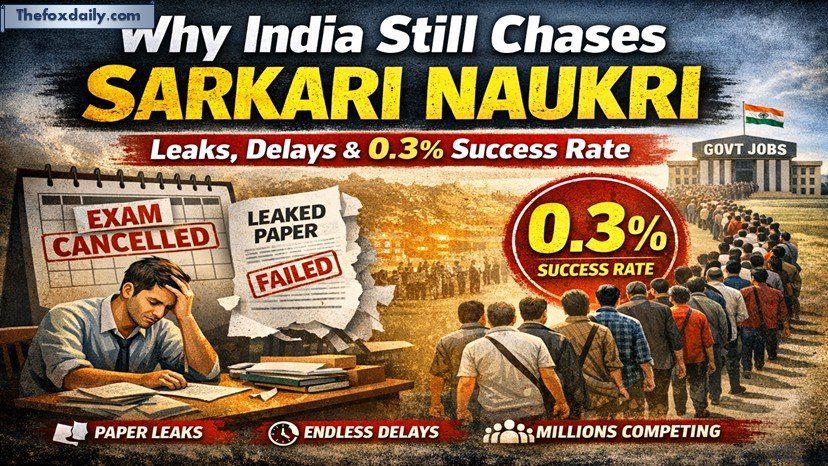
Every year, millions of aspirants across India prepare for government exams with one goal: securing a sarkari naukri. These candidates Students, graduates, and even working professionals invest years of their lives in preparation. The process involves rigorous study, repeated attempts, and significant financial and emotional investment. Yet, the reality is stark. With an estimated success rate of just 0.3%, frequent exam delays, and recurring paper leaks, the system poses serious challenges. Despite these hurdles, the demand for government jobs continues to rise. Why does this paradox exist? And how do aspirants navigate such a complex system?
The Aspirational Pull of Sarkari Naukri
Government jobs in India have long been associated with stability, social respect, and long-term financial Security. For many families, especially in smaller towns and rural areas, a government job is seen as the ultimate career achievement.
The appeal goes beyond salary. It includes predictable work hours, pension benefits, and minimal risk of layoffs. In uncertain economic times, these factors make government jobs significantly more attractive than private sector roles.
There is also a cultural dimension. Many aspirants grow up hearing phrases like
Inside the Preparation Cycle: Years of Commitment
Preparing for government exams is not just a short-term effort it often becomes a lifestyle. Aspirants dedicate 3 to 6 years on average, studying for multiple exams simultaneously, including SSC, banking, Railway and civil services.
The preparation ecosystem has evolved significantly in recent years. With the rise of digital platforms, online coaching, and mock test series, the process has become highly structured and competitive.
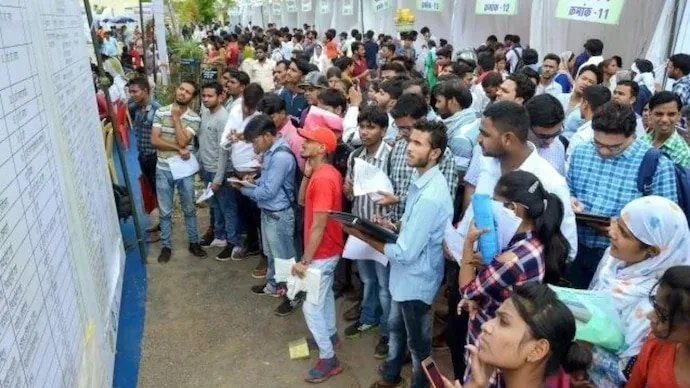
However, this intense preparation comes at a cost:
- Financial burden from coaching fees and study materials
- Living expenses for those who relocate to exam hubs
- Emotional stress due to repeated failures and uncertainty
For many aspirants, the journey is marked by isolation, discipline, and constant pressure to perform.
Systemic Challenges: Leaks, Delays, and Uncertainty
Recurring Paper Leaks and Exam Cancellations
One of the most significant issues plaguing the system is the recurring problem of exam paper leaks. Over the past several years, multiple recruitment exams have been compromised, leading to cancellations and rescheduling.
Such disruptions have a cascading impact. Aspirants who spend months preparing for a specific exam are forced to restart the process, often without clarity on new dates.
“When exams are cancelled, it feels like all their efforts go to waste. It delays future plans and causes stress and frustration,” shared an aspirant balancing a job alongside exam preparation.
Delays and Administrative Inefficiencies
Beyond leaks, delays in conducting exams and releasing results are another major concern. Recruitment cycles often stretch over years, creating uncertainty for candidates.
In some cases, even after clearing exams, candidates wait months or longer for final appointments. This prolonged timeline affects career planning and financial stability.
Changing Exam Patterns
Frequent changes in exam patterns and formats add another layer of complexity. Aspirants must constantly adapt their preparation strategies, often without sufficient guidance.
This unpredictability makes the system not just competitive, but also mentally exhausting.
Competition vs Opportunities: The Numbers Tell the Story
The scale of competition in government exams is staggering. While millions apply each year, only a fraction secure jobs.
| Metric | Data |
|---|---|
| Total Applications (2014–2022) | ~220 million |
| Total Selections | ~722,000 |
| Overall Success Rate | ~0.3% |
| Annual Applications | ~7 crore |
Even as government hiring shows signs of growth, the number of applicants continues to rise at a much faster rate. This imbalance creates intense competition, where even highly qualified candidates struggle to secure positions.
Another factor is the overlap of aspirants. Many candidates apply for multiple exams simultaneously, increasing the effective competition for each role.
The Repeat Cycle
A significant portion of candidates are repeat aspirants. After unsuccessful attempts, they continue preparing and reappearing for exams year after year.
This creates a cycle where:
- Experienced candidates compete alongside freshers
- The applicant pool keeps expanding
- Selection becomes even more difficult
In many exams, the success rate falls below 1%, making it one of the most competitive career paths in the country.
The Hidden Costs: Financial and Mental Impact
While the rewards of a government job are well-known, the costs of preparation are often overlooked.
Financial Strain
Preparation involves expenses such as:
- Coaching institute fees
- Online subscriptions and test series
- Accommodation and daily living costs
For aspirants from economically weaker backgrounds, these costs can be significant.
Mental Health Challenges
Continuous preparation without guaranteed results leads to burnout, anxiety, and self-doubt. The pressure to succeed often combined with family expectations can be overwhelming.
Failures are not just academic setbacks; they impact confidence and long-term career decisions.
Why the Craze Still Continues
Despite all these challenges, the demand for government jobs shows no signs of slowing down. The reasons are deeply rooted in both practical and emotional factors.
Job Security Over Everything
In a world where private sector jobs can be unpredictable, government roles offer unmatched stability. During economic crises, such as the COVID-19 pandemic, this security becomes even more valuable.
Social Status and Family Expectations
A government job often brings social recognition and family pride. In many communities, it is still considered a benchmark of success.
The influence of “log kya kahenge” plays a subtle but powerful role in career choices.
Structured Career Growth
Government jobs provide:
- Regular salary increments
- Defined promotion pathways
- Post-retirement benefits like pensions
This structured growth offers long-term financial planning, which is appealing for many families.
Work-Life Balance
Compared to many private sector roles, government jobs typically offer fixed working hours and better work-life balance. This stability allows individuals to focus on personal and family life.
A System of Contradictions
The current state of government exams in India reflects a clear contradiction. On one hand, aspirants are putting in more effort than ever before. On the other hand, the system continues to face issues like inefficiency, irregularities, and limited capacity.
Success in this Environment depends not just on knowledge and hard work, but also on persistence, timing, and sometimes luck.
It is not uncommon to hear stories of candidates clearing exams after multiple attempts spanning several years. While these stories inspire, they also highlight the unpredictable nature of the system.
Conclusion: The Dream That Refuses to Fade
The pursuit of a sarkari naukri in India is more than just a career choice it is a reflection of societal values, economic realities, and individual aspirations.
Despite a success rate as low as 0.3%, millions continue to compete, driven by the promise of stability and a better future. However, the challenges within the system paper leaks, delays, and intense competition cannot be ignored.
Looking ahead, there is a growing need for systemic reforms to ensure transparency, efficiency, and fairness in the recruitment process. Strengthening the system will not only benefit aspirants but also enhance trust in public institutions.
Until then, the dream of a government job will continue to inspire and test the resilience of millions across the country.
For breaking news and live news updates, like us on Facebook or follow us on Twitter and Instagram. Read more on Latest Careers on thefoxdaily.com.






COMMENTS 0