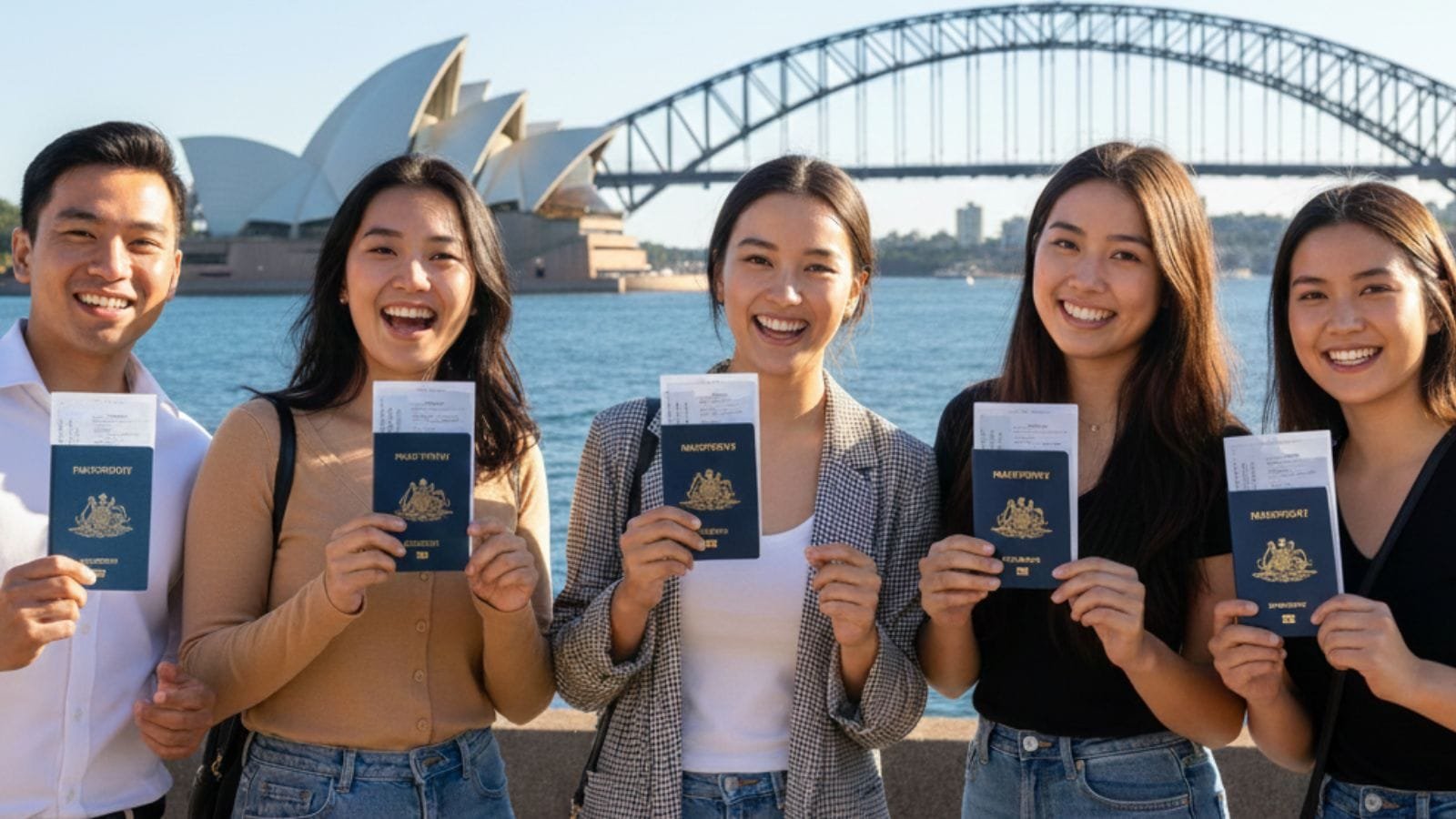
Australia has revised its student Visa framework for Indian applicants, moving India from Evidence Level 2 (EL2) to Evidence Level 3 (EL3) under the Simplified Student Visa Framework (SSVF). The change, effective from January 8, 2026, was confirmed by India’s Ministry of External Affairs (MEA) in a statement to the Rajya Sabha.
This shift effectively brings back stricter documentation requirements and closer scrutiny for Indian Students—similar to rules that were in place before September 2025. While the move does not block student visas, it does make the process more detailed and potentially more time-consuming.
What Changed: From EL2 to EL3 Explained
The SSVF categorises countries based on Immigration risk levels, which determines how much evidence a student must provide while applying for a visa.
| Evidence Level | Risk Category | Requirements |
|---|---|---|
| EL1 | Low Risk | Minimal documentation, faster processing |
| EL2 | Moderate Risk | Standard documentation |
| EL3 | Higher Risk | Extensive documentation and stricter scrutiny |
With India now classified under EL3, applicants may need to provide more detailed proof of financial capacity, academic intent, and English proficiency. Visa officers are also likely to examine applications more closely to ensure compliance with immigration rules.
Why Did Australia Make This Move?
While Australian authorities have not publicly detailed specific reasons for this reclassification, such decisions are typically based on factors like visa compliance rates, student migration patterns, and concerns around misuse of student visas.
The SSVF itself is designed to strike a balance between welcoming genuine students and maintaining immigration integrity.
The framework aims to simplify visa processes for genuine applicants while applying stricter checks where risks are perceived to be higher.
In this context, moving India to EL3 suggests a shift towards tighter monitoring rather than a reduction in opportunities.
What It Means for Indian Students
The change does not prevent Indian students from studying in Australia, but it does make the process more demanding.
Key impacts include:
- More detailed financial documentation to prove ability to fund education and living expenses
- Stronger emphasis on genuine student intent (GTE/Genuine Temporary Entrant criteria)
- Possibly longer processing times due to increased scrutiny
- Higher chances of visa interviews or additional verification steps
For students, this means preparation becomes even more important. A well-documented application will now be crucial for approval.
Government of India’s Response
The Indian government has acknowledged the development and stated that it is in active dialogue with Australian authorities.
Minister of State for External Affairs Kirti Vardhan Singh noted in Parliament:
“The government remains engaged in constructive dialogue with the Australian government to support Indian students pursuing higher education.”
He also emphasised that India is committed to facilitating opportunities for students seeking education and research abroad.
Impact on India-Australia Education Ties
Despite the tighter visa rules, the broader educational relationship between India and Australia remains strong.
In recent years:
- Several Australian universities have announced or launched campuses in India
- Student mobility between the two countries has increased significantly
- Education has become a key pillar of bilateral cooperation
This suggests that while visa processes may become stricter, the long-term partnership is unlikely to weaken.
Analysis: A Policy Tightening, Not a Closure
The shift from EL2 to EL3 should be seen as a regulatory tightening rather than a barrier. Countries often adjust visa frameworks based on evolving migration patterns and compliance data.
For Australia, international education is a major economic sector. Completely restricting access would not align with its broader interests.
Instead, the move appears aimed at filtering applications more rigorously—ensuring that those who apply are genuine students with clear academic goals.
In simple terms, the door is still open—but the entry checks have become stricter.
What Students Should Do Now
If you are planning to study in Australia, here are a few practical steps:
- Prepare strong financial documentation well in advance
- Clearly articulate your study goals and career plans
- Ensure all academic and English proficiency records are accurate and complete
- Avoid last-minute applications to account for longer processing times
Seeking guidance from authorised education consultants or university advisors can also help in navigating the updated requirements.
Conclusion: More Scrutiny, Same Opportunity
Australia’s decision to move India to EL3 under the SSVF introduces stricter checks, but it does not shut the door on Indian students. Instead, it raises the bar for documentation and intent verification.
For genuine students, opportunities remain intact—provided applications are thorough and well-prepared.
As global education policies continue to evolve, adaptability and preparation will be key. Because in today’s competitive environment, it’s not just about where you want to study—it’s about how well you present your case.
For breaking news and live news updates, like us on Facebook or follow us on Twitter and Instagram. Read more on Latest Education on thefoxdaily.com.

COMMENTS 0