- What Is the Churchill Scholarship and Why It Matters
- A Journey Rooted in Curiosity and Problem-Solving
- Turning Research into Real-World Healthcare Solutions
- Future Plans at Cambridge: Smarter, Faster Healthcare
- The Role of Mentorship and Interdisciplinary Learning
- A Rare Achievement with Broader Significance
- Analysis: The Growing Role of AI in Medicine
- Advice for Aspiring Students
- Conclusion
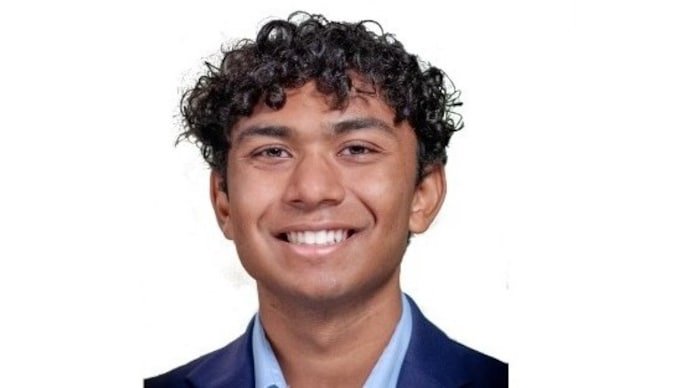
An Indian-origin student in the United States, Krithik Vishwanath, has secured the highly prestigious Churchill Scholarship, earning a fully funded opportunity to pursue a master’s degree at the University of Cambridge. His selection not only places him among an elite group of global scholars but also marks the first time in 36 years that a student from his university has received this honour.
Currently a final-year student studying computational engineering, chemistry, and mathematics, Vishwanath’s academic journey reflects a powerful combination of technical excellence and real-world application. His work, particularly at the intersection of Artificial Intelligence and Healthcare, has positioned him as a promising voice in the future of medical Innovation.
What Is the Churchill Scholarship and Why It Matters
The Churchill Scholarship is one of the most competitive academic awards globally, granted annually to a select group of Students specialising in science, Technology, engineering, and mathematics (STEM). It funds a one-year master’s degree at the University of Cambridge, offering scholars access to world-class research facilities and academic mentorship.
Winning the scholarship is not just about academic performance it recognises innovation, leadership potential, and the ability to apply knowledge to solve complex global challenges.
“The Churchill Scholarship seeks students who not only excel academically but also demonstrate the potential to make meaningful contributions to science and society.”
Vishwanath’s selection underscores the increasing importance of interdisciplinary approaches in tackling modern problems, particularly in healthcare.
A Journey Rooted in Curiosity and Problem-Solving
From an early stage, Vishwanath showed a strong inclination toward mathematics and analytical thinking. However, his academic direction evolved significantly when he began exploring how these skills could be applied to real-world challenges.
A defining moment came when he was introduced to computational oncology a field that uses mathematical models and algorithms to understand cancer progression and treatment responses. This exposure helped him see how abstract concepts could directly impact patient care.
Rather than limiting himself to theoretical work, Vishwanath actively sought opportunities to bridge the gap between computation and clinical practice.
“It wasn’t just about solving equations anymore it was about solving problems that affect real lives,” a mentor familiar with his work noted.
Turning Research into Real-World Healthcare Solutions
One of the key highlights of Vishwanath’s academic journey has been his research experience at a leading academic medical centre, where he worked on integrating artificial intelligence into healthcare systems.
His focus was on developing compact AI models capable of running on personal devices. This approach addresses a critical challenge in modern healthcare: how to deliver advanced computational insights without relying heavily on centralised Infrastructure.
By enabling local data processing, such models can:
- Enhance patient privacy by reducing data sharing
- Provide faster clinical insights at the point of care
- Make advanced healthcare tools accessible in low-resource settings
This kind of innovation is particularly relevant in a world where healthcare systems are increasingly data-driven but often constrained by infrastructure limitations.
Future Plans at Cambridge: Smarter, Faster Healthcare
As he prepares to begin his studies at Cambridge, Vishwanath plans to expand his research on the application of artificial intelligence in healthcare systems. One of his primary goals is to improve hospital efficiency through predictive modelling.
Specifically, he aims to develop systems that can accurately forecast patient discharge timelines. While this might sound like a logistical detail, it has significant implications for healthcare delivery.
Efficient discharge planning can:
- Reduce hospital overcrowding
- Improve patient flow
- Optimise resource allocation
- Enhance overall patient care
In essence, his work seeks to make healthcare systems not just smarter, but also more responsive and efficient.
The Role of Mentorship and Interdisciplinary Learning
Vishwanath credits much of his success to early mentorship and exposure to interdisciplinary research environments. Working across fields such as clinical AI, imaging technologies, and biomedical informatics allowed him to develop a holistic understanding of healthcare challenges.
Mentors played a crucial role in encouraging him to explore beyond traditional academic boundaries and embrace new tools and methodologies.
“His willingness to step into unfamiliar domains and learn quickly has been one of his greatest strengths,” a faculty member observed.
This adaptability is increasingly seen as essential in modern research, where breakthroughs often occur at the intersection of multiple disciplines.
A Rare Achievement with Broader Significance
What makes Vishwanath’s achievement particularly noteworthy is the 36-year gap since the last recipient from his university. This highlights both the competitiveness of the Churchill Scholarship and the significance of his accomplishment.
It also reflects a broader trend: the growing presence and impact of Indian-origin students in global academic and research spaces. Their contributions span fields ranging from technology and medicine to policy and entrepreneurship.
| Aspect | Details |
|---|---|
| Scholarship | Churchill Scholarship |
| Recipient | Krithik Vishwanath |
| Field of Study | Computational Engineering, Chemistry, Mathematics |
| Focus Area | AI in Healthcare |
| University Milestone | First recipient in 36 years |
Analysis: The Growing Role of AI in Medicine
Vishwanath’s work sits at the forefront of a major transformation in healthcare the integration of artificial intelligence into clinical decision-making. From diagnostics to treatment planning, AI is increasingly being used to enhance accuracy and efficiency.
However, challenges remain, including:
- Ensuring data privacy and security
- Addressing biases in algorithms
- Integrating AI tools into existing healthcare systems
By focusing on compact, device-based models, Vishwanath’s approach addresses some of these challenges directly, particularly in terms of accessibility and privacy.
It’s a reminder that innovation doesn’t always mean bigger systems sometimes, it means smarter, more efficient ones.
Advice for Aspiring Students
For students looking to follow a similar path, Vishwanath offers simple yet practical advice: explore widely, embrace challenges, and don’t hesitate to start as a beginner.
This mindset is especially important in rapidly evolving fields like AI and healthcare, where continuous learning is essential.
And if there’s a subtle lesson here, it’s this: you don’t need to have everything figured out from the start. Sometimes, curiosity is the best roadmap.
Conclusion
Krithik Vishwanath’s achievement is more than just an individual milestone it reflects the potential of combining technical expertise with a clear sense of purpose. By focusing on real-world applications of artificial intelligence in healthcare, he represents a new generation of researchers committed to making a tangible impact.
As he heads to Cambridge under the Churchill Scholarship, his journey serves as an example of how curiosity, interdisciplinary learning, and a willingness to tackle complex problems can open doors to global opportunities.
In a world increasingly shaped by technology, stories like his offer a glimpse into a future where innovation is not just about advancement but about improving lives.
For breaking news and live news updates, like us on Facebook or follow us on Twitter and Instagram. Read more on Latest Education on thefoxdaily.com.


COMMENTS 0