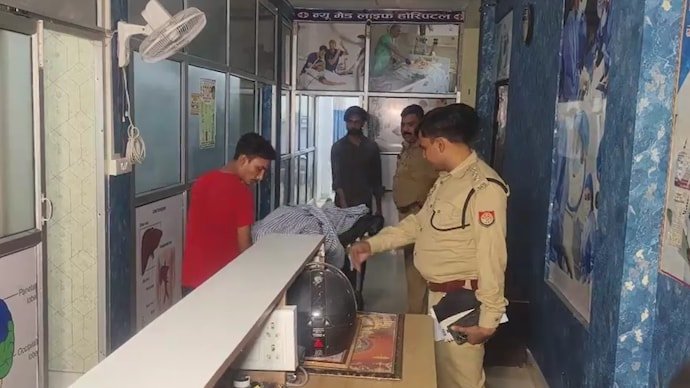
A shocking multi-crore illegal kidney transplant racket has come to light in Kanpur after a dispute over just Rs 50,000 triggered a major police investigation. What initially appeared to be a minor financial disagreement has now exposed a well-organised interstate organ trafficking network involving hospitals, middlemen, and vulnerable donors.
According to initial reports, the racket operated through private Healthcare facilities and targeted financially distressed individuals, offering them large sums of money in exchange for kidney donations. However, many donors were allegedly underpaid or misled, leading to exploitation on a large scale.
The case surfaced when a donor approached the police claiming he had been promised Rs 10 lakh but received only Rs 50,000. Repeated delays in payment pushed him to file a complaint, setting off a chain of investigations that uncovered the larger criminal network.
Donor Lured, Kidney Sold for Massive Profits
Investigators revealed that a key accused, Shivam Agarwal, a resident of Kalyanpur, allegedly lured a young man from Uttarakhand by claiming the kidney was urgently needed for a relative. The donor, facing financial hardship, agreed to the procedure in exchange for Rs 10 lakh.
The transplant was reportedly carried out at a private hospital in Rawatpur. However, the kidney was later sold for over Rs 90 lakh to the family of a 35-year-old woman from Muzaffarnagar.
Despite the huge transaction, the donor allegedly received only Rs 3.5 lakh via cheque and Rs 6 lakh in cash, far less than promised.
| Transaction Stage | Amount (Approx.) | Details |
|---|---|---|
| Promised to Donor | Rs 10 lakh | Initial agreement made by middlemen |
| Actual Payment | Rs 3.5 lakh (cheque) + Rs 6 lakh (cash) | Partial payment given to donor |
| Final Sale Price | Rs 90 lakh+ | Charged to recipient’s family |
| Trigger Dispute | Rs 50,000 | Unpaid amount that led to police complaint |
Three-Hospital Model Used to Evade Detection
One of the most alarming findings of the investigation is the use of a “three-hospital model” designed to avoid detection. Authorities believe the network strategically divided the transplant process across multiple facilities.
According to investigators:
- One hospital was used for kidney extraction (surgery).
- A second facility handled post-operative care for the donor.
- A third hospital treated the recipient.
This method ensured that no single hospital had complete knowledge of the entire procedure, making it difficult for authorities to detect irregularities.
Sources revealed that the donor, who initially identified himself as “Ayush,” was shifted to another hospital after surgery, while the recipient was moved elsewhere.
Students and Vulnerable Youth Targeted
The investigation has highlighted a disturbing pattern—financially vulnerable individuals, especially Students, were specifically targeted by the racket.
In one case, the donor claimed to be an MBA student who initially agreed to donate his kidney for Rs 4 lakh. In another instance, a female student was allegedly coerced into donating a kidney for a similar amount, which was later sold for Rs 45–50 lakh.
Middlemen reportedly used emotional manipulation, false medical claims, and financial pressure to lure victims into the network.
Hospital Nexus: Doctors, Brokers, and Operators Involved
Police believe the racket was not an isolated operation but a coordinated effort involving multiple stakeholders, including hospital operators, Doctors, and brokers.
While brokers were responsible for identifying and recruiting donors, hospitals facilitated surgeries, and medical professionals allegedly conducted the transplants in violation of legal protocols.
Among those arrested early in the investigation are hospital operator Surjeet Singh Ahuja and accused middleman Shivam Agarwal.
Raids Conducted Across Multiple Hospitals
Following the revelations, joint teams from the police and health department conducted raids at several hospitals, including Priya Hospital and Trauma Center, Ahuja Hospital, and Medlife Hospital.
Authorities are currently examining patient records, transplant documentation, and financial transactions to trace the full extent of the operation.
Late-night raids by the crime branch led to the detention of a doctor couple and several other suspects. In a separate operation, police also reached another hospital where the recipient had been shifted and detained five more individuals for questioning.
Interstate Network Under Investigation
Investigators suspect that the racket spans multiple states, connecting donors from economically weaker regions to recipients in wealthier areas.
During questioning, the donor initially claimed to be from Meerut but later revealed he was originally from Samastipur in Bihar and had been living in Meerut when he came into contact with the middleman.
This has strengthened suspicions of a well-organised interstate network that sources donors from one region and supplies organs to recipients in another.
More Arrests and Revelations Expected
Officials believe the case could be part of a much larger illegal organ trafficking syndicate involving significant financial transactions across states.
While no official joint statement has yet been issued by the police and health department, sources indicate that the investigation is ongoing and more arrests are likely in the coming days.
The Kanpur kidney racket case has once again raised serious concerns about illegal organ trade in India, the role of Private hospitals, and the urgent need for stricter monitoring and enforcement of transplant regulations.
For breaking news and live news updates, like us on Facebook or follow us on Twitter and Instagram. Read more on Latest Health on thefoxdaily.com.



COMMENTS 0