- Allegations of Ideological Bias in Court
- “Will I Get Justice?” — Kejriwal Raises Key Question
- Criticism of Investigative Agencies
- Liquor Policy Case: Background and Legal Developments
- Concerns Over Judicial Process and Speed of Hearings
- Reaction to Court Orders: “My Heart Sank”
- Arguments on Co-Accused Cases and Prior Observations
- Courtroom Exchange and Closing Moments
- CBI’s Response and Opposition to Plea
- Conclusion: Legal Battle Highlights Questions of Perception and Trust
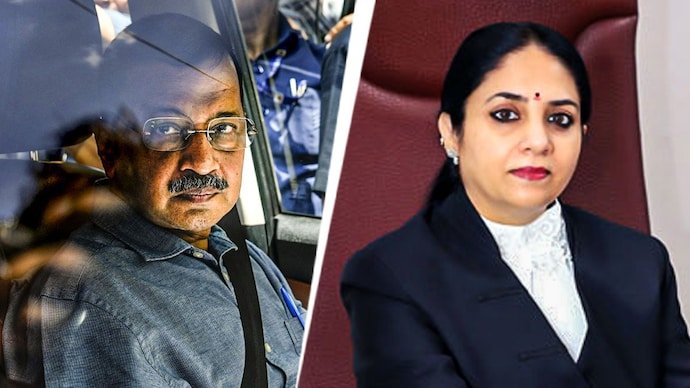
Former Delhi Chief Minister Arvind Kejriwal on Monday made strong submissions in court, questioning the impartiality of Delhi High Court judge Justice Swarana Kanta Sharma in connection with the ongoing liquor policy case. Appearing in person, Kejriwal alleged that the judge had attended events organised by Adhivakta Parishad, a lawyers’ body linked to the RSS, on four occasions. He argued that this raised a reasonable apprehension of bias, especially given his own opposition to BJP-RSS ideology.
The remarks came during proceedings related to a petition filed by the Central Bureau of Investigation (CBI) challenging the discharge of Kejriwal and others in the Delhi liquor policy case. Kejriwal has sought the judge’s withdrawal from the matter, claiming that the circumstances could affect the perception of fairness in judicial proceedings.
Allegations of Ideological Bias in Court
During his arguments, Kejriwal stated that Adhivakta Parishad is ideologically aligned with the BJP and RSS, and highlighted the judge’s participation in its events as a matter of concern.
“There’s a lawyer’s body, Adhivakta Parishad. It is an ideological body of the BJP and RSS. Your honour has attended its events four times. The ideology they follow is something we strongly oppose,” Kejriwal said in court.
He maintained that his opposition to the BJP-RSS ideology is public and consistent, and therefore, any perceived association between the court and such organisations could create doubts about neutrality in the case.
Demand for Recusal
Kejriwal formally requested that Justice Sharma recuse herself from hearing the matter, citing what he described as a “grave, bona fide and reasonable apprehension” of bias. He emphasized that judicial proceedings must not only be fair but also appear fair to all parties involved.
This argument draws on established legal principles where even the perception of bias can be grounds for recusal in order to preserve public confidence in the Judiciary.
“Will I Get Justice?” — Kejriwal Raises Key Question
One of the central points in Kejriwal’s submission was the issue of perception in a functioning democracy. He questioned whether an individual holding opposing ideological views could expect a fair hearing.
“If I am from the opposite ideology, will I get justice?” he asked.
He also referred to Supreme Court observations that stress the importance of perception in judicial processes, arguing that even an apprehension of bias should be taken seriously.
Criticism of Investigative Agencies
Kejriwal extended his argument to the functioning of investigative agencies, particularly the CBI. He cited past judicial remarks describing the agency as a “caged parrot,” suggesting concerns about its independence.
According to Kejriwal, such perceptions strengthen the need for courts to maintain a high standard of neutrality and transparency.
- Alleged political influence over investigative agencies
- Concerns about fairness in high-profile cases
- Need for judicial independence to counterbalance institutional bias
He argued that if both the investigative process and judicial proceedings are perceived as biased, it could undermine confidence in the justice system.
Liquor Policy Case: Background and Legal Developments
The Controversy stems from the Delhi liquor policy case, which has been at the center of political and legal debate. Kejriwal described the case as “political” in nature, suggesting that it is driven by factors beyond legal considerations.
Trial Court Verdict
On February 27, a trial court discharged Kejriwal, former Deputy Chief Minister Manish Sisodia, and 21 others in the case. The court criticized the CBI’s investigation, stating that the case failed to stand up to judicial scrutiny.
| Key Event | Date | Details |
|---|---|---|
| Trial Court Discharge | February 27 | Kejriwal, Sisodia, and others cleared of charges |
| High Court Notice | March 9 | Justice Sharma issued notice on CBI’s plea |
| CBI Petition | Ongoing | Challenge to trial court’s discharge order |
High Court Proceedings
Following the trial court’s decision, the CBI approached the Delhi High Court seeking to overturn the discharge. On March 9, Justice Sharma issued notices to all accused, noting that certain findings of the trial court appeared “prima facie erroneous.”
Kejriwal criticized this order, claiming it was passed after a brief hearing and without hearing all parties.
“Ex parte, without hearing anyone… this court passed an order stating that the trial court’s order is erroneous,” he argued.
Concerns Over Judicial Process and Speed of Hearings
Kejriwal also raised concerns about what he described as selective urgency in cases involving opposition leaders. He alleged that such cases are being heard at a faster pace compared to others.
According to him, this creates an impression of unequal treatment within the judicial system.
- Alleged fast-tracking of opposition-related cases
- Concerns about limited hearing time
- Claims of conclusions being drawn prematurely
He further stated that in some instances, significant conclusions were reached within just a few hearings, raising questions about the depth of judicial examination.
Reaction to Court Orders: “My Heart Sank”
Reflecting on the March 9 order, Kejriwal described his reaction in emotional terms, stating that it triggered serious concerns about fairness.
“My heart sank. I had serious apprehensions about bias. Therefore, I wrote a letter to the Chief Justice,” he said.
After his representation was not accepted, he chose to raise the issue directly before the court.
He reiterated that the apprehension of bias is a subjective matter between the litigant and the court, and does not require validation from other parties such as the CBI.
Arguments on Co-Accused Cases and Prior Observations
Kejriwal also referred to previous proceedings involving co-accused, including bail hearings. He argued that certain observations made during those hearings resembled final judgments on key issues.
In particular, he pointed to remarks suggesting corruption, stating that such conclusions were premature and later challenged in higher courts.
He also noted that the CBI’s case relies significantly on statements from approvers, which he believes weakens the overall prosecution narrative.
Courtroom Exchange and Closing Moments
After concluding his submissions, Kejriwal sought permission to leave the courtroom. Justice Sharma acknowledged his arguments and made a light remark appreciating his presentation.
“You argued very well. You can even become a lawyer,” the judge said.
Responding with a smile, Kejriwal replied, “Thank you, ma’am. I am happy with what I am doing right now.”
The exchange briefly lightened an otherwise intense hearing, reflecting a moment of civility amid legal and political tensions.
CBI’s Response and Opposition to Plea
During earlier proceedings on April 6, Solicitor General Tushar Mehta, representing the CBI, opposed Kejriwal’s plea for recusal. He described the application as baseless and defended the integrity of the judicial process.
The CBI has also filed a formal response contesting the allegations and seeking continuation of the proceedings under the current bench.
Conclusion: Legal Battle Highlights Questions of Perception and Trust
The developments in the Delhi liquor policy case underscore the complex intersection of law, Politics, and public perception. Arvind Kejriwal’s allegations of bias and his demand for recusal bring attention to a critical principle of the justice system: not just fairness, but the appearance of fairness.
While the court will ultimately decide on the recusal plea, the case raises broader questions about judicial transparency, institutional independence, and the role of perception in democracy.
As the legal battle continues, the outcome will not only impact the parties involved but also shape public confidence in the judicial process. In high-stakes cases like this, trust in the system becomes just as important as the verdict itself.
For breaking news and live news updates, like us on Facebook or follow us on Twitter and Instagram. Read more on Latest India on thefoxdaily.com.





COMMENTS 0