- Leadership Transition in Bihar: Why the Buzz Now?
- Samrat Choudhary: The Administrative Contender
- Nityanand Rai: The Strategic Political Bet
- BJP’s Strategic Dilemma: Continuity vs Experimentation
- Role of Central Leadership and Alliance Politics
- Looking Ahead: What’s at Stake?
- Conclusion: A Crucial Crossroads for Bihar BJP
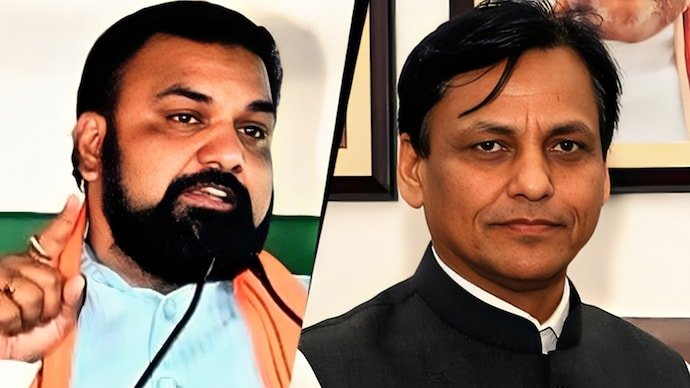
Bihar’s political landscape has entered a phase of renewed uncertainty and strategic recalibration as Chief Minister Nitish Kumar took oath as a Rajya Sabha Member of Parliament in April 2026. With this transition, discussions within the Bharatiya Janata Party (BJP) and the National Democratic Alliance (NDA) have intensified over the future leadership of the state. Two prominent names Deputy Chief Minister Samrat Choudhary and Union Minister of State for Home Affairs Nityanand Rai have emerged as leading contenders for the Chief Minister’s post. The decision, however, will depend on a complex mix of governance credentials, caste equations, party unity, and long-term electoral strategy.
Leadership Transition in Bihar: Why the Buzz Now?
The speculation around Bihar’s next Chief Minister has gained momentum following Nitish Kumar’s move to the Rajya Sabha, signaling a potential shift in the state’s political leadership structure. While no official announcement has been made, internal deliberations within the BJP suggest that the party is actively assessing its options.
This transition comes at a crucial time, with the NDA aiming to strengthen its position in Bihar ahead of future Elections. The choice of Chief Minister could significantly influence both governance and electoral outcomes.
Samrat Choudhary: The Administrative Contender
Strong Governance Experience and State-Level Presence
Samrat Choudhary, currently serving as Bihar’s Deputy Chief Minister, is widely regarded as an administratively capable leader. His direct involvement in governance and policy implementation gives him an edge when it comes to understanding the state’s bureaucratic and developmental challenges.
Over time, Choudhary has built familiarity with the functioning of the state machinery, making him a natural choice for continuity in leadership. His hands-on approach in decision-making has strengthened his image as a leader ready to step into a larger role.
Caste Advantage: The Luv-Kush Equation
Choudhary belongs to the Kushwaha (Koeri) community, which plays a significant role in Bihar’s caste-driven Politics. The “Luv-Kush” social combination has historically been a key electoral factor, and his background could help consolidate this vote bank further.
This caste alignment is particularly important for the BJP, which has focused on mobilizing non-Yadav Other Backward Classes (OBCs) as part of its electoral strategy in the state.
Challenges: Internal Resistance and Political Past
Despite his strengths, Choudhary’s journey is not without hurdles. His past association with the Rashtriya Janata Dal (RJD) continues to create unease among sections of the BJP cadre.
There have also been instances of internal resistance, including objections to campaign materials projecting him as a Chief Ministerial face. These undercurrents suggest that while he is a strong contender, he may require firm backing from the BJP’s central leadership to secure consensus.
Nityanand Rai: The Strategic Political Bet
Organisational Strength and Central Leadership Trust
Nityanand Rai, currently serving as Union Minister of State for Home Affairs, brings a different set of strengths to the table. A former Bihar BJP president, Rai has deep organisational roots and a strong grassroots network.
His proximity to the party’s top leadership enhances his credibility and positions him as a trusted figure within the BJP’s national framework.
Yadav Identity: A Game-Changing Factor?
One of Rai’s most significant political advantages is his Yadav identity. The Yadav community, which constitutes a substantial portion of Bihar’s population, has traditionally been aligned with the RJD.
Projecting Rai as a Chief Ministerial candidate could signal a bold strategic shift by the BJP an attempt to break into this entrenched vote bank and redefine the state’s political arithmetic.
| Leader | Key Strength | Political Advantage |
|---|---|---|
| Samrat Choudhary | Administrative experience | Strong Luv-Kush (Kushwaha) support |
| Nityanand Rai | Organisational strength | Potential Yadav vote outreach |
Limitations: Administrative Exposure and Role Balance
While Rai’s organisational credentials are strong, his experience in managing state-level administration is relatively limited compared to Choudhary. His long tenure in national politics means he has had less direct involvement in Bihar’s governance framework.
Additionally, his current responsibilities at the Union level raise practical questions about balancing national duties with state leadership.
BJP’s Strategic Dilemma: Continuity vs Experimentation
The choice between Samrat Choudhary and Nityanand Rai reflects a broader strategic dilemma for the BJP in Bihar.
On one hand, selecting Choudhary would represent continuity leveraging existing governance experience and maintaining the party’s focus on non-Yadav OBC consolidation.
On the other hand, choosing Rai would signal a more experimental approach, aiming to disrupt traditional caste alignments and expand the party’s social base.
Impact on Caste Equations
Caste dynamics remain central to Bihar politics, and the BJP’s decision will likely be influenced by how it wants to position itself in upcoming elections.
- Choudhary’s elevation: Strengthens existing OBC alliances
- Rai’s elevation: Attempts to penetrate Yadav vote base
Both approaches carry opportunities as well as risks, making the final decision highly consequential.
Role of Central Leadership and Alliance Politics
Ultimately, the decision on Bihar’s next Chief Minister will rest with the BJP’s central leadership. Factors such as alliance stability within the NDA, coordination with regional partners, and long-term electoral goals will play a decisive role.
The party must also consider how its choice will be perceived by voters, cadres, and allies alike.
Signals from Recent Political Moves
The BJP’s recent support for leaders like Upendra Kushwaha in parliamentary roles indicates continued attention to caste representation. However, whether this approach will extend to the Chief Minister’s post remains an open question.
Political observers also point to subtle signals from Nitish Kumar’s recent public appearances, which some interpret as leaning towards a consensus candidate like Choudhary.
Looking Ahead: What’s at Stake?
The decision is not just about leadership it is about shaping Bihar’s political future.
With the 2029 lok Sabha elections on the horizon, the BJP’s choice could influence its ability to expand its voter base and strengthen its position in eastern India.
A carefully chosen leader could help the party:
- Enhance governance credibility
- Reconfigure caste alliances
- Strengthen organisational unity
Conclusion: A Crucial Crossroads for Bihar BJP
The contest between Samrat Choudhary and Nityanand Rai represents more than just a leadership decision it reflects the BJP’s broader strategic direction in Bihar.
Choudhary offers stability, administrative readiness, and continuity within the current framework. Rai, in contrast, represents a bold political gamble with the potential to reshape caste dynamics and expand the party’s reach.
As the BJP weighs its options, the final decision will need to balance immediate governance needs with long-term electoral ambitions. In a state where politics is as much about perception as it is about performance, choosing the right leader could make all the difference.
One thing is clear: Bihar’s next political chapter is being written and the stakes could not be higher.
For breaking news and live news updates, like us on Facebook or follow us on Twitter and Instagram. Read more on Latest India on thefoxdaily.com.




COMMENTS 0