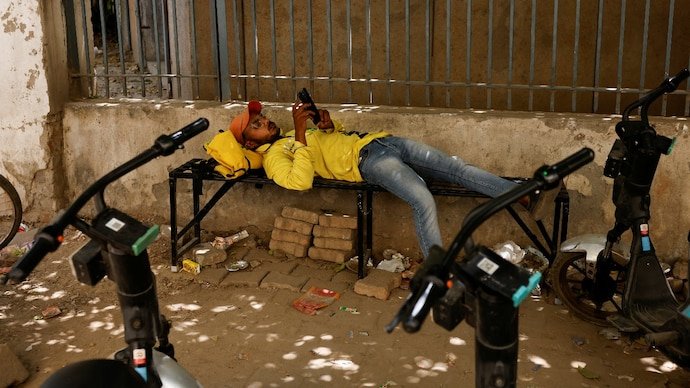
The promise of 10-minute delivery reshaped urban shopping habits in India. Blinkit became more than a brand name—it turned into a verb. From milk and vegetables to bottled water and last-minute gifts, everything seemed just a tap away. Yet, as Blinkit now drops the explicit “10-minute” tag from its branding, it raises a critical question: does this actually change anything?
A closer look at delivery data, platform mechanics, and gig worker realities suggests that while the branding may disappear, the underlying system—and its limitations—remain very much the same.
At its core, business is about creating demand and then fulfilling it efficiently. Pizza delivery once popularised the “30 minutes or free” idea. After the pandemic accelerated hyperlocal logistics, quick-commerce platforms promised something even faster—groceries in under 10 minutes. This pledge, however, was always as much about positioning and marketing as it was about real-world delivery times.
This article examines three key aspects: how ultra-fast delivery is actually achieved, why the 10-minute promise was largely a myth, and why removing the branding will not materially affect customers or delivery partners.
Why Blinkit Removed the 10-Minute Branding
Blinkit’s decision came amid growing scrutiny. Government agencies raised concerns, and gig worker unions announced strikes, questioning whether speed-centric branding indirectly encouraged unsafe riding practices. In most Indian cities, delivery riders weaving through traffic at high speed has become a familiar—and troubling—sight.
The removal of the branding appears to be a response to regulatory pressure and public perception rather than a fundamental change in operations.
How Blinkit, Zepto, and Instamart Deliver So Quickly
Zomato founder and Blinkit head Deepinder Goyal has repeatedly clarified that rapid deliveries are not achieved by riders speeding, but by the strategic placement of dark stores.
“The density of stores around your homes allows US to fulfil fast deliveries. Asking delivery partners to drive fast does not make it possible,” Goyal wrote in a post on X on January 1. He added that delivery partners do not even see a timer indicating the promised delivery duration.
According to Goyal, once an order is placed on Blinkit, it is picked and packed in roughly 2.5 minutes. The delivery partner then travels an average distance of under two kilometres, typically taking around eight minutes—translating to an average speed of about 15 km/h.
This model relies heavily on dark stores—small, hyperlocal warehouses located within residential or mixed-use neighbourhoods. These stores stock a limited but high-demand assortment of products, curated using granular data on local consumption patterns.
Orders are automatically routed to the nearest dark store, where staff pick and pack items almost immediately. The delivery partner’s role is primarily the last-mile connection, not a high-speed race against the clock.
When food delivery platforms faced criticism in 2022 over rider safety, Goyal reiterated that companies continued to train delivery partners in road safety and provide accident and life insurance coverage.
The Myth of the 10-Minute Delivery
In practice, the 10-minute delivery promise only ever applied to customers living extremely close to a dark store. For instance, a resident in Jungpura, South Delhi, located just 650 metres from a Blinkit dark store, often does receive deliveries within ten minutes.
However, for many others, the experience is very different. When a dark store is 1.5 to 2 kilometres away, deliveries typically take 15 to 20 minutes. In Mumbai, deliveries near IIM Mumbai take about 19 minutes. In Bengaluru’s CV Raman Nagar, with a dark store near Gopalan Mall, deliveries average around 17 minutes.
This raises a crucial question: if deliveries are rarely completed in ten minutes, why do delivery partners still rush?
As Goyal remarked in a recent podcast, “We are impatient on the road as a society.” But for gig workers, the incentive structure matters more. The pressure to complete as many orders as possible to earn a livable income often pushes riders to hurry, regardless of branding.
Therefore, even with the removal of the 10-minute label, the behavioural incentives—and economic compulsions—remain unchanged.
Gig Workers Say Branding Is Not the Real Issue
During the Christmas and New Year period, over one lakh gig workers across 22 locations participated in strikes. The Gig & Platform Service Workers Union (GIPSWU) alone mobilised around 14,000 workers from eight major cities, including Delhi and Mumbai.
The union told India Today Digital that quick-commerce firms must stop “treating gig workers like slaves in the name of 10-minute deliveries,” while companies generate massive revenues.
Despite the branding shift, unions continue to demand economic stability for workers in line with statutory minimum wages. Several workers reported earning around Rs 25,000 a month after working 12 to 14 hours daily—sometimes even less due to unexplained deductions.
As per central government norms, monthly minimum wages range from Rs 20,358 for unskilled workers to Rs 26,910 for highly skilled workers. Platform labour, often classified as unskilled, barely meets these thresholds once fuel costs, commissions, and vehicle maintenance are accounted for.
Unions such as GIPSWU and the Karnataka App-based Workers Union (KAWU) are demanding a minimum fare of Rs 20 per kilometre, an eight-hour workday, overtime pay, and safeguards against arbitrary ID blocking and algorithmic penalties.
They argue that current algorithm-driven rate fixation ignores waiting time, fuel inflation, and maintenance costs, pushing workers deeper into debt. Sudden account deactivations due to rating drops, they say, amount to arbitrary dismissal without due process.
Will Dropping the 10-Minute Tag Change Anything?
The short answer is no. Removing the 10-minute branding may slightly lower consumer expectations, but it does not change how deliveries are fulfilled or how workers are compensated.
Years of conditioning have trained urban consumers to expect near-instant gratification. Resetting those expectations will take time—far more than a branding tweak.
Ultimately, the 10-minute delivery was always more marketing myth than operational reality. Your groceries will likely arrive in roughly the same time as before. And unless deeper structural reforms are introduced, the lives of gig workers will remain unchanged.
So while Blinkit’s rebranding may calm regulators and soften public perception, it does little to alter the fundamentals. The clock may no longer say “10 minutes,” but the system keeps ticking exactly as it always has.
For breaking news and live news updates, like us on Facebook or follow us on Twitter and Instagram. Read more on Latest India on thefoxdaily.com.

COMMENTS 0