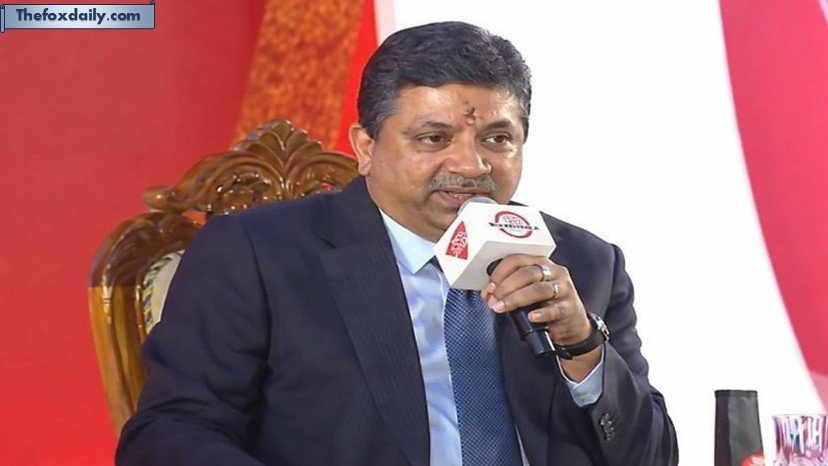
Tamil Nadu IT and Digital Services Minister Palanivel Thiaga Rajan mounted a strong and unapologetic defence of the state’s long-standing language and education policies, challenging the Union government to “perform better” if it expects Tamil Nadu to reconsider its opposition to the three-language formula under the National Education Policy (NEP).
Speaking at the India Today Tamil Nadu Roundtable, a high-profile political forum held amid intensifying Assembly election discussions, Thiaga Rajan clarified that the Dravida Munnetra Kazhagam (DMK) government’s resistance is not directed against Hindi as a language but against what it describes as policy-driven imposition.
The event brought together leading political figures, policy experts, strategists, and analysts as Tamil Nadu moves closer to an election cycle marked by evolving alliances and ideological positioning.
‘We Are Not Anti-Hindi, We Are Anti-Imposition’
Addressing questions on the NEP’s three-language formula, Thiaga Rajan emphasized that the DMK’s stance is rooted in federal principles and educational autonomy.
“We are not anti-Hindi; we are anti-Hindi imposition,” he stated firmly. “We oppose NEET and anyone attempting to dictate which examination we should use to select or filter applicants—our children—who attend institutions funded by our taxpayers in a healthcare system that is among the best in India.”
The minister argued that Tamil Nadu’s two-language policy—Tamil and English—has historically delivered measurable educational and economic benefits. He questioned why the state should dilute what it considers a successful model.
“If someone wants US to change, they must demonstrate better outcomes,” he said. “What have you done better than us that should compel us to alter our behaviour?”
Thiaga Rajan added that policy decisions must be driven by performance metrics and governance outcomes rather than ideological pressure.
Opposition to Three-Language Formula Under NEP
The DMK government has consistently opposed the NEP’s three-language mandate, arguing that it disproportionately burdens non-Hindi-speaking states while offering limited practical benefit.
According to Thiaga Rajan, the implementation framework effectively results in asymmetry: “For the Hindi belt, it is functionally one language plus English. For us, it becomes three languages. Why should we weaken our educational focus when there is no measurable advantage?”
He reiterated that students in Tamil Nadu remain free to learn Hindi voluntarily but maintained that compulsory expansion of curriculum hours in government schools could dilute educational quality.
The minister framed the debate as one concerning cooperative federalism and state autonomy in education policy—areas constitutionally shared between the Centre and states.
Defending the ‘Dravidian Model 2.0’
Beyond the language debate, Thiaga Rajan positioned the discussion within a broader ideological framework, defending what he termed the “Dravidian Model 2.0” of governance.
He described the model as rooted in more than a century of social justice principles, including equitable access to education, reservation policies, social inclusion, and opportunity-driven economic growth.
“Inclusion is at the heart of Dravidian 2.0,” he explained. “We began over a hundred years ago with reforms centered on justice, education, and opportunity. That foundation drives sustainable economic expansion.”
Drawing comparisons with what has often been described nationally as the “Gujarat model,” Thiaga Rajan said debates about development models are, in reality, debates about competing governance philosophies.
He argued that Tamil Nadu’s performance across social development indicators—healthcare, literacy, industrial output, and human development—demonstrates the effectiveness of its approach.
“The South has a bright future,” he said. “How much of the rest of India chooses to adopt elements of the Tamil Nadu or Dravidian model will determine the country’s broader trajectory.”
On Dynastic Politics and Corruption Allegations
Addressing recurring criticism directed at regional parties—including allegations of dynastic politics and corruption—Thiaga Rajan responded by broadening the lens beyond Tamil Nadu.
“Name one state where dynastic politics and corruption do not exist,” he remarked. “Corruption is a systemic issue. The real question is: who delivers better outcomes?”
He emphasized that governance should ultimately be evaluated through measurable performance—economic growth rates, social welfare indicators, public service delivery, and citizen well-being.
“If there is decay in the political system, that decay is universal,” he observed, suggesting that reform must be institutional rather than selective.
Governance Metrics Over Political Rhetoric
Throughout the discussion, Thiaga Rajan consistently returned to a results-based argument: Tamil Nadu’s policies, he said, have produced tangible improvements in healthcare infrastructure, educational attainment, digital innovation, and social equity.
He maintained that comparisons between states should rely on empirical data rather than rhetorical narratives.
As the Assembly elections approach and debates around the National Education Policy intensify, the language issue appears set to remain central to Tamil Nadu’s political discourse. The DMK leadership has made clear that its stance is unlikely to shift unless convinced by demonstrably superior outcomes.
The minister’s challenge to the Centre was succinct but pointed: governance models, not directives, must earn public trust.
For breaking news and live news updates, like us on Facebook or follow us on Twitter and Instagram. Read more on Latest India on thefoxdaily.com.






COMMENTS 0