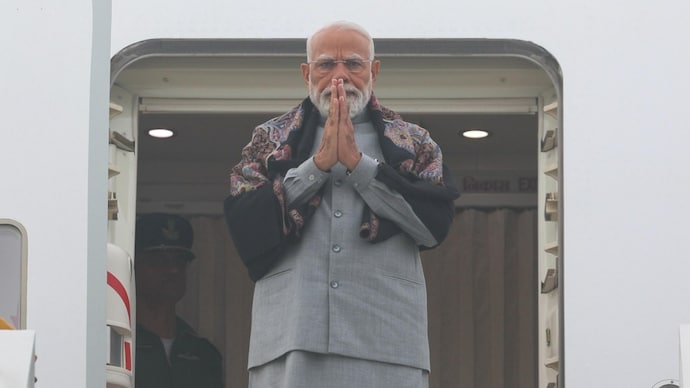
Amid shifting geopolitical equations, energy market volatility, and supply-chain disruptions, Prime Minister Narendra Modi’s four-day diplomatic tour to Jordan, Ethiopia, and Oman from December 15 to 18, 2025, is aimed at reinforcing India’s presence in two strategically vital regions—West Asia and Africa.
The visit, which coincides with key bilateral milestones, reflects New Delhi’s intent to build resilient partnerships focused on trade expansion, energy security, development cooperation, and stronger engagement with the Indian diaspora.
Prime Minister Modi’s three-nation tour comes at a critical moment when India is positioning itself as a reliable partner of the Global South while simultaneously safeguarding its national interests in energy, food security, and regional stability.
CORE STRATEGIC OBJECTIVES OF THE TOUR
The overarching goal of the visit is to consolidate India’s strategic footprint in West Asia and Africa through deeper economic integration, enhanced energy cooperation, and long-term development partnerships.
According to the Ministry of External Affairs (MEA), “The visit will further deepen strategic partnerships in diverse fields such as trade, investment, energy, defence, security, technology, agriculture, and culture, while also enabling an exchange of views on regional and global issues of mutual interest.”
By engaging with leaders across three pivotal countries, India aims to strengthen political trust, diversify trade partnerships, and ensure access to critical resources amid a rapidly evolving global order.
ITINERARY AND KEY DIPLOMATIC ENGAGEMENTS
Jordan (December 15–16): Prime Minister Modi will hold extensive bilateral discussions with King Abdullah II. Talks are expected to focus on enhancing trade volumes, strengthening defence and security cooperation, and discussing regional peace initiatives. Jordan’s strategic location makes it a crucial gateway to West Asia, and India sees Amman as a reliable partner in regional stability.
Ethiopia (December 16–17): Marking the first visit by an Indian Prime Minister to Ethiopia in over a decade, Modi will meet Prime Minister Abiy Ahmed, address the Ethiopian Parliament, and oversee the signing of several Memoranda of Understanding (MoUs). The visit underscores India’s renewed focus on Africa as a growth partner.
Oman (December 17–18): The Oman leg includes high-level talks with Sultan Haitham bin Tarik, participation in a major business event, and the anticipated signing of the India–Oman Comprehensive Economic Partnership Agreement (CEPA), a deal expected to significantly boost bilateral trade.
ENERGY SECURITY AND FOOD SUPPLY CHAINS
Ensuring uninterrupted access to critical resources remains a central theme of the visit, particularly in light of global energy uncertainty and rising food security concerns.
Strategic energy partnership with Oman: Oman plays a vital role in India’s energy basket. Bilateral trade stood at $10.61 billion in 2024–25, with petroleum gases and urea accounting for over 70% of India’s imports from the Gulf nation.
The India–Oman CEPA, already approved by India’s Union Cabinet and Oman’s Shura Council, is expected to be signed during the visit. The agreement promises duty-free access on 95% of tariff lines and up to 98% tariff-free access for Indian exports.
Commerce Minister Piyush Goyal has previously hinted at progress, stating, “India–Oman FTA talks are progressing; good news soon.” The deal is expected to open new avenues in green energy, technology collaboration, and food security.
Resource security with Jordan: Jordan is a critical supplier of potash and phosphates, essential for India’s fertilizer needs. Initiatives such as the Jordan India Fertilizer Company (JIFCO) underline the depth of cooperation.
With bilateral trade currently valued at $2.75 billion, both nations have set an ambitious target of reaching $5 billion by 2030. Discussions with King Abdullah II are expected to focus on expanding economic ties and strengthening supply-chain resilience.
WHY ETHIOPIA MATTERS TO INDIA
Ethiopia occupies a central place in India’s Africa strategy. It is the diplomatic heart of the continent as the seat of the African Union (AU) and a key partner in India’s Global South outreach.
India–Ethiopia trade is projected to touch $550 million in 2024–25, driven largely by pharmaceutical exports. India has also been a long-standing partner in Ethiopia’s development journey through capacity-building initiatives, training programs, and infrastructure support.
MEA Secretary (South) Neena Malhotra noted, “The current visit reflects India’s commitment to deepening South-South cooperation and strengthening our partnership with Africa.” She added that the trip is expected to “give renewed momentum to bilateral ties and chart new pathways for cooperation in the years ahead.”
THE INDIAN DIASPORA: A LIVING BRIDGE
The Indian diaspora across Jordan, Ethiopia, and Oman plays a pivotal role in strengthening bilateral relations through economic contributions, remittances, and cultural diplomacy.
In Oman, Indians form the largest expatriate community, numbering over 675,000. They are deeply embedded in sectors such as construction, Healthcare, and services, contributing significantly to Oman’s economy and India–Oman relations.
Jordan hosts around 17,000 Indians, many employed in the apparel sector, supported by nearly $300 million in Indian investments.
Ethiopia’s Indian community, estimated at 1,500–2,500 people, includes around 150 Indian faculty members working in Ethiopian universities, making a meaningful contribution to the country’s education sector.
Prime Minister Modi is expected to engage directly with these communities, recognizing them as key stakeholders in India’s soft power outreach.
ECONOMIC CHALLENGES AND EMERGING OPPORTUNITIES
While the tour promises significant economic upside, it also comes against a backdrop of regional instability and the need for swift policy execution.
Post-CEPA, India–Oman trade is projected to rise sharply, potentially crossing $20 billion in the coming years. Oman offers India a strategic gateway to Gulf, African, and West Asian markets.
The agreement also proposes smoother mobility for professionals, including a five-year multiple-entry “India Business Card” visa for eligible executives, further strengthening business ties.
Overall, Prime Minister Modi’s diplomatic outreach to Jordan, Ethiopia, and Oman reflects India’s evolving foreign policy—one that blends economic pragmatism, strategic foresight, and people-to-people engagement to secure long-term national interests.
For breaking news and live news updates, like us on Facebook or follow us on Twitter and Instagram. Read more on Latest India on thefoxdaily.com.






COMMENTS 0