Fresh Snowfall returned to parts of the Kashmir Valley on Sunday, covering several high-altitude areas in a pristine white layer and providing much-needed relief after an unusually dry spell that lasted throughout February. The sudden change in weather conditions has delighted tourists visiting the region, especially in the famous ski resort town of Gulmarg.
According to local reports, snowfall was recorded in multiple areas across Kashmir’s higher reaches, including Gulmarg, Ganderbal, Kupwara, Shopian, and Bandipora districts. The snowfall transformed these regions into scenic winter landscapes, attracting both domestic and international travelers.
Among the prominent locations that witnessed fresh snowfall were Pir Ki Gali, the Sonamarg–Zojila axis, and parts of the historic Mughal Road near Shopian. These areas, known for their breathtaking mountain views, were quickly covered with fresh snow, enhancing the region’s natural beauty.
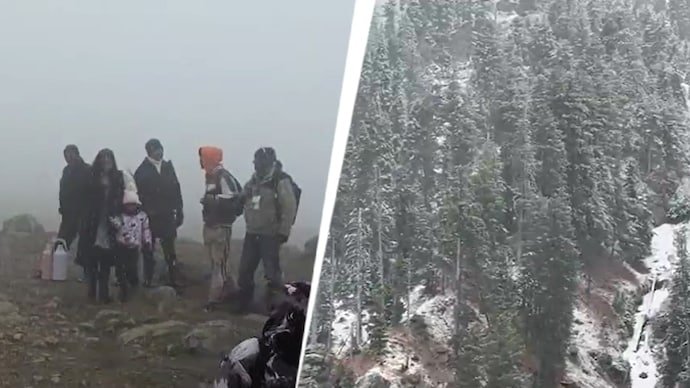
Visuals from Gulmarg showed groups of tourists enjoying the snowfall, with many walking across snow-covered slopes and capturing photographs of the picturesque surroundings. Some visitors could be seen playing in the snow, while others admired the calm and scenic winter atmosphere.
Ground footage from Shopian also highlighted the beauty of the snowfall, showing tall pine trees blanketed in fresh snow. The sight created a dramatic winter scene that quickly spread across Social Media and news platforms.
A tourist visiting from Bihar expressed her excitement to reporters, saying that witnessing snowfall was a dream come true. She said she could not hide her happiness after experiencing the sudden change in weather and seeing the snow-covered landscapes for the first time.
The remote Gurez Valley also received snowfall during the weather system, with nearby hills and mountain slopes completely covered in snow. The valley, located near the Line of Control, often experiences harsh winters, but the March snowfall added a fresh layer of snow to the already cold terrain.
While the snowfall created stunning scenery, it also caused some disruptions. Traffic movement was significantly affected at Sinthan Top, a high-altitude mountain pass that connects parts of the Kashmir Valley with the Jammu region. Vehicles faced delays as authorities worked to ensure safe travel through the snow-covered roads.
At the same time, Srinagar and several lower plains of the Kashmir Valley experienced rainfall rather than snowfall. The rain, combined with cloudy skies, caused a noticeable drop in daytime temperatures across the region.
According to the Meteorological Department, the unstable weather conditions are expected to continue for several days. Officials have predicted generally cloudy skies along with intermittent rainfall in the plains and snowfall in higher altitudes.
Weather experts have indicated that sporadic light to moderate rain or snowfall may continue until Monday morning in several parts of the region. These conditions are expected to affect both mountain areas and nearby valleys.
According to a report from news agency PTI, there is also a possibility of brief spells of light rain or snow in the higher ranges at some locations on Tuesday as well.
The recent snowfall across Kashmir and other parts of the western Himalayan region has been linked to a fresh Western Disturbance moving across northern India. These weather systems, originating in the Mediterranean region, are responsible for bringing rain and snow to northern parts of the Indian subcontinent.
The India Meteorological Department (IMD) confirmed the development in its weather bulletin issued on Sunday, March 15. The report stated that scattered to fairly widespread rainfall and snowfall were likely across the western Himalayan region between March 15 and March 21.
| Region | Weather Condition | Impact |
|---|---|---|
| Gulmarg | Fresh Snowfall | Tourists enjoying snow-covered slopes |
| Shopian | Snowfall in higher areas | Pine forests covered in snow |
| Gurez Valley | Heavy Snowfall | Mountains blanketed in thick snow |
| Sinthan Top | Snow accumulation | Traffic disruptions reported |
| Srinagar | Rainfall | Drop in daytime temperatures |
Typically, the western Himalayan region receives the majority of its snowfall between December and February. By March, snowfall usually decreases as winter begins to transition into spring.
Because of this seasonal pattern, snowfall during March is generally considered off-season in Kashmir. However, occasional western disturbances can still bring unexpected snow and rainfall during this period.
Despite the unusual timing, the fresh snowfall has brought a renewed winter charm to Kashmir’s famous tourist destinations. For visitors hoping to experience snow-covered mountains and scenic landscapes, the sudden weather change has turned into an unforgettable travel experience.
For breaking news and live news updates, like us on Facebook or follow us on Twitter and Instagram. Read more on Latest India on thefoxdaily.com.


COMMENTS 0