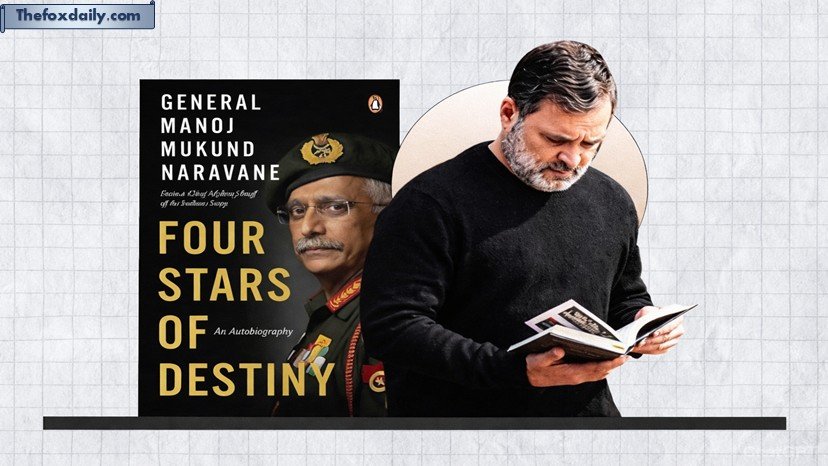
The publisher of Gen Naravane’s book must address several pressing and unavoidable questions. As the controversy deepens, clarity is not just desirable – it is necessary. The focus of the police investigation may currently be on the circulation of an unapproved manuscript online and digital copies allegedly sold overseas, but a far more fundamental question remains unanswered: How did a physical copy of the book come into existence in the first place?
The Central Question in the Investigation Into General MM Naravane’s Book
The primary question in the ongoing investigation into General MM Naravane‘s memoir is straightforward yet baffling – how was the book printed and circulated if it was never officially approved for publication?
We reached out to the publisher seeking clarification on these issues and waited for a response. However, there has been complete silence so far.
Did the book simply materialize out of thin air? Did it appear without any formal printing process? Or was it printed and distributed through channels that remain undisclosed? The publisher has not offered an explanation, and the absence of transparency only fuels speculation.
It has now been nearly three weeks since General MM Naravane’s memoir was first mentioned in the lok Sabha by Leader of the Opposition Rahul Gandhi. More than 16 days have passed since he displayed a physical hardcover copy of Four Stars of Destiny – a book that both the publisher and the government had previously claimed did not exist in printed form.
Because the memoir deals with sensitive defence matters and allegedly did not receive prior approval from the Ministry of Defence (MoD), serious questions must be addressed by the publisher.
India Today Digital contacted Penguin Random House India through email, phone calls, and text messages to seek clarity about the mysterious appearance of the book. As of now, there has been no official response. Should the publisher issue a formal clarification, this report will be updated accordingly.
Why the Location of the Printed Copy Raises Further Questions
The discovery of a printed copy adds another layer of complexity to the issue. This was not a pirated edition discovered in informal markets such as Connaught Place or Colaba Causeway, where unauthorized copies are occasionally found.
Instead, the hardcover edition of the former Army Chief’s memoir surfaced inside India’s Parliament – in the hands of a constitutionally appointed leader. That fact alone significantly elevates the gravity of the matter.
Following a heated debate in the Lok Sabha, Rahul Gandhi displayed the hardcover edition of Four Stars of Destiny. A day earlier, he had attempted to quote passages from a magazine article reportedly based on the book. Defence Minister Rajnath Singh had categorically denied the existence of the book.
Subsequently, Rahul Gandhi was seen flipping through the memoir within the Parliament complex. India Today Digital reviewed the images and confirmed that the congress leader was indeed holding what appeared to be a printed, hardbound copy.
If the manuscript had not yet received MoD approval, how did such a copy reach him? This remains both a mystery and a puzzle.
How the Publisher’s Denial Has Deepened the Mystery
Penguin Random House India, the publisher of the memoir, has categorically denied that the book was printed or distributed. In a statement issued shortly after the controversy erupted, the publisher clarified that the manuscript was still under review and had not received the mandatory approval from the Ministry of Defence – a requirement for any defence-related publication by a former service chief.
General Naravane himself echoed the publisher’s position in a brief statement supporting this stance.
However, these assurances have not resolved the issue. In fact, they have intensified it.
Within hours of the developments, the Delhi Police registered a complaint under provisions relating to breach of trust and disclosure of confidential information. The first and most obvious question raised was: how did Rahul Gandhi acquire a hardbound copy of a book that was allegedly never printed?
The dust-jacketed edition appeared professionally produced, consistent with publication by a major publishing house.
| Claim | Stated By | Contradictory Development |
|---|---|---|
| The book was not printed | Publisher | Hardcover copy displayed in Parliament |
| The manuscript was under review | Publisher & Author | Pre-orders appeared on international e-commerce sites |
| The book did not exist in circulation | Defence Minister | Physical copy publicly shown |
Rahul Gandhi later stated that the “book was available abroad,” yet he refrained from revealing how he obtained his copy. Meanwhile, reports indicated that international e-commerce platforms had listed the book for pre-order.
This raises additional questions: If the publisher did not authorize printing, and if MoD approval had not been granted, how were pre-orders enabled? And how did a finished hardcover copy surface?
Key Questions the Publisher Must Answer
While the current investigation appears to be focusing primarily on the unauthorized digital circulation of the manuscript, it seems to overlook a crucial aspect – the publisher’s responsibility in safeguarding the typescript and ensuring publication protocols are strictly followed.
India Today Digital formally posed the following questions to Penguin Random House India:
- If the book was never printed, how did a hardbound copy reach Rahul Gandhi?
- How were copies listed for overseas sale without prior MoD clearance?
- Was the manuscript submitted to the MoD only after the controversy surfaced?
- Who is responsible for the alleged leak of the preprint PDF?
- Has the publisher lodged any complaint regarding a potential internal security breach?
Despite repeated attempts to seek clarification, no official response has been provided so far.
What Sparked the Controversy Around ‘Four Stars of Destiny’?
In his memoir, Four Stars of Destiny, General Naravane reflects on his tenure as Army Chief from 2019 to 2022. The book reportedly covers significant events, including:
- The Galwan Valley clash with China
- The subsequent standoff at Rechin La
- Internal military reforms, including the Agnipath Scheme
Several media reports have already highlighted potentially sensitive excerpts from the book. This has raised concerns not only about publication procedures but also about whether unscreened material touching upon national security interests has entered the public domain.
According to reports, the manuscript found its way into international digital marketplaces before securing mandatory Defence Ministry approval.
If the publisher did not authorize its release, does this indicate a breach in internal systems? Was there an insider leak? Or was there a miscommunication in the publication process?
Confidentiality is a cornerstone of the publishing industry, particularly when it involves high-profile memoirs related to national defence. The apparent failure to contain the manuscript – whether digitally or physically – demands scrutiny.
As the Delhi Police investigation progresses, attention must also turn toward the origin of the physical copies. The issue is no longer limited to digital leaks; it concerns the integrity of the publication process itself.
Given that the book deals with India’s defence strategy and high-level military decisions, the questions raised are not merely procedural – they are of national importance. Transparency from the publisher is essential to restore credibility and public trust.
Until clear answers are provided, the mystery surrounding the appearance of Four Stars of Destiny remains unresolved.
For breaking news and live news updates, like us on Facebook or follow us on Twitter and Instagram. Read more on Latest India on thefoxdaily.com.






COMMENTS 0