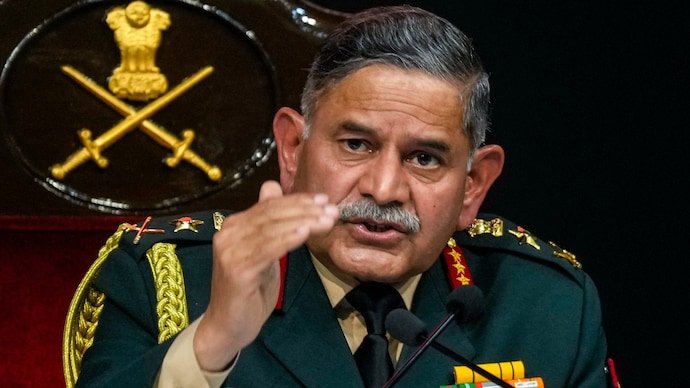
In a candid briefing in New Delhi on Tuesday, Chief of Army Staff General Upendra Dwivedi outlined what he described as two critical turning points during Operation Sindoor that altered the course of the India–Pakistan military standoff last year. According to him, Pakistan’s decision to seek a ceasefire was not sudden or voluntary, but the outcome of a clear message delivered through India’s operational posture and battlefield actions.
General Dwivedi revealed that on the morning of May 10, the Indian armed forces were issued a set of what he termed “certain orders”—directives that prepared the Army, Navy, and Air Force for all contingencies should the conflict escalate further.
“All three services were given specific instructions on what actions would follow if the situation intensified,” the Army Chief said. “The message of what would happen if the fighting continued was understood by those who needed to understand it.”
While refraining from disclosing operational specifics, General Dwivedi made it clear that the intent behind those directives was unmistakable and deliberately visible.
Strategic Signalling Through Military Posture
The Army Chief explained that Pakistan was able to read India’s intentions not through rhetoric, but through observable ground realities. According to him, Islamabad had access to satellite imagery that showed the movement and readiness of Indian strike corps, naval assets, and air power.
“They could see the deployment patterns—naval movements, force mobilisation, air assets. When they connected the dots, they realised it was the right time to stop the fight,” General Dwivedi said.
Shortly thereafter, Pakistan reached out through established military channels. Director General of Military Operations (DGMO) Lt Gen Rajiv Ghai received communication from his Pakistani counterpart, seeking a ceasefire understanding.
This outreach, General Dwivedi indicated, was not born out of goodwill, but out of strategic compulsion.
Precision Strikes That Shook the Opponent
The first major turning point, according to the Army Chief, came earlier in the operation with India’s precision strikes on terror infrastructure located in Pakistan and Pakistan-Occupied Kashmir (POK).
Referring to the opening phase of Operation Sindoor, General Dwivedi said the 22-minute-long strikes on terror targets fundamentally disrupted the adversary’s decision-making cycle.
“Those strikes shook the decision-making process on the other side,” he said, carefully avoiding naming Pakistan directly.
The suddenness and accuracy of the operation, he explained, left the Pakistani establishment struggling to process what had occurred.
“They needed time to understand what had happened. Initially, they reacted without clarity—using whatever they had at hand,” he said.
Confusion and Disarray Across the Border
General Dwivedi pointed to Pakistan’s subsequent actions—ranging from drone incursions and missile launches to other asymmetric responses—as evidence of confusion rather than coherent strategy.
“They were unable to comprehend what was taking place. There was fear, mismanagement, and total confusion,” the Army Chief stated.
According to him, these erratic responses reflected a breakdown in command and control on the Pakistani side, exposing vulnerabilities that India had anticipated.
“They used stones, drones, missiles—anything they could—because they were startled and disoriented,” he added.
India’s Measured and Deliberate Response
Despite the scale of India’s military readiness, General Dwivedi stressed that New Delhi never intended to escalate the conflict unnecessarily.
“Our response was measured and methodical. We did not want to prolong the conflict,” he said.
The Army Chief emphasised that India’s objectives during Operation Sindoor were limited, precise, and clearly defined.
“We achieved the politico-military aim of the operation,” he said, underlining that restraint was as much a part of India’s strategy as strength.
Background: Why Operation Sindoor Was Launched
Operation Sindoor was launched on May 7 last year in response to a brutal terror attack in Pahalgam, Jammu and Kashmir, that killed 25 tourists and a local pony operator.
The attack triggered widespread outrage and prompted swift military action aimed at dismantling terror infrastructure and sending a strong deterrent message across the border.
According to General Dwivedi, the operation succeeded not only in neutralising terror targets but also in establishing escalation dominance—making it clear that India was prepared for any eventuality, while remaining firmly in control of the situation.
The combination of precise military strikes and unmistakable strategic signalling, he concluded, left Pakistan with little choice but to step back.
“When they understood the full picture,” the Army Chief said, “they knew continuing the fight would only worsen their losses.”
For breaking news and live news updates, like us on Facebook or follow us on Twitter and Instagram. Read more on Latest India on thefoxdaily.com.






COMMENTS 0