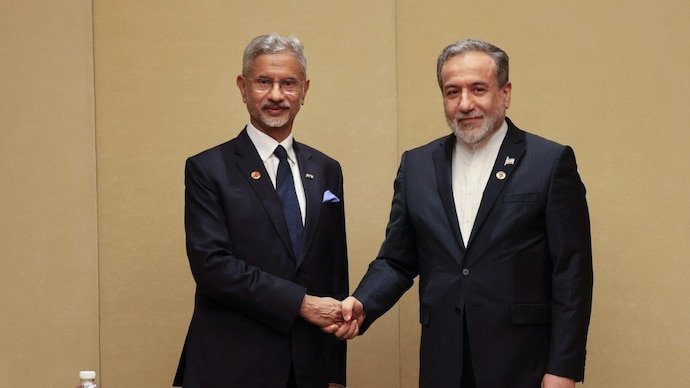
External Affairs Minister S Jaishankar has said that diplomatic engagement between India and Iran helped secure safe passage for two Indian-flagged gas carriers through the Strait of Hormuz, a critical maritime route that has been largely disrupted during the ongoing conflict in the Middle East.
According to Jaishankar, Iran’s decision to allow the vessels to pass through the narrow waterway demonstrated that sustained diplomatic dialogue between the two countries had “yielded results.”
The development is particularly significant because Iran has effectively restricted tanker traffic through the strait following escalating tensions involving the United States, Israel, and Iran.
Despite the disruption, two Indian vessels carrying liquefied petroleum gas (LPG) were permitted to transit through the route on Saturday.
Two Indian LPG Carriers Cross the Strait
The ships — named Shivalik and Nanda Devi — transported a combined cargo of approximately 92,712 metric tonnes of LPG while crossing the Strait of Hormuz en route to India.
The Strait of Hormuz connects the Persian Gulf with the Arabian Sea and serves as one of the most important energy corridors in the world.
Nearly one-fifth of global oil consumption typically passes through the narrow passage, making any disruption a major concern for Global energy markets.
Speaking in an interview with the Financial Times, Jaishankar said the vessels’ successful transit reflected the benefits of diplomatic coordination.
“Certainly, from India’s perspective, it is better that we reason, coordinate and find a solution than not,” he said.
| Vessel Name | Type | Cargo | Destination |
|---|---|---|---|
| Shivalik | LPG Carrier | Liquefied Petroleum Gas | India |
| Nanda Devi | LPG Carrier | Liquefied Petroleum Gas | India |
Diplomatic Talks with Iran
Jaishankar revealed that he had held multiple conversations with Iran’s Foreign Minister Abbas Araghchi since Tehran began restricting maritime traffic in the Strait of Hormuz.
According to the minister, the two leaders have spoken at least four times since the crisis began.
However, Jaishankar clarified that there was no formal or blanket arrangement allowing Indian vessels unrestricted access through the strait.
He also emphasized that India had not offered any concessions to Iran in exchange for allowing the ships to pass.
“India and Iran have a relationship; this is not an exchange problem. And this is a conflict that we regard as something very unfortunate,” Jaishankar said.
The minister added that diplomatic engagement remains ongoing because several Indian vessels are still in the region awaiting safe passage.
Other Countries Also Negotiating with Iran
Reports suggest that other major energy-importing nations, including china and Russia, have also engaged in discussions with Tehran to allow their ships to transit through the Strait of Hormuz during the ongoing conflict.
However, Jaishankar noted that each country’s relationship with Iran is unique and that the arrangements cannot be easily replicated.
“Each country’s relationship with Iran stands on its own merits,” he said when asked whether European countries might be able to reach a similar understanding with Tehran.
He added that India would be willing to discuss its diplomatic approach with European partners if requested.
Hormuz Crisis Raises Energy Security Concerns
Iran’s blockade of the Strait of Hormuz in response to US and Israeli military strikes has raised serious concerns about Energy Security across Asia.
Major energy-importing economies such as India and China rely heavily on shipments of crude oil and liquefied natural gas from producers in the Middle East.
The disruption has already caused global oil prices to surge above $100 per barrel, compared to around $72–$73 before the crisis began.
Impact on India’s Energy Market
India is the world’s second-largest consumer of LPG and the fourth-largest importer of the fuel.
A large portion of India’s LPG imports comes from Middle Eastern suppliers and is transported through the Strait of Hormuz.
As supply pressures increase, the Indian government has prioritised LPG allocation for households and the transportation sector in order to ensure that essential consumption needs are met.
However, industries that rely heavily on LPG are beginning to feel the impact of supply constraints.
Several restaurants and manufacturers that depend on LPG — including ceramic tile producers — have reported shortages, raising concerns that prolonged disruptions could slow industrial production in parts of the country.
Despite the situation, the government has repeatedly urged citizens not to engage in panic buying and has assured that sufficient LPG stocks and supply agreements are in place to meet domestic demand.
For breaking news and live news updates, like us on Facebook or follow us on Twitter and Instagram. Read more on Latest India on thefoxdaily.com.






COMMENTS 0