An Energised Opposition Leader Dominates the Budget Session
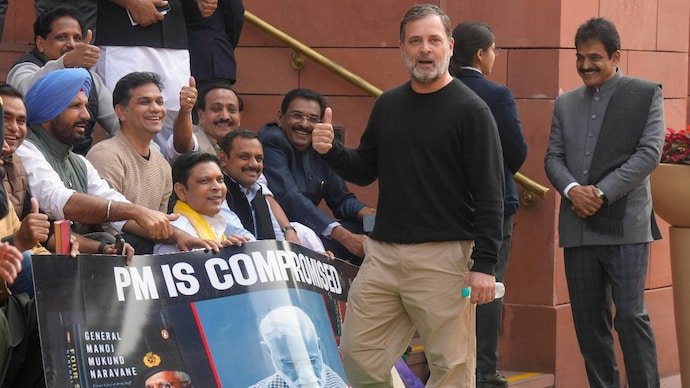
The first half of the Parliament Budget Session witnessed a visibly transformed Rahul Gandhi. The congress MP appeared politically charged, sharp in delivery, and unwavering in his attack on Prime Minister Narendra Modi and the government. For nearly fifty minutes in one key intervention, he maintained a singular line of argument, brushed aside interruptions, and delivered a sustained critique that dominated headlines.
Inside the House, his confrontational style electrified Congress MPs. Party members rallied behind him, staged protests, courted suspension, and raised slogans in solidarity. The optics suggested renewed cohesion within a party often criticized for internal drift. Gandhi’s combative approach not only unsettled treasury benches but also injected fresh energy into opposition ranks.
Yet seasoned observers remain cautious. As one senior Congress leader candidly remarked, “The party is sorted if Rahul Gandhi maintains this form outside Parliament—but that consistency has not always been there.” The remark underscores the larger question: can parliamentary aggression convert into sustained political momentum?
Positioning as the ‘Annadata’ Champion
Rahul Gandhi’s outreach to farmers soon after the first phase of the session indicated that he intends to carry the confrontation beyond the House. His meeting with representatives of the farming community was carefully choreographed to position him as a defender of the ‘annadata’ and a critic of the Indo-US accord, which he alleges compromises national interest.
While many attendees reportedly included office-bearers of the Congress Kisan wing, the symbolism was unmistakable. Gandhi sought to reinforce his narrative that the government is yielding to external pressure—particularly from former US President Donald Trump—at the expense of Indian farmers and economic sovereignty.
He sharpened this attack by suggesting that industrialist Gautam Adani’s image be placed alongside Narendra Modi and Donald Trump on protest banners displayed by suspended Congress MPs at Makar Dwar. The messaging was designed to blend economic nationalism with allegations of crony capitalism.
However, optics alone do not secure electoral dividends. The Congress must translate symbolic positioning into sustained grassroots mobilization if it hopes to transform narrative advantage into political capital.
Beyond Optics: Congress’ Grassroots Deficit
The deeper structural challenge confronting the Congress party remains organizational. Parliamentary speeches can dominate television debates, but elections are won through booth-level networks and sustained public engagement.
Recent campaigns offer mixed lessons. The Voter Adhikar Yatra, launched with considerable fanfare, struggled to maintain long-term traction. Protests against the proposed dilution or phase-out of MGNREGA similarly remained sporadic and largely symbolic rather than evolving into mass movements.
This recurring gap between rhetoric and mobilization continues to limit the party’s reach, particularly in states where its cadre base has weakened over the past decade. Without rebuilding local organizational machinery, even the most effective parliamentary performance risks fading from public memory.
National Security as the Next Political Battleground
As the second half of the Budget Session approaches—and with assembly elections looming in West Bengal, Assam, Tamil Nadu, and Kerala—national security is expected to become a focal point of Rahul Gandhi’s strategy.
References to observations from former Army Chief General M.M. Naravane’s book have already surfaced in the debate. Gandhi appears determined to challenge what he describes as the Prime Minister’s cultivated image of decisiveness and strength. His rhetorical line—“Jo uchit samjho wahi karo” (do what you think is right)—is aimed at puncturing the “56-inch chest” political branding associated with Modi.
By reframing national security as an arena for scrutiny rather than unquestioned endorsement, Gandhi is attempting to reposition the opposition from defensive to assertive territory. Whether this narrative gains traction will depend on both factual substantiation and public perception.
The ‘Epstein Files’ Angle and Digital Campaigning
Another potential line of attack involves references to the so-called Epstein files controversy. While not a central electoral issue in India, Congress strategists believe the matter could generate political discomfort and feed into broader questions about transparency and global associations.
Party insiders suggest that social media amplification will play a crucial role in keeping this issue alive during the second half of the session. In today’s political ecosystem, digital narratives often shape perception as much as parliamentary speeches.
A Confrontation Intensifying — But Can It Sustain?
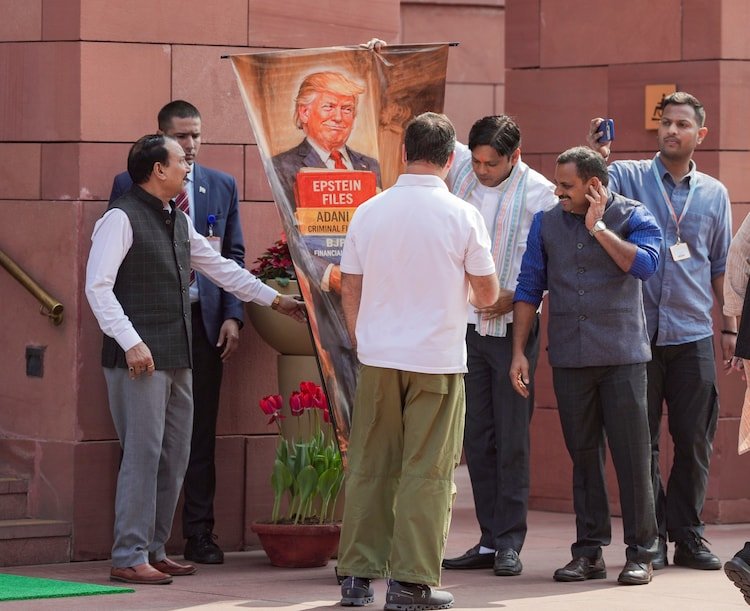
Rahul Gandhi’s body language during the first half of the Budget Session reflected confidence and renewed political conviction. His interventions were structured, relentless, and calibrated to keep the Modi government on the defensive.
Yet the ultimate test lies beyond the House. Parliamentary assertiveness must evolve into consistent public engagement, disciplined organization, and issue-based mobilization. With crucial state elections on the horizon, the Congress leadership cannot afford episodic bursts of energy followed by prolonged quiet phases.
The coming weeks will determine whether Gandhi’s legislative performance marks the beginning of a broader political resurgence or remains confined to headline moments within Parliament.
In the end, Parliament may provide the stage—but the streets will decide the script.
For breaking news and live news updates, like us on Facebook or follow us on Twitter and Instagram. Read more on Latest India on thefoxdaily.com.

COMMENTS 0