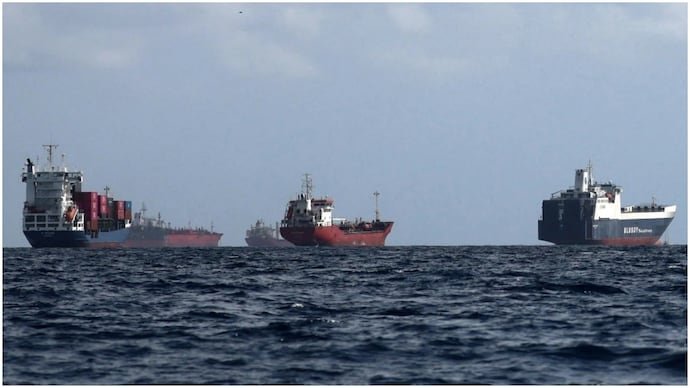
India is currently in negotiations with Iran to ensure the safe passage of more than 20 oil and gas tankers stranded near the Strait of Hormuz, according to reports. The discussions are being led by India’s Ministry of External Affairs as part of diplomatic efforts to prevent disruptions to the country’s energy supply.
The Strait of Hormuz, a narrow waterway connecting the Persian Gulf to the Gulf of Oman, is one of the world’s most important maritime energy routes. Nearly one-fifth of the global crude oil supply typically passes through this corridor.
However, the ongoing conflict involving Iran, the United States, and Israel has led to severe disruptions in shipping traffic through the strait.
Several oil tankers carrying crude oil, liquefied petroleum gas (LPG), and liquefied natural gas (LNG) have reportedly been stranded in the region since military strikes and retaliatory attacks escalated tensions.
Diplomatic Talks Led by India’s Foreign Ministry
According to reports citing Bloomberg, India’s Ministry of External Affairs is directly involved in negotiations with Iranian authorities to allow Indian vessels to pass safely through the strait.
The diplomatic engagement reportedly followed a conversation between India’s External Affairs Minister S. Jaishankar and Iran’s Foreign Minister Abbas Araghchi.
After the discussion, Iranian authorities are said to have allowed Indian oil tankers to move through the strategic waterway.
Although the Indian government confirmed the conversation between the two ministers, officials have not publicly disclosed specific details regarding the tanker passage negotiations.
MEA spokesperson Randhir Jaiswal acknowledged that talks had taken place but declined to provide further information.
Importance of the Strait of Hormuz for India
The Strait of Hormuz plays a crucial role in India’s energy security.
Before the current crisis, approximately 45% of India’s oil imports passed through the strait, making it one of the country’s most critical energy supply routes.
| Energy Flow Through Strait of Hormuz | Details |
|---|---|
| Global Oil Supply | About 20% passes through the strait |
| India’s Oil Imports (Pre-Crisis) | Approximately 45% via Hormuz |
| Type of Cargo | Crude oil, LPG, LNG |
| Strategic Importance | Key route connecting Gulf producers to global markets |
Any prolonged disruption in this route could have significant consequences for Global energy markets and countries that rely heavily on Gulf oil exports.
Government Says India’s Oil Supply Is Secure
Despite the crisis, the Indian government has assured that the country currently faces no fuel shortage.
Speaking in Parliament, Petroleum and Natural Gas Minister Hardeep Singh Puri said India had secured enough crude oil supplies from alternative sources to offset the disruption in the Strait of Hormuz.
“In the history of modern energy, the world has never faced a situation like this. India’s crude supply position is safe, and the volume secured surpasses what the Hormuz would have supplied,” Puri said.
He added that India had successfully diversified its oil imports since the crisis began.
| India’s Oil Import Sources | Share |
|---|---|
| Through Hormuz (Before Crisis) | About 45% |
| Non-Hormuz Sources (Before Crisis) | About 55% |
| Non-Hormuz Sources (After Crisis) | About 70% |
Refineries Running at Full Capacity
According to the government, Indian refineries have increased production to ensure a stable supply of fuel products across the country.
Puri stated that some refineries are operating at more than 100% of their capacity to maintain adequate stock levels.
He assured that essential petroleum products—including petrol, diesel, aviation turbine fuel (ATF), kerosene, and fuel oil—remain readily available across the country.
Retail fuel outlets are also fully stocked, and supply chains are functioning normally, he said.
Global Energy Markets Remain on Edge
The situation in the Strait of Hormuz continues to be closely watched by global energy markets.
Shipping disruptions in the region have already contributed to volatility in oil prices, as traders fear potential supply shortages if the conflict escalates further.
For major energy-importing countries like India, maintaining safe maritime routes and diversifying supply sources remains a critical priority amid the evolving geopolitical crisis.
For breaking news and live news updates, like us on Facebook or follow us on Twitter and Instagram. Read more on Latest India on thefoxdaily.com.



COMMENTS 0