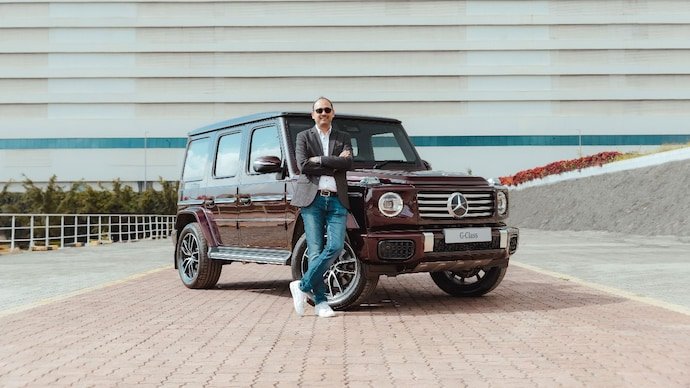
Luxury carmaker Mercedes-Benz India has hailed the recently concluded India–European Union Free trade Agreement (FTA) as a forward-looking move that could significantly reshape India’s high-end automotive market. The company believes the agreement will unlock new growth avenues, expand customer choice, and enable faster access to globally popular luxury models.
Responding to the proposed tariff rationalisation under the FTA, Santosh Iyer, Managing Director and CEO of Mercedes-Benz India, said the deal is expected to have a “positive cascading effect on customer sentiment in the luxury segment,” especially when combined with broader economic growth and stronger cross-border trade flows.
“The gradual reduction in tariffs on vehicles and the full liberalisation of automotive components are strategically important elements of this agreement,” Iyer said. “These measures will not only support the industry but also create tangible benefits for customers in the luxury space.”
Lower Tariffs, Wider Global Choice
According to Iyer, the India–EU FTA opens up multiple opportunities for luxury car buyers by improving vehicle allocations and increasing the availability of top-end global models for Indian consumers. Faster access to cutting-edge automotive technologies is another key advantage, which could narrow the gap between global launches and their India debut.
Under the agreement, India will progressively reduce import duties on European-built cars to as low as 10% within specified quotas—a dramatic cut from current effective import duties that can reach up to 110%. The FTA permits the import of up to 2,50,000 European vehicles annually at concessional tariffs.
This quota will be divided between internal combustion engine (ICE) vehicles and electric vehicles (EVs). While ICE models will benefit from early-stage tariff reductions, EVs will see duty cuts starting from the fifth year of the agreement, offering a calibrated transition for India’s evolving electric mobility ecosystem.
Boost to India’s Luxury Car Ecosystem
Iyer noted that these policy changes could help build a “stronger and more mature luxury car ecosystem” in India. Improved access to global portfolios and easing supply constraints are expected to benefit both manufacturers and consumers, making the premium segment more dynamic over the coming years.
At the same time, Mercedes-Benz reaffirmed its long-term commitment to local manufacturing in India. “Mercedes-Benz will continue to add value for customers through the local production of world-class models at our manufacturing plant,” Iyer said, making it clear that imports enabled by the FTA will complement—not replace—the company’s India-centric production strategy.
Long-Term Impact on India’s Premium Auto Market
Luxury automakers broadly view the India–EU free trade agreement as a positive structural reform that could reshape India’s premium automotive landscape over the next decade. Greater model variety, quicker adoption of new technologies, and improved availability of high-end vehicles are expected to drive sustained growth in the segment.
For luxury car buyers, the FTA promises a more compelling value proposition—bringing global innovation closer to Indian roads while strengthening the overall competitiveness of the market.
For breaking news and live news updates, like us on Facebook or follow us on Twitter and Instagram. Read more on Latest India on thefoxdaily.com.






COMMENTS 0