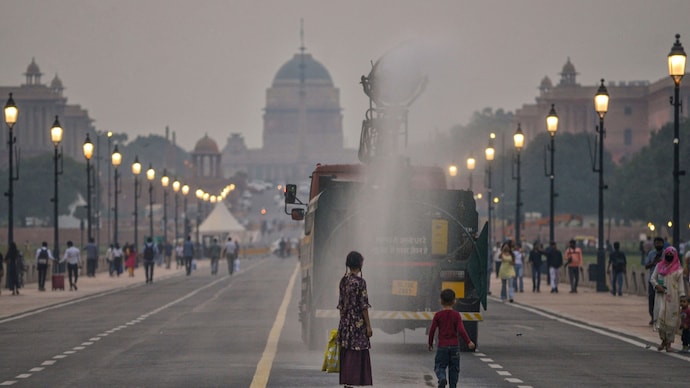
The Central Government told Parliament that India follows its own scientifically developed air quality standards, asserting that global rankings published by external agencies hold no legal validity. While acknowledging that air pollution remains a serious national challenge, the government emphasized that India is not obligated to comply with the World Health Organization’s air quality norms, which function as advisory guidelines rather than binding rules.
Responding to a question in the Rajya Sabha on Thursday, the Centre clarified India’s position on its representation in well-known international assessments, including the Global Burden of Disease (GBD) report, the Environmental Performance Index (EPI), the WHO Global Air Quality Database, and IQAir’s World Air Quality Ranking.
Minister of State for Environment Kirti Vardhan Singh reiterated that WHO guidelines merely serve as reference points to help countries customize their own standards: “WHO guidelines are advisory in nature. They assist nations in developing air quality benchmarks tailored to local conditions, topography, and environmental factors.”
He further stated, “India has already notified its National Ambient Air Quality Standards (NAAQS) for 12 major pollutants to protect public health and strengthen environmental governance.” These benchmarks guide nationwide monitoring and regulatory actions to manage air pollution effectively.
The Minister highlighted that India evaluates its air quality using domestic frameworks such as the annual Swachh Vayu Survekshan, which assesses 130 cities under the National Clean Air Programme (NCAP). He noted that, contrary to public perception, there is no global body issuing official air quality rankings, and most international lists rely on selective datasets and independent monitoring networks.
The Centre’s clarification comes months after Swiss air quality monitoring firm IQAir reported that India fell short of the WHO’s stringent 2024 global air quality standards. According to IQAir’s March analysis, India ranked fifth among the world’s most polluted nations, with thirteen of the twenty most polluted cities located within the country.
Delhi was listed as the most polluted capital globally, while Byrnihat in Assam topped the overall chart for worst air quality. These findings reignited debate over the severity of India’s pollution crisis and the urgency of adopting stronger, localized mitigation strategies.
In recent months, Delhi’s Air Quality Index (AQI) has repeatedly plunged to severe and hazardous levels, making it increasingly difficult for residents to breathe clean air. The persistent decline in air quality has raised alarm among public health experts, environmental researchers, and policymakers.
With the air quality situation deteriorating, the Centre’s reaffirmation of India’s independent standards underscores the need for region-specific solutions rather than a one-size-fits-all global approach. However, critics argue that stronger implementation and long-term pollution control measures are essential to protect public health.
For breaking news and live news updates, like us on Facebook or follow us on Twitter and Instagram. Read more on Latest India on thefoxdaily.com.


COMMENTS 0