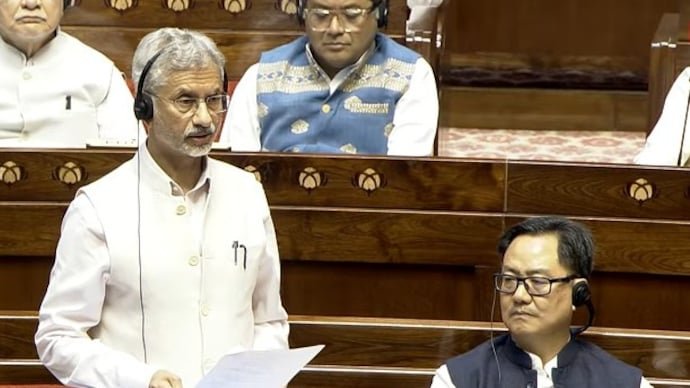
India‘s External Affairs Minister S. Jaishankar on Monday said the government’s “overriding priority” amid the escalating conflict in West Asia is safeguarding the interests of Indian consumers and ensuring the stability of the country’s energy supply.
Speaking in the Rajya Sabha, Jaishankar warned that the ongoing tensions in the region could potentially lead to serious disruptions in global supply chains, shipping routes, and energy markets.
He noted that the situation in West Asia has worsened in recent weeks and that the government is closely monitoring developments to assess their potential impact on India’s economy and supply chains.
“Our government had issued a statement on February 20 expressing deep concern and urging all sides to exercise restraint,” Jaishankar told the House.
“We continue to believe that communication and diplomacy must be pursued to de-escalate the tensions,” he added.
Stability in West Asia Crucial for Global Energy Markets
Jaishankar emphasized that peace and stability in West Asia are essential not only for India but also for Global energy markets.
India imports a significant portion of its crude oil from the Middle East, making the region strategically important for the country’s economic stability.
“West Asia must remain stable and peaceful,” the minister said, adding that New Delhi is maintaining regular communication with international partners while closely tracking developments in the region.
He also assured lawmakers that the government is taking all necessary steps to ensure the country’s energy security and protect Indian consumers from potential supply disruptions or price shocks.
Thousands of Indians Evacuated from Conflict Zone
Highlighting the government’s efforts to protect Indian citizens abroad, Jaishankar said that more than 67,000 Indian nationals have returned home from the region amid rising tensions.
The minister said the government remains focused on the safety and welfare of the large Indian community living and working across West Asia.
Iranian Warship Allowed to Dock in Kochi
Jaishankar also addressed India’s decision to allow the Iranian destroyer IRIS Lavan to dock at Kochi port earlier this month.
Iran had requested permission for three of its naval ships operating in the region to visit Indian ports. Following approval on March 1, IRIS Lavan docked in Kochi on March 4.
Jaishankar explained that the decision was made on humanitarian grounds after the ship reported a technical issue while sailing in the region.
The vessel carried 183 crew members, most of whom were young naval cadets.
Speaking earlier at the Raisina Dialogue, Jaishankar said the decision to allow the ship to dock was guided more by “humanity” than by geopolitical considerations.
Rescue Efforts After Iranian Ship Sinking
The development came days after another Iranian naval ship, IRIS Dena, was reportedly sunk by a US submarine in the Indian Ocean on March 4. More than 80 personnel were feared dead in the incident.
Following a distress signal from the vessel, India deployed maritime resources including a naval patrol aircraft and ships to assist in search and rescue operations.
Around 32 survivors were later rescued by the Sri Lankan Navy.
Jaishankar described the incident as “unfortunate” and reiterated India’s call for restraint and diplomatic engagement to prevent further escalation in the region.
Opposition Demands Parliamentary Debate
Meanwhile, opposition parties criticized the government for not allowing a full debate on the West Asia situation in Parliament.
congress leader Jairam Ramesh said the minister’s statement in the Rajya Sabha was delivered as a suo motu declaration, meaning no questions or clarifications could be sought by members.
According to Ramesh, opposition parties had demanded an immediate discussion on the situation in West Asia, but the request was denied, leading to protests and a walkout from the House.
Despite the political disagreements, the government has reiterated that its focus remains on protecting Indian citizens, maintaining stable energy supplies, and supporting diplomatic efforts to reduce tensions in the region.
For breaking news and live news updates, like us on Facebook or follow us on Twitter and Instagram. Read more on Latest India on thefoxdaily.com.






COMMENTS 0