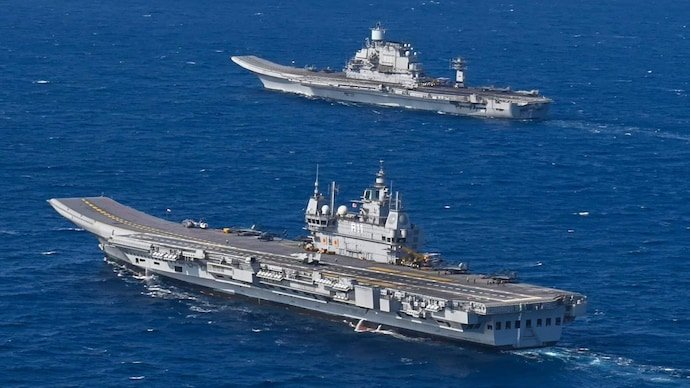
In response to escalating tensions in the Strait of Hormuz — one of the world’s most vital oil transit routes — the Indian Navy has significantly stepped up maritime security operations. With Iran restricting movement through the strait, India has deployed naval task groups to escort oil tankers and merchant ships carrying crude oil and liquefied petroleum gas (LPG) to its ports.
The move comes at a critical time when Global energy supply chains are under pressure, and several India-linked vessels remain stranded in the conflict-hit region.
Indian Navy Steps Up Escort Operations
According to senior government sources, the Indian Navy has deployed at least two task forces comprising multiple warships in the North Arabian Sea and near the Strait of Hormuz. These naval units are actively escorting merchant vessels through high-risk zones to ensure their safe arrival at Indian ports.
Escort missions began last week as tensions intensified, with naval forces accompanying ships across vulnerable stretches of sea where threats from military escalation remain high.
The scale of the current deployment is being compared to Operation Sankalp, under which the Indian Navy previously ensured the safety of commercial shipping during heightened regional tensions and piracy threats.
Impact on Indian Shipping and Trade
The ongoing crisis has significantly affected Indian maritime activity. Officials report that at least 22 Indian vessels remain stranded in the Strait of Hormuz, including six ships carrying LPG. In total, approximately 611 India-linked ships have been impacted by the disruptions.
| Category | Number of Vessels | Status |
|---|---|---|
| Total Affected Ships | 611 | Impacted by regional tensions |
| Stranded Vessels | 22 | Awaiting safe passage |
| LPG Carriers | 6 | Critical energy cargo |
| Escorted Ships | Ongoing | Under naval protection |
The disruption highlights the vulnerability of India’s energy imports, as a large portion of crude oil and gas shipments pass through this strategic chokepoint.
Diplomatic Efforts Alongside Naval Deployment
Alongside military measures, India is pursuing diplomatic channels to ease the situation. External Affairs Minister S. Jaishankar has been in discussions with Iranian authorities to secure the release and safe passage of affected vessels.
India has emphasized dialogue and coordination as the preferred approach to resolving the crisis, aiming to avoid further escalation while protecting its economic interests.
Reports suggest that Iran has proposed a potential arrangement involving the release of three tankers — Al Jafzia, Stellar Ruby, and Asphalt Star — which were detained earlier over alleged illicit ship-to-ship transfers.
Ensuring Energy Security Remains Top Priority
The Indian Navy’s escort missions have already delivered some positive outcomes. One LPG carrier, Shivalik, successfully reached Mundra Port in Gujarat under naval protection, offering relief amid the ongoing crisis.
Officials stress that maintaining uninterrupted energy supply remains the government’s top priority. With India heavily dependent on imported oil and gas, any prolonged disruption in the Strait of Hormuz could have serious economic consequences.
Strengthening India’s Maritime Presence
The current deployment builds on India’s long-standing maritime security operations in the region. Since 2019, the Indian Navy has maintained a continuous presence in the Gulf of Oman and Gulf of Aden, focusing on anti-piracy missions and the protection of commercial shipping.
Since 2008, piracy has posed a significant challenge in the Indian Ocean region, prompting coordinated efforts by international naval forces, including India.
In recent years, the Indian Navy has conducted nearly 1,000 boarding operations, seized over 3,000 kilograms of narcotics, and ensured the safety of hundreds of commercial vessels navigating high-risk waters.
Additionally, naval missions have rescued more than 110 individuals, including 45 Indian seafarers, and facilitated the safe transport of over 1.5 million tonnes of essential goods such as crude oil and fertilizers.
High Alert Amid Ongoing Gulf Tensions
With the situation in the Gulf showing no immediate signs of de-escalation, the Indian Navy remains on high operational alert. Continuous surveillance, escort operations, and coordination with international partners are being maintained to safeguard India’s maritime interests.
As global energy markets remain volatile, India’s proactive naval deployment underscores its commitment to securing vital oil lifelines and ensuring stability in the face of geopolitical uncertainty.
For breaking news and live news updates, like us on Facebook or follow us on Twitter and Instagram. Read more on Latest India on thefoxdaily.com.






COMMENTS 0