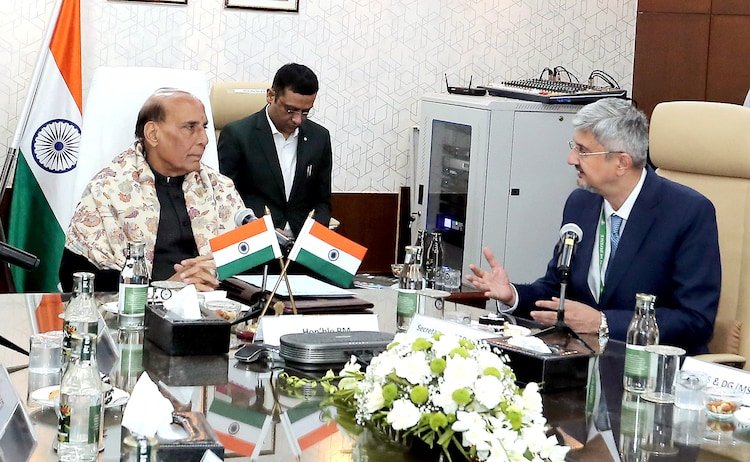
India’s ambitious, homegrown air defence initiative — the Sudarshan Chakra — is set to become operational in the near future, Defence Minister Rajnath Singh announced on Thursday. Expressing strong confidence in the Defence Research and Development Organisation (DRDO), Singh said the project’s progress has been reinforced by the proven success of indigenous defence systems during Operation Sindoor.
Addressing scientists and officials at the 68th Foundation Day of DRDO in New Delhi, the Defence Minister underlined that DRDO-developed weapon systems played a decisive role in the execution of Operation Sindoor. According to Singh, these systems performed with precision and reliability, reinforcing India’s operational preparedness and boosting the morale of Indian armed forces personnel.
Describing Operation Sindoor as a landmark moment, Singh said it stood as a testament to DRDO’s technological excellence and its unwavering commitment to safeguarding India’s national security interests. “The flawless performance of indigenous systems during the operation clearly demonstrated the growing strength of India’s defence research ecosystem,” he noted.
Looking ahead, Singh highlighted that the Sudarshan Chakra air defence project, announced by Prime Minister Narendra Modi during his Independence Day address in 2025, will be spearheaded by DRDO. The long-term initiative aims to provide comprehensive air defence coverage to India’s critical infrastructure and strategic installations over the next decade.
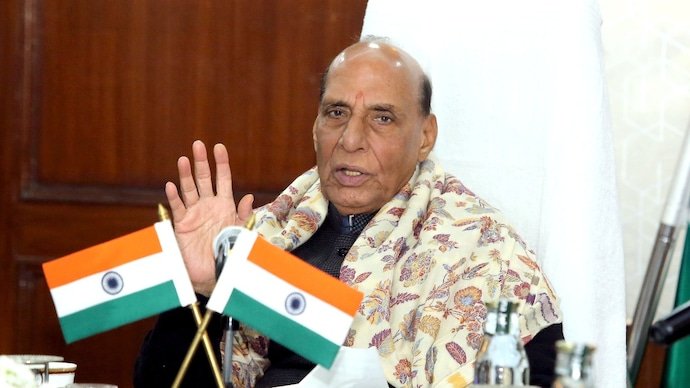
Emphasising the changing nature of modern warfare, Singh said Operation Sindoor had once again underlined the critical importance of a robust air defence system. “Air defence has become a decisive factor in contemporary combat scenarios. I am confident that DRDO will achieve the Sudarshan Chakra objective with full commitment and dedication,” the Defence Minister said.
Rajnath Singh also described DRDO as a “trust builder” for the nation, pointing out that its role now extends well beyond technology development. He highlighted visible reforms in defence procurement processes, project execution, and industry participation, noting that these changes have significantly strengthened India’s defence manufacturing and innovation framework.
The Defence Minister praised DRDO’s growing collaboration with the private sector, start-ups, micro, small and medium enterprises (MSMEs), and academic institutions. According to him, such partnerships are crucial for building a more agile, integrated, and future-ready defence innovation ecosystem capable of responding to evolving security challenges.
Calling for sustained innovation, Singh urged DRDO scientists to stay ahead of rapidly evolving military technologies and operational domains. He stressed the importance of deep-tech research, next-generation defence systems, and continuous technology scanning, saying that future readiness and constant learning are no longer optional but practical necessities.
During the event, DRDO Chairman Dr. Samir V. Kamat briefed the Defence Minister on the organisation’s roadmap and reform priorities for 2026. He also provided updates on ongoing projects, industry outreach initiatives, and key research and development milestones achieved by DRDO in 2025.
The event was attended by Minister of State for Defence Sanjay Seth, senior DRDO leadership, and leading scientists from across the organisation, highlighting the collective effort behind India’s push for self-reliance in defence technology.
For breaking news and live news updates, like us on Facebook or follow us on Twitter and Instagram. Read more on Latest India on thefoxdaily.com.






COMMENTS 0