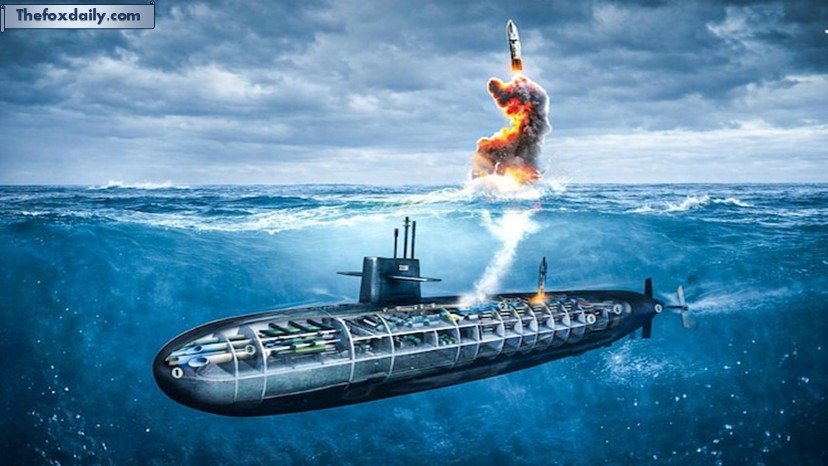
- A Silent but Strategic Leap in India’s Nuclear Posture
- Why INS Aridhaman Matters for India’s Nuclear Doctrine
- What Makes an SSBN Strategically Unique
- Continuous At-Sea Deterrence: The Strategic Goal
- INS Aridhaman and India’s Expanding SSBN Fleet
- Why Submarines Are the Most Survivable Nuclear Platforms
- India’s Long and Secretive SSBN Development Journey
- The Importance of Fleet Size and Operational Readiness
- Future Developments: S5-Class Submarines and Strategic Expansion
- Strategic Implications for Regional Security
- Conclusion: A Quiet but Powerful Shift in Nuclear Deterrence
The commissioning of INS Aridhaman marks a significant milestone in India’s long-term nuclear deterrence strategy. As an indigenously built nuclear-powered ballistic missile submarine (SSBN), it strengthens India’s sea-based nuclear capability and moves the country closer to maintaining a continuous at-sea deterrence posture. For a nation committed to a no-first-use nuclear doctrine, platforms like INS Aridhaman are not just strategic assets they are the backbone of credible retaliation capability.
A Silent but Strategic Leap in India’s Nuclear Posture
India’s defence establishment has quietly added a powerful new asset to its nuclear arsenal with INS Aridhaman, the third SSBN in its growing underwater fleet. While public announcements have remained limited, the strategic significance is considerable. The submarine enhances India’s ability to ensure a survivable second-strike capability, a core principle of nuclear deterrence.
The development comes at a time of heightened global instability and evolving security challenges. As geopolitical tensions rise across multiple regions, India continues to refine its nuclear triad land, air, and sea-based delivery systems to ensure credible deterrence under all conditions.
Why INS Aridhaman Matters for India’s Nuclear Doctrine
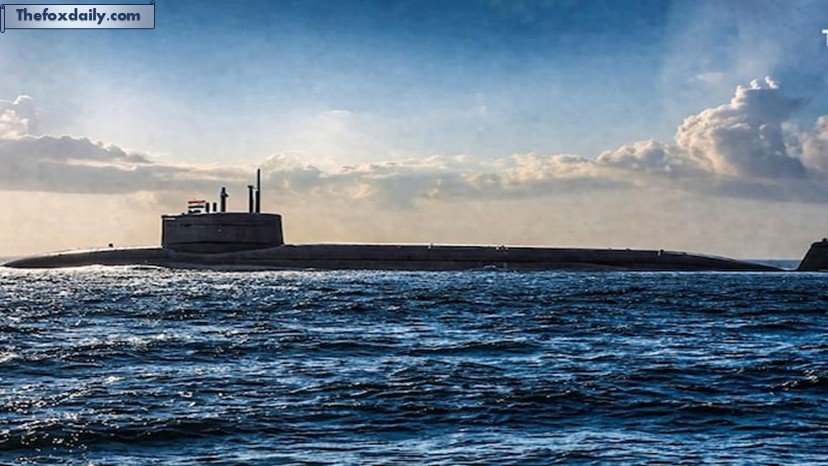
India’s nuclear doctrine is built on the principle of no-first-use, meaning the country would only respond with nuclear weapons if attacked first. This places immense importance on survivability. In such a framework, the ability to absorb a first strike and still retaliate is essential.
INS Aridhaman enhances this capability by ensuring that India maintains a stealthy, mobile, and highly survivable nuclear platform at sea. Unlike land-based systems or aircraft, Submarines offer near-continuous concealment, making them one of the most secure components of any nuclear arsenal.
“A weapon that cannot be found cannot be destroyed, and a weapon that survives ensures credible deterrence,” is a widely accepted principle in submarine-based nuclear strategy.
What Makes an SSBN Strategically Unique
INS Aridhaman belongs to a class of submarines known as SSBNs Ship Submersible Ballistic Nuclear vessels. These platforms are powered by onboard nuclear reactors and are capable of carrying nuclear-tipped ballistic missiles.
Unlike conventional submarines that rely on diesel-electric propulsion and must surface periodically for air and fuel, SSBNs can remain submerged for extended periods. Their endurance is primarily limited by crew sustainability rather than fuel constraints.
This allows them to remain hidden in deep ocean environments, significantly reducing the likelihood of detection during a crisis.
Continuous At-Sea Deterrence: The Strategic Goal
The ultimate objective of India’s SSBN fleet is to achieve Continuous At-Sea Deterrence (CASD). This concept ensures that at least one nuclear-armed submarine is always on patrol, ready to respond in case of a strategic emergency.
CASD is already maintained by major nuclear powers such as the United States, United Kingdom, and France. Achieving this capability requires multiple submarines operating in a carefully managed rotation of deployment, maintenance, and readiness cycles.
INS Aridhaman and India’s Expanding SSBN Fleet
INS Aridhaman is part of India’s indigenous Advanced Technology Vessel (ATV) program, a long-running and highly classified initiative to develop nuclear-powered submarines. The program reflects decades of technological development aimed at strengthening India’s strategic deterrence capability.
| Submarine | Designation | Status | Significance |
|---|---|---|---|
| INS Arihant | S2 | Commissioned | First indigenous SSBN |
| INS Arighaat | S3 | Commissioned | Enhanced capability follow-on platform |
| INS Aridhaman | S4 | Newest addition | Increased payload and endurance |
| S4* | Experimental variant | Under development | Bridge toward next-generation SSBNs |
INS Aridhaman is believed to be larger than its predecessors and capable of carrying more ballistic missiles, increasing both its strike capacity and operational flexibility.
Why Submarines Are the Most Survivable Nuclear Platforms
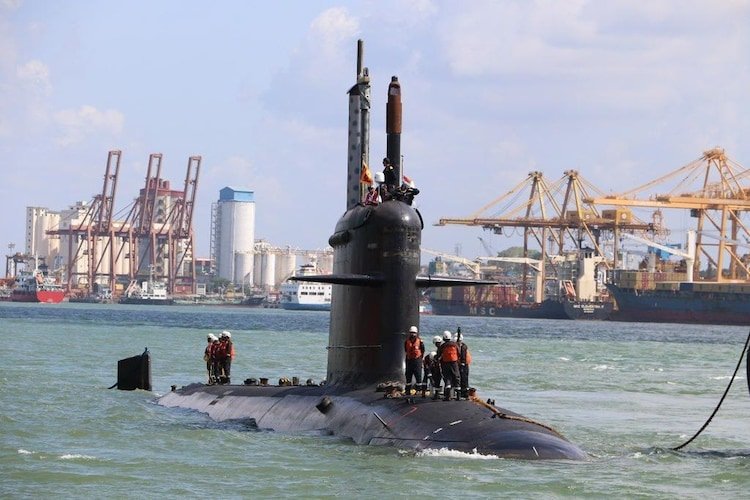
Among all nuclear delivery systems, submarines offer the highest level of survivability. Aircraft can be intercepted, land-based missiles can be targeted, and fixed silos are vulnerable to detection. Submarines, however, combine mobility with stealth, making them extremely difficult to locate.
Operating silently in deep waters, SSBNs provide what is often described as a “hidden deterrent” a force that cannot be easily tracked or neutralized.
This makes them central to India’s second-strike capability and a cornerstone of strategic stability.
India’s Long and Secretive SSBN Development Journey
India’s pursuit of nuclear-powered submarines dates back several decades, evolving gradually under high secrecy. The Advanced Technology Vessel program was designed to develop indigenous expertise in nuclear propulsion and underwater missile delivery systems.
The first major breakthrough came with INS Arihant, followed by INS Arighaat, and now INS Aridhaman. Each successive platform has introduced improvements in size, capability, and missile-carrying capacity.
This incremental development reflects both technological challenges and the sensitive nature of nuclear submarine engineering.
The Importance of Fleet Size and Operational Readiness
Maintaining continuous deterrence is not simply about building submarines it requires maintaining a fleet large enough to rotate operations effectively. While one submarine is deployed, others undergo maintenance, refit, or crew training.
Analysts suggest that at least four SSBNs are typically required for reliable continuous deterrence. With only a limited number of platforms currently operational, India continues to expand its underwater fleet to ensure strategic stability.
Even minor technical issues or maintenance delays can impact operational readiness, making fleet size a critical factor in nuclear deterrence planning.
Future Developments: S5-Class Submarines and Strategic Expansion
India is already planning the next generation of SSBNs under the S5 program. These submarines are expected to be larger, more advanced, and capable of carrying a greater number of long-range ballistic missiles.
Alongside platform development, India is also working on improving missile range and underwater command Infrastructure. A key component of this expansion is the development of secure submarine bases designed to protect SSBNs during maintenance and deployment cycles.
These facilities are essential, as submarines are most vulnerable when docked rather than at sea.
Strategic Implications for Regional Security
The strengthening of India’s SSBN capability has broader implications for regional security dynamics. A credible sea-based deterrent enhances strategic stability by ensuring that no adversary can expect a disarming first strike.
This reduces the incentive for escalation and reinforces the principle of mutual deterrence in a nuclear Environment.
However, it also reflects the ongoing modernization of nuclear forces in the region, where multiple countries continue to refine their strategic capabilities.
Conclusion: A Quiet but Powerful Shift in Nuclear Deterrence
INS Aridhaman represents a significant yet quietly executed advancement in India’s nuclear deterrence posture. As part of a growing fleet of indigenous SSBNs, it strengthens the country’s ability to maintain a survivable second-strike capability under its no-first-use doctrine.
While not widely publicized, its strategic impact is substantial. Combined with future S5-class submarines and supporting infrastructure, INS Aridhaman contributes to a long-term vision of continuous at-sea deterrence.
In modern nuclear strategy, visibility is vulnerability and silence is strength. INS Aridhaman embodies that principle beneath the ocean’s surface, where deterrence is maintained not by presence alone, but by the certainty of retaliation.
For breaking news and live news updates, like us on Facebook or follow us on Twitter and Instagram. Read more on Latest India on thefoxdaily.com.






COMMENTS 0