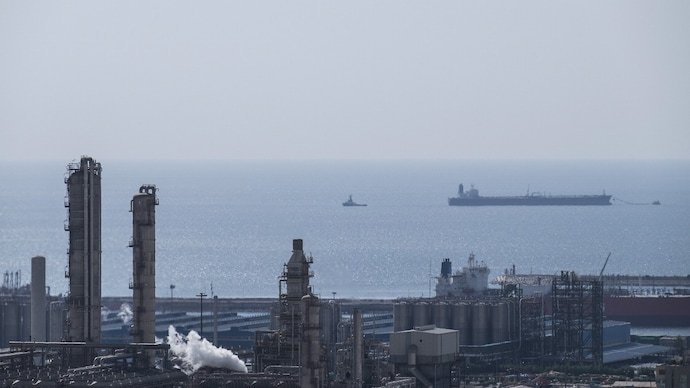
The ongoing Iran war has entered a new and decisive phase—an energy war. What began as a conflict centered on nuclear ambitions and military capabilities has rapidly evolved into a battle targeting critical energy infrastructure, shipping routes, and global supply chains.
Initially, attention was focused on Iran’s nuclear program, followed by its use of drones and ballistic missiles. Soon, analysts began framing the conflict as a war of endurance—whether Iran’s offensive capabilities would outlast the defensive systems of the United States, Israel, and their allies.
However, beneath these developments, a parallel strategy was unfolding. Both sides increasingly began targeting energy assets, transforming the conflict into one that directly impacts global oil and gas markets.
This shift became particularly evident when US President Donald Trump reportedly ordered a temporary pause on strikes targeting Iran’s energy infrastructure on March 23, indicating growing concern over the broader economic consequences.
Massive Damage Across the Region
The scale of the damage has been significant. According to International Energy Agency Executive Director Dr. Fatih Birol, at least 40 energy assets across nine countries in the Middle East have been severely impacted since the war began on February 28.
Data compiled through open-source intelligence (OSINT), including government releases, media reports, and maritime tracking systems, indicates widespread disruption across the entire energy value chain—from production fields to export terminals and shipping routes.
| Energy War Element | Impact Observed |
|---|---|
| Countries Affected | At least 9 across West Asia |
| Energy Assets Damaged | 40+ major sites |
| Key Targets | Oil fields, LNG hubs, export terminals |
| Shipping Disruptions | 25+ maritime incidents reported |
| Critical Chokepoint | Strait of Hormuz under sustained threat |
Energy Infrastructure Under Fire
Strikes on energy facilities have been reported across multiple countries, reflecting a deliberate strategy to disrupt supply chains. In Iran, key sites such as the South Pars gas field have suffered significant damage.
The conflict has not been limited to Iranian territory. Tehran has expanded its targeting strategy across the Gulf, striking energy infrastructure in countries such as Qatar, Saudi Arabia, and the United Arab Emirates.
One of the most significant incidents involved Qatar’s Ras Laffan, the world’s largest liquefied natural gas (LNG) hub. Authorities described the attack as a “direct threat,” forcing operational disruptions and raising concerns over global LNG supplies.
Meanwhile, Iran’s own export infrastructure, including Kharg Island, has remained under constant threat, highlighting the mutual vulnerability of energy assets on both sides.
Targeting Alternative Oil Routes
Beyond direct attacks on shipping lanes, Iran appears to be expanding its strategy by targeting infrastructure designed to bypass the Strait of Hormuz.
A key example is the Habshan–Fujairah pipeline (ADCOP) in the United Arab Emirates. This 380-kilometre pipeline, commissioned in 2012 at a cost of approximately $3.3 billion, was built to transport crude oil directly to the Gulf of Oman, avoiding the Hormuz chokepoint.
However, recent satellite imagery reports suggest that this alternative route is no longer immune. Strikes have reportedly hit pumping stations at Habshan and Sweihan, indicating a shift toward disrupting even inland energy infrastructure.
This development underscores a broader strategy: ensuring that no route—sea or land—remains completely secure for energy exports.
Strait of Hormuz: A High-Risk Zone
The Strait of Hormuz, one of the world’s most vital oil transit routes, has become increasingly dangerous since the conflict began.
According to the United Kingdom Maritime Trade Operations (UKMTO), at least 25 maritime security incidents have been recorded in the Arabian Gulf, Strait of Hormuz, and Gulf of Oman.
These incidents go beyond isolated disruptions. Several oil tankers and energy-linked vessels have been deliberately targeted during critical phases of transit.
Ships such as Hercules Star and MKD VYOM reportedly sustained damage after being struck by projectiles, resulting in onboard fires. Even more concerning were attacks during ship-to-ship transfer operations—moments when vessels are particularly vulnerable.
Tankers like Zefyros and SAVFESA Vishnu were reportedly hit during such operations, further highlighting the calculated nature of these disruptions.
A Strategy to Shift the Cost of War
The emerging energy war appears to be designed not just to weaken military capabilities, but to impose economic costs on a global scale.
By targeting energy infrastructure and supply routes, the conflict is effectively transferring its impact beyond the battlefield—affecting oil prices, shipping costs, and Energy Security for countries far removed from the region.
This strategy places pressure not only on the United States and its allies but also on neutral nations that depend heavily on stable energy supplies.
Global Implications Intensify
As the war continues, the energy dimension is becoming the defining feature of the conflict. The widespread targeting of infrastructure and shipping routes suggests that both sides are willing to escalate economic disruption to achieve strategic goals.
With critical energy hubs under threat and key maritime routes increasingly unsafe, the consequences of this energy war are being felt worldwide.
The coming weeks will be crucial in determining whether this phase leads to broader escalation or forces a shift toward de-escalation and diplomatic solutions.
For breaking news and live news updates, like us on Facebook or follow us on Twitter and Instagram. Read more on Latest India on thefoxdaily.com.






COMMENTS 0