- What Happened in Malda?
- Who Is Mofakkerul Islam?
- Why Were Judicial Officers Targeted?
- NIA Steps In, Investigation Intensifies
- Supreme Court Slams State Authorities
- Key Directives Issued by the Supreme Court
- Analysis: Law, Politics, and Electoral Tensions
- Insight: When Administrative Processes Become Flashpoints
- Conclusion: A Test for Institutions
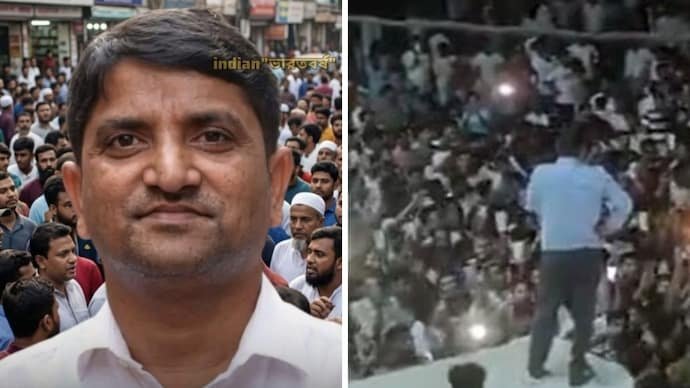
The West Bengal Police have arrested 18 individuals, including AIMIM leader Mofakkerul Islam, in connection with the Malda protest that led to the hostage-like detention of seven judicial officers for more than nine hours. Islam, described by authorities as the “mastermind” behind the incident, was apprehended at Bagdogra Airport while allegedly attempting to leave the state.
The dramatic episode unfolded on Wednesday at the Kaliachak II Block Development Office (BDO), where a large group of protesters surrounded the premises during an ongoing Special Intensive Revision (SIR) exercise linked to the state’s electoral rolls. The situation escalated into a prolonged standoff, raising serious concerns about Law and Order and the safety of officials performing judicial duties.
What Happened in Malda?
According to officials, the protest began as a demand for a meeting with officers overseeing the voter list revision process. When the request was denied, tensions quickly escalated. By around 4 pm, protesters had gheraoed the BDO office, effectively trapping seven judicial officers inside.
The officers, including three women, remained confined for over nine hours. Among those inside was also a five-year-old child accompanying one of the officers, adding to the gravity of the situation.
The standoff ended close to midnight when police teams intervened and evacuated the officers. However, the rescue operation was not without resistance, as protesters reportedly hurled stones at police vehicles, damaging property and creating chaotic scenes.
Who Is Mofakkerul Islam?
Mofakkerul Islam, an advocate by profession and a former AIMIM candidate from Itahar in the 2021 West Bengal assembly elections, has been identified by police as a key figure in organizing and leading the protest.
A video circulating on Social Media shows Islam confronting senior administrative officials during the protest, challenging their authority in an aggressive tone.
“Oye DM, oye SP… where is the CID? Where is the IB? Come here,” he is heard saying in the video.
AIMIM has confirmed that Islam remains associated with the party, though it has not publicly commented on the allegations against him.
Why Were Judicial Officers Targeted?
The incident is closely linked to the Special Intensive Revision (SIR) exercise being conducted by the Election Commission in West Bengal. The process aims to update electoral rolls ahead of upcoming assembly elections.
The revision has proven controversial, with significant numbers of voter records affected:
| Category | Number of Voters |
|---|---|
| Deleted from rolls | Over 63 lakh |
| Under adjudication | Around 60 lakh |
Judicial officers were assigned to review disputed cases—deciding whether individuals should remain on or be removed from the voter list—following directions from the Supreme Court.
This process has triggered political tensions and public protests, particularly in regions where large numbers of voters are affected.
NIA Steps In, Investigation Intensifies
Given the seriousness of the incident, the National Investigation Agency (NIA) has taken over the probe. Senior IPS officer Sonia Singh has arrived in Kolkata to oversee the investigation, signaling the Centre’s involvement in the matter.
Police officials confirmed that raids are ongoing and more arrests could follow as authorities attempt to identify all those involved in the protest and subsequent violence.
The Inspector General of North Bengal is personally supervising the investigation, underscoring the high priority assigned to the case.
Supreme Court Slams State Authorities
The incident drew sharp criticism from the Supreme Court, which termed the situation a “criminal failure” of governance. A bench comprising Chief Justice Surya Kant, Justice Joymalya Bagchi, and Justice Vipul Pancholi expressed serious concern over the safety of judicial officers.
“This incident is a brazen attempt not only to browbeat judicial officers but also challenges the authority of this court,” the Chief Justice remarked.
The bench also described West Bengal as “the most polarised state,” suggesting that political tensions were interfering with administrative and judicial processes.
Notably, the court observed that the officers were released only after intervention from the Chief Justice of the Calcutta High Court.
Key Directives Issued by the Supreme Court
In response to the incident, the Supreme Court issued several important directives:
- Ordered the Election Commission to deploy central forces for the protection of judicial officers
- Directed that security be extended to officers’ residences as well
- Mandated that the investigation be handed over to central agencies such as the NIA or CBI
- Summoned senior state officials, including the Chief Secretary and DGP, to appear on April 6
The court also instructed authorities to restrict access to the BDO premises, allowing only a limited number of individuals at a time to ensure the safety of officials conducting adjudication work.
Analysis: Law, Politics, and Electoral Tensions
The Malda incident highlights the intersection of law enforcement, electoral processes, and political tensions in a highly charged environment. The scale of voter list revisions has created widespread anxiety, making the SIR exercise a flashpoint in the state.
From a governance perspective, the episode raises serious questions about the ability of local authorities to maintain order and protect officials performing critical duties.
At the same time, the involvement of central agencies and the Supreme Court’s intervention indicate the gravity of the situation and the need for accountability.
In simple terms, this is not just about one protest—it’s about the integrity of the electoral process itself.
Insight: When Administrative Processes Become Flashpoints
Electoral roll revisions are typically technical exercises, but in politically sensitive environments, they can quickly become contentious. Large-scale deletions or reviews often lead to perceptions of bias, even when carried out under judicial supervision.
The Malda incident shows how quickly such tensions can escalate into law-and-order crises, especially when trust in institutions is low.
It also underscores the importance of communication and transparency in managing large administrative exercises.
Conclusion: A Test for Institutions
The arrest of Mofakkerul Islam and others marks a significant step in addressing the Malda hostage row, but the broader implications of the incident remain. With the NIA now leading the investigation and the Supreme Court closely monitoring developments, the focus has shifted to accountability and systemic reform.
As West Bengal prepares for upcoming elections, ensuring the safety of officials and the credibility of the electoral process will be critical. The events in Malda serve as a stark reminder that administrative breakdowns can have far-reaching consequences.
Ultimately, the case is not just about a protest gone wrong—it is about safeguarding the institutions that underpin democracy.
For breaking news and live news updates, like us on Facebook or follow us on Twitter and Instagram. Read more on Latest India on thefoxdaily.com.






COMMENTS 0