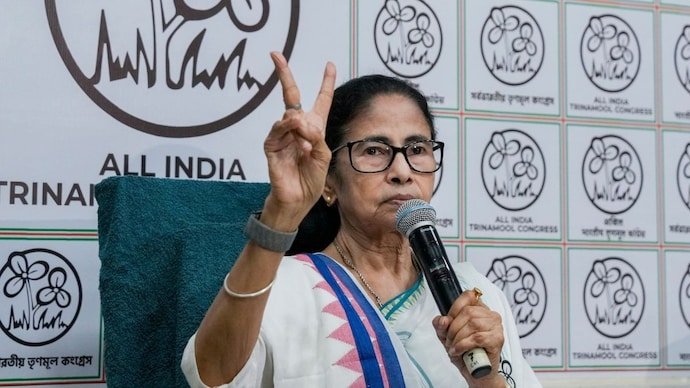
As West Bengal gears up for crucial assembly elections, Chief Minister Mamata Banerjee has once again launched a sharp attack on the Election Commission of India (ECI), questioning its neutrality and alleging that democratic processes are being compromised.
During her recent political tour across North Bengal—including Chalsa, Maynaguri, Dabgram-Fulbari, Matigara, and Siliguri—Banerjee used the platform not just for campaigning but to escalate her criticism of the poll body. What began as a routine pre-election outreach quickly turned into one of her strongest critiques of the ECI to date.
“ECI Is Not Unbiased,” Says Mamata Banerjee
Addressing reporters during her tour, Banerjee did not mince words. “I’m here to prove one thing—that this ECI is not unbiased,” she said, setting the tone for her broader argument.
Her allegations ranged from administrative interference to systemic bias. She pointed to large-scale bureaucratic reshuffles, including the sudden transfer of IAS and IPS officers, replacement of returning officers overnight, and redeployment of key officials across constituencies.
According to Banerjee, these actions go beyond routine election management and suggest a deeper political alignment. “Now the cat is out of the bag,” she remarked, implying a nexus between the ruling party at the Centre and the Election Commission.
Allegations of ECI-BJP Nexus
One of Banerjee’s most serious accusations was the alleged connection between the ECI and the Bharatiya Janata Party (BJP). She even referred to a poll-related notification that reportedly carried the BJP’s symbol, using it as an example to question the Commission’s independence.
“Under whose direction is the ECI functioning?” she asked, adding, “The ECI-BJP nexus is evident to everyone.”
These remarks have intensified political tensions, turning the focus from traditional electoral competition to institutional credibility.
Voter List Controversy Takes Center Stage
A key issue raised by Banerjee is the handling of electoral rolls, particularly the supplementary voter list. She alleged a lack of transparency and raised concerns over delays in publishing the complete list.
“Why is the ECI afraid to publish the full list clearly?” she questioned, suggesting that the delay of six to seven days in releasing updated rolls could indicate possible manipulation.
Banerjee also linked the issue to the ongoing Special Intensive Revision (SIR) process, describing it as “torturous” and warning that it could lead to voter disenfranchisement.
Major Concerns Raised by TMC Leadership
| Issue | Allegation |
|---|---|
| Administrative Transfers | Sudden removal and reshuffling of IAS/IPS officers |
| Returning Officers | Overnight replacement across constituencies |
| Voter Lists | Delay and lack of transparency in supplementary rolls |
| SIR Process | Accused of causing voter disenfranchisement |
| Institutional Neutrality | Alleged bias toward ruling party at Centre |
Call to Media and Public Oversight
Banerjee also appealed to the media to scrutinize the Election Commission’s actions more closely. She urged journalists to ask tough questions in order to protect democratic rights.
“I am requesting this not for political gain, but to protect democracy and the Constitution,” she said, framing the issue as one that goes beyond party politics.
She further claimed that even the timing of official announcements appeared politically influenced, alleging that certain decisions were delayed strategically during her campaign schedule.
TMC Leaders Intensify Criticism
Other leaders from the Trinamool congress (TMC) echoed and amplified Banerjee’s concerns. State minister Bratya Basu described the situation as unprecedented, calling it a “war against Bengal.”
In a controversial comparison, Basu said that stripping people of voting rights has historically been one of the first steps toward authoritarianism. He cited large-scale administrative changes, claiming that 11 district magistrates and 73 returning officers were transferred in a single day.
Meanwhile, MP Partha Bhowmick raised concerns about the scale of institutional reshuffling, stating that Bengal’s administrative and security framework had been significantly altered. He also pointed out irregularities in voter rolls, alleging that many households were missing names from the list.
“This is autocracy,” Bhowmick stated, warning that such practices could set a precedent in other opposition-ruled states.
Political Strategy or Institutional Crisis?
Despite the strong statements from her colleagues, Mamata Banerjee remains at the center of the narrative. Her framing of the issue goes beyond administrative complaints, presenting it as a broader struggle to protect democratic institutions.
By placing the Election Commission at the heart of the political debate, Banerjee is effectively redefining the stakes of the upcoming election. For the Trinamool Congress, the contest is not just about electoral victory but about safeguarding the integrity of the democratic process.
Conclusion
As the election approaches, the confrontation between the West Bengal government and the Election Commission is likely to intensify. With allegations of bias, concerns over voter lists, and questions about administrative decisions, the debate has shifted from politics to principles.
Whether these claims translate into electoral impact remains to be seen, but one thing is clear—Mamata Banerjee has placed the issue of electoral fairness at the center of the political discourse in Bengal.
For breaking news and live news updates, like us on Facebook or follow us on Twitter and Instagram. Read more on Latest India on thefoxdaily.com.






COMMENTS 0