- Why the Census Timing Is Being Questioned
- Impact of Displacement and Relief Camps
- Refugee Influx from Myanmar Adds Complexity
- Concerns Over Delimitation Based on Flawed Data
- Congress Position on NRC and Immigration
- Call for Consensus and Coordinated Action
- Governance and Ground Reality: A Mismatch?
- Analysis: Why Accurate Census Data Matters More Than Ever
- A Subtle but Serious Warning
- Conclusion
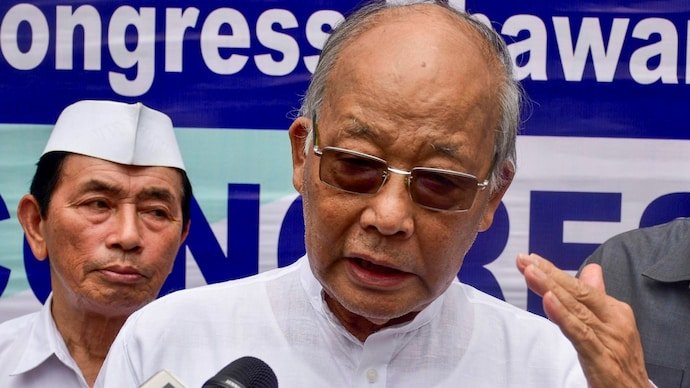
The Manipur Pradesh Congress Committee (MPCC), led by senior Congress leader and former Chief Minister Okram Ibobi Singh, has raised serious concerns over the proposed census exercise in the state, urging the Centre to defer it until normalcy is restored. Speaking at a press conference, Ibobi highlighted that large-scale displacement, ongoing ethnic tensions, and the presence of refugees could significantly compromise the accuracy of census data.
The demand comes at a time when Manipur continues to grapple with internal instability, with thousands displaced and many residing in relief camps. Ibobi stressed that the census, a critical national exercise, must be conducted under stable conditions to ensure reliable data that informs governance, policy-making, and development planning.
Why the Census Timing Is Being Questioned
At the heart of the Congress party’s concern is the issue of data integrity. Ibobi emphasised that flawed or incomplete data could have long-term consequences, especially in areas such as resource allocation, Infrastructure planning, and political representation.
“The census is not just a headcount. It forms the backbone of governance. If the data is flawed, policies based on it will also be flawed,” Ibobi said.
He pointed out that conducting the census in the current situation-marked by displacement and uncertainty-would make it difficult to accurately enumerate the population. Many residents are no longer living in their original homes, while others are moving between locations, making consistent data collection a logistical challenge.
Impact of Displacement and Relief Camps
One of the most pressing issues highlighted by the MPCC is the large number of internally displaced persons (IDPs) in the state. According to estimates cited during the press briefing, over 50,000 people have been affected by displacement, many of whom are living in temporary shelters or relief camps.
This situation creates multiple challenges for census officials:
- Tracking individuals who have moved multiple times
- Avoiding duplication or omission in data collection
- Ensuring accurate household-level information
- Managing access to sensitive or Conflict-affected areas
Ibobi argued that unless displaced individuals return to their original homes, any census exercise would risk producing distorted data.
Refugee Influx from Myanmar Adds Complexity
Adding another layer of complexity is the ongoing conflict in neighbouring Myanmar, which has led to an influx of refugees into Manipur. Ibobi noted that the presence of these refugees could complicate the enumeration process, particularly in distinguishing between citizens and non-citizens.
He suggested that proper identification mechanisms should be put in place before conducting the census, including addressing the issue of illegal Immigration.
“Enumeration should only take place after identifying illegal immigrants and ensuring that displaced citizens are rehabilitated,” he said.
This raises broader questions about how census operations intersect with migration and border management, especially in sensitive regions.
Concerns Over Delimitation Based on Flawed Data
Beyond immediate logistical challenges, Ibobi also warned about the long-term political implications of inaccurate census data. He referred to past experiences, particularly the 2001 census, where discrepancies in population figures allegedly led to uneven delimitation in certain districts.
Delimitation-the process of redrawing electoral boundaries-is heavily dependent on population data. Any anomalies in census figures can lead to disproportionate representation, affecting the democratic balance.
Ibobi highlighted that while the national population growth rate was around 24 percent during that period, some districts recorded unusually high increases, raising concerns about data accuracy.
| Key Concern | Implication |
|---|---|
| Displacement of residents | Inaccurate population count and duplication risks |
| Refugee presence | Difficulty in distinguishing citizens from non-citizens |
| Unstable conditions | Limited access to affected areas |
| Flawed census data | Incorrect delimitation and policy decisions |
Congress Position on NRC and Immigration
Clarifying the party’s stance, Ibobi stated that the Congress is not opposed to identifying illegal immigrants. He reiterated support for mechanisms like the National Register of Citizens (NRC), provided they are implemented transparently and effectively.
“The NRC is meant to identify illegal immigrants, and we support that objective. But the approach must be clear and consistent,” he said.
He also criticised the ruling Bharatiya Janata Party (BJP) for what he described as mixed signals on the issue, suggesting that a lack of clarity could further complicate matters.
Call for Consensus and Coordinated Action
In addition to raising concerns, Ibobi called for a broader political consensus on how to address the situation. He said the Congress is open to participating in all-party meetings and delegations to engage with the Centre.
This, he argued, is essential for ensuring that decisions related to the census, delimitation, and immigration are taken in a coordinated and inclusive manner.
He also stressed the importance of restoring normalcy in the state as a prerequisite for any major administrative exercise.
Governance and Ground Reality: A Mismatch?
One of the underlying themes in Ibobi’s remarks is the gap between policy planning and ground reality. While the census is a routine administrative exercise in most parts of the country, the situation in Manipur is far from routine.
Conducting a census in a conflict-affected region is not just a technical challenge-it is also a question of timing, sensitivity, and trust. Residents who have been displaced or affected by violence may be less willing or able to participate in the process.
In such scenarios, even well-intentioned efforts can lead to incomplete or unreliable outcomes.
Analysis: Why Accurate Census Data Matters More Than Ever
The concerns raised by the MPCC highlight a fundamental principle: the quality of governance is only as good as the data it relies on. Census data influences a wide range of decisions, including:
- Allocation of central and state funds
- Infrastructure development and planning
- Welfare schemes and subsidies
- Electoral representation through delimitation
Any inaccuracies in this data can have a cascading effect, leading to misallocation of resources and potential social tensions.
In a state like Manipur, where demographic balance and representation are particularly sensitive issues, the stakes are even higher.
A Subtle but Serious Warning
While Ibobi’s remarks were measured, they carry an implicit warning: proceeding with the census under current conditions could lead to unintended consequences, including unrest.
It’s not a dramatic statement-but it doesn’t need to be. In regions with complex social dynamics, even administrative decisions can have far-reaching implications.
And if there’s a slightly ironic twist here, it’s this: a process designed to bring clarity could end up creating confusion if not timed correctly.
Conclusion
The call by the Manipur Congress to defer the census underscores the challenges of conducting nationwide exercises in regions facing instability. With displacement, refugee inflows, and logistical hurdles at play, ensuring accurate data collection becomes a significant concern.
As the Centre weighs its options, the focus will likely remain on balancing administrative priorities with ground realities. For now, the message from Manipur is clear-accuracy must come before urgency.
Because when it comes to the census, getting the numbers right isn’t just important-it’s essential.
For breaking news and live news updates, like us on Facebook or follow us on Twitter and Instagram. Read more on Latest India on thefoxdaily.com.






COMMENTS 0