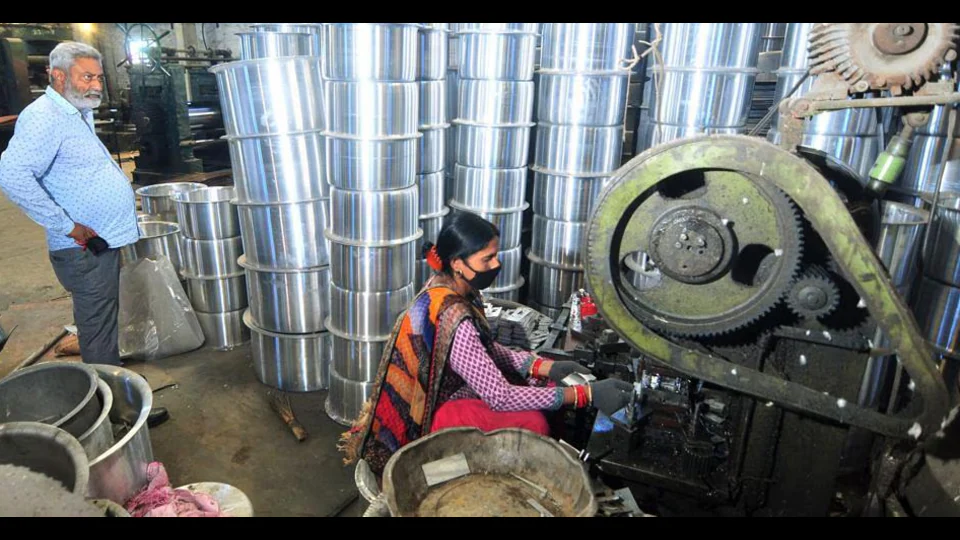
India’s decision to expand paid maternity leave in 2017 was intended to strengthen workplace protections for women, but research examining its effects on manufacturing employment has identified an unintended consequence: covered firms hired fewer women and more men after the reform.
The study, titled Mandated Maternity Leave and Labour Substitution: Firm-Level Evidence from India, found that women’s employment at firms covered by the Maternity Benefit (Amendment) Act, 2017, declined by 8.4% following the change. Men’s employment at these firms increased by 2.6%, suggesting that some employers may have adjusted their workforce composition in response to the new requirements.
The researchers also found that the number of days worked by women fell by 9.5%, while the corresponding figure for men increased by 2.1%. The effects were more pronounced in industries that employed a larger proportion of women, where female employment declined by 12% and male employment rose by 4.1%.
Published in August as part of the IZA Discussion Paper Series by the IZA@LISER Network, the research examined industrial employment data covering the period from 2012-13 to 2019-20. The authors found no statistically significant change in firms’ output or profits.
The findings highlight a difficult policy question: how can governments provide meaningful maternity protection without creating incentives for employers to avoid hiring the workers the law is intended to support? The researchers argue that the way maternity benefits are financed may be central to addressing this problem.
What changed under the Maternity Benefit Amendment Act, 2017?
The Maternity Benefit (Amendment) Act, 2017, significantly expanded India’s statutory maternity leave entitlement for eligible women employees. It amended legislation that had been in place for more than five decades and increased paid maternity leave from 12 weeks to 26 weeks for women having their first two children.
The reform was designed to provide women with more time to recover from childbirth, care for their newborns and manage the transition back to employment. Paid leave can be particularly important during the early months of a child’s life, when childcare demands may make returning to work difficult.
The amendment also introduced requirements relating to workplace childcare. Establishments with 50 or more employees were required to provide a crèche facility within the prescribed distance, while eligible women employees were entitled to four visits a day to the facility, including their intervals for rest.
These provisions addressed two distinct concerns: the need for income protection during maternity leave and the practical challenge of caring for a child after returning to work.
However, the law also placed the financial responsibility for mandated maternity leave on employers. That arrangement is central to understanding the employment effects examined by the researchers.
When an individual employer bears the cost of a statutory benefit associated with a particular category of employee, the employer may have an incentive to consider that cost when making recruitment decisions. Whether and how strongly that incentive affects hiring depends on the workplace, industry, availability of workers and the employer’s response to the regulation.
The study investigates whether such adjustments occurred in India’s manufacturing sector after the 2017 amendment. Its findings suggest that the reform’s effects on employment were not limited to the workers receiving maternity benefits.
What the study found about women’s employment after the 2017 reform
The researchers examined employment patterns at manufacturing firms covered by the maternity benefit legislation, using data from the Annual Survey of Industries for the financial years 2012-13 to 2019-20.
Their analysis identified a shift in the gender composition of employment after the amendment. While the number of women employed at covered firms declined, male employment increased. The pattern was accompanied by a reduction in the number of days women worked and an increase in the number of days worked by men.
The study’s principal findings can be summarised as follows:
- Women’s employment: Employment at covered manufacturing firms declined by 8.4%.
- Men’s employment: Employment increased by 2.6% at the firms examined.
- Days worked by women: The number of days worked fell by 9.5%.
- Days worked by men: The number of days worked increased by 2.1%.
- Industries with more women workers: Female employment declined by 12%, while male employment rose by 4.1%.
- Business performance: The researchers found no statistically significant change in firms’ output or profits.
Together, these findings suggest that employers’ responses to the expanded maternity leave requirements may have affected hiring patterns and the distribution of work between women and men.
However, the figures should be interpreted carefully. A decline in employment after a policy change does not necessarily mean that every affected employer reduced its female workforce or that every job lost by a woman was subsequently filled by a man. The findings describe overall patterns identified in the researchers’ analysis.
Similarly, the increase in male employment does not establish that all additional male jobs were created specifically to replace female workers taking maternity leave. The study’s title and findings point to labour substitution as an important issue, but the precise circumstances can vary across firms.
Why manufacturing firms may respond differently to maternity leave rules
The manufacturing sector provides an important setting for examining the consequences of employment regulations because firms must organise their workforce around production requirements, staffing levels and operational schedules.
When a worker takes extended leave, an employer may need to redistribute responsibilities, recruit temporary staff or arrange for another employee to cover the work. The practical implications depend on the nature of the job and the availability of suitable replacements.
Under the 2017 amendment, employers became responsible for financing the expanded paid maternity leave entitlement. For some firms, this could make hiring an eligible woman appear more expensive than hiring a man, even when the candidates have comparable qualifications and productivity.
This is an example of how a policy intended to protect workers can produce an unintended hiring incentive. The benefit goes to eligible women, but the associated financial obligation falls on the employer making recruitment decisions.
Consider a hypothetical manufacturing company recruiting for a position that requires continuous staffing. If the employer anticipates that a worker taking extended paid leave will need to be replaced temporarily, it may factor the potential cost into its recruitment decision. If the employer believes those costs apply differently to male and female candidates, the perception itself could influence hiring.
This example illustrates a possible mechanism rather than a description of every firm’s behaviour. The study’s employment findings are consistent with concerns about labour substitution, but individual employers may respond differently depending on their resources, workforce structure and production needs.
The absence of a statistically significant change in output and profits is also relevant. It suggests that the researchers did not identify a significant deterioration in these business outcomes alongside the employment changes. It does not establish that maternity leave had no operational costs or that every firm experienced the same effects.
Why were the effects greater in industries employing more women?
One of the study’s most important findings was that the employment effects were larger in industries with a higher proportion of women workers.
In these industries, women’s employment fell by 12%, compared with an overall decline of 8.4% at the covered firms examined. Male employment rose by 4.1%, exceeding the overall increase of 2.6%.
This difference matters because a regulation can have varying effects across industries depending on how many employees are affected and how employers organise their workforces.
In industries that employ relatively few women, the direct effect of a change in maternity leave requirements may be limited to a smaller share of the workforce. Where women account for a larger proportion of employees, employers may face the financial implications of the rules more frequently.
If firms respond to those costs by changing recruitment practices, industries that previously offered more employment opportunities to women could experience a greater shift in workforce composition.
However, the findings do not establish that the same effect occurred in every women-intensive industry or that all employers deliberately discriminated against female applicants. The reported figures show a stronger employment response in these industries, while the specific decisions behind that response require careful interpretation.
The results nevertheless raise an important question for policymakers: whether the design of maternity benefits can inadvertently make industries less willing to recruit women, particularly where employers bear the full direct cost of the entitlement.
What labour expert Harshil Sharma said about barriers to women’s employment
Labour policy specialist Harshil Sharma said his fieldwork had revealed similar barriers to women’s employment in the construction sector.
Sharma pointed to differences in the participation of men and women in construction, citing Periodic Labour Force Survey (PLFS) data. According to the figures he referenced, construction accounted for about 15.6% of India’s male workers but less than 5% of its female workers.
He said men had moved from agriculture into construction while women’s share of employment in the sector had remained largely unchanged.
Sharma also argued that practical workplace arrangements and compliance obligations could influence contractors’ recruitment decisions. He cited the need for separate toilets, maternity protections and safety provisions, as well as accommodation arrangements for workers.
His observations highlight a wider issue in employment policy: statutory protections can have different consequences depending on how workplaces are organised and how the cost of compliance is distributed.
Construction and manufacturing are different sectors, and the experiences described by Sharma should not be treated as direct evidence of the causes behind the manufacturing study’s findings. Nevertheless, his comments illustrate how employers’ perceptions of employment costs and workplace requirements can become barriers to women’s participation.
Providing suitable facilities and protecting workers’ rights remain important objectives. The policy challenge is to ensure that employers do not respond to those obligations by reducing opportunities for the people the protections are intended to benefit.
Why the maternity leave funding model matters
The researchers recommended shifting the financing of maternity leave away from individual employers and towards a social insurance system. They also proposed government-financed paternity leave and extending maternity protections to informal-sector workers.
These recommendations address different aspects of the same policy challenge: ensuring that the costs of supporting workers and families are distributed in a way that does not create unnecessary barriers to employment.
Social insurance to spread maternity leave costs
Under a social insurance approach, maternity benefits would be financed through a broader funding mechanism rather than being borne entirely by the individual employer. Depending on the design, funding could come from pooled contributions and other designated sources.
The underlying idea is to spread the financial responsibility across a wider group rather than linking the direct cost of a particular worker’s leave to the employer’s recruitment decision.
If employers no longer bear the full direct cost of maternity leave, the financial incentive to prefer male applicants over otherwise comparable female candidates could be reduced. The extent of any improvement would depend on the contribution structure, eligibility rules and implementation of the system.
Social insurance would not automatically eliminate all forms of workplace discrimination or every cost associated with employee absences. Employers would still need to organise work during leave periods, and other factors could continue to influence recruitment. However, changing the financing mechanism could address one potential source of unequal treatment.
Government-financed paternity leave
The researchers also recommended introducing paternity leave financed by the government. This proposal could help distribute the costs associated with family-related leave more broadly rather than concentrating statutory leave obligations on women employees.
Where employers associate extended leave primarily with women, those expectations can influence hiring decisions even before a worker takes leave. A more balanced approach to parental leave could help challenge the assumption that childcare-related absences are exclusively a female employment concern.
The recommendation is a proposed policy response, not an existing provision established by the supplied study summary. Its impact would depend on the duration of leave, eligibility requirements, financing arrangements and the extent to which workers could access the benefit.
Extending maternity protections to informal workers
The third recommendation concerns workers in the informal sector, who may not have access to the same employment protections as workers covered by formal arrangements.
Extending maternity protection to informal workers presents a different challenge from reforming benefits for employees of covered manufacturing firms. Informal workers may lack a single employer responsible for administering leave, maintaining employment or providing income during an absence.
A broader protection system would therefore need to consider how workers establish eligibility, how benefits are financed and how payments can reach people whose employment arrangements differ from those in formal workplaces.
The researchers’ recommendation reflects the importance of considering both sides of the policy problem: reducing the possibility that maternity benefits discourage employers from hiring women while ensuring that women outside formal employment are not excluded from essential support.
Does the study mean maternity leave should be reduced?
The findings do not, by themselves, establish that reducing paid maternity leave would improve women’s overall economic position. The study identifies an employment pattern following the 2017 amendment and points to possible unintended consequences of making employers bear the costs of expanded benefits.
Maternity leave serves a different purpose from an employment subsidy or a general hiring incentive. It provides eligible women with time away from work following childbirth while maintaining an entitlement to paid leave. Assessing the policy therefore requires considering both its employment effects and the protection it offers workers and families.
Reducing the duration of leave could change employers’ costs, but it would also reduce the benefit available to eligible women. Whether such a change would improve overall outcomes cannot be determined from the reported employment figures alone.
The researchers’ recommendations point towards another approach: preserving maternity protection while reconsidering how it is financed. Shifting costs to a broader insurance mechanism could potentially reduce the incentive for employers to treat women as more expensive hires without removing the benefit itself.
This distinction is important for interpreting the findings. The central policy question is not simply whether maternity leave is costly, but whether its costs are allocated in a way that creates avoidable disadvantages for women in the labour market.
What the research means for women’s employment in India
The study adds to the debate about how employment regulations interact with recruitment decisions. It suggests that a policy designed to improve women’s welfare can have unintended consequences when its financing creates different perceived costs for employers hiring women and men.
The reported decline in female employment, alongside the increase in male employment, raises concerns about access to manufacturing jobs and the possibility that some employers may adjust their hiring patterns in response to maternity benefit obligations.
At the same time, the findings should not be interpreted as proof that maternity leave alone explains women’s employment patterns across India. The analysis focused on covered manufacturing firms during the period from 2012-13 to 2019-20. Its findings should be understood within that scope rather than automatically applied to every industry or category of worker.
The study also found no statistically significant change in output and profits, indicating that the employment changes were not accompanied by a significant measured shift in those business outcomes in the researchers’ analysis.
For policymakers, the challenge is to design a system that protects workers during maternity without creating incentives to exclude women from employment. Social insurance, government-financed paternity leave and broader coverage for informal workers are among the options proposed by the researchers.
Ultimately, the study highlights the importance of looking beyond the intended benefits of a law to examine how employers respond to its financial and administrative requirements. Effective maternity protection and equal access to employment need not be competing objectives, but achieving both may require a funding structure that distributes the costs more broadly.
For breaking news and live news updates, like us on Facebook or follow us on Twitter and Instagram. Read more on Latest India on thefoxdaily.com.






COMMENTS 0