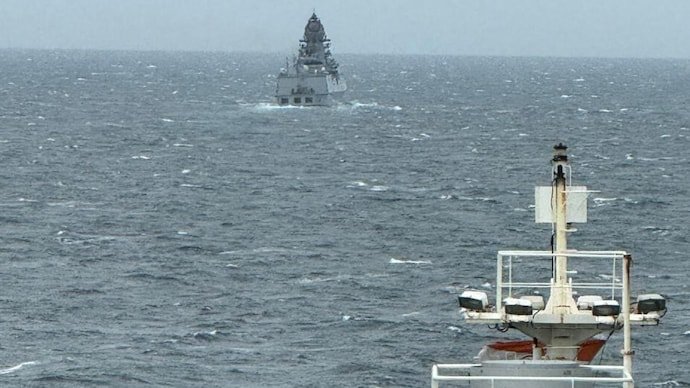
In a decisive move to protect India’s energy lifelines, the Indian Navy has initiated Operation Urja Suraksha, deploying multiple frontline warships near the Strait of Hormuz. This strategic maritime operation comes at a time when geopolitical tensions in West Asia are threatening Global energy supply chains.
According to top defence sources, the mission is being carried out with utmost caution and minimal publicity to avoid unnecessary escalation while ensuring maximum security for Indian-flagged vessels.
Why the Strait of Hormuz Matters for India
The Strait of Hormuz is one of the world’s most critical oil transit chokepoints, handling nearly 20% of global oil shipments. For India, which relies heavily on energy imports, any disruption in this region can have serious economic consequences.
With ongoing hostilities affecting maritime safety, ensuring secure passage for energy cargo has become a top priority for Indian authorities.
| Factor | Significance |
|---|---|
| Global Oil Flow | ~20% passes through Hormuz |
| India’s Dependence | High reliance on imported oil & gas |
| Current Risk | Conflict-driven disruptions |
| Strategic Response | Naval escort operations |
Key Objectives of Operation Urja Suraksha
The primary goal of the operation is to ensure the safe movement of Indian cargo vessels carrying essential energy supplies such as crude oil, LNG (liquefied natural gas), and LPG (liquefied petroleum gas).
Currently, around 22 Indian-bound ships have been identified for protection and possible evacuation. Out of these, 20 vessels are classified as high-priority due to their critical cargo.
- Secure transit of Indian-flagged energy vessels
- Escort ships through high-risk maritime zones
- Ensure safety of Indian crew members
- Prevent disruptions in energy supply chains
Successful Escorts and Ongoing Operations
The mission has already recorded several successful operations. Indian Navy warships have safely escorted key vessels through the Strait of Hormuz.
Among the notable successes are the LPG tankers Pine Gas and Jag Vasant, which together carry approximately 92,000 tonnes of LPG. These vessels are expected to reach Indian ports by March 26–27.
Earlier, other ships including the crude oil tanker Jag Laadki and LPG carriers Shivalik and Nanda Devi were also escorted safely, highlighting the operational efficiency of the mission.
| Vessel Name | Type | Status |
|---|---|---|
| Pine Gas | LPG Tanker | Safely escorted |
| Jag Vasant | LPG Tanker | En route to India |
| Jag Laadki | Crude Oil Tanker | Escorted successfully |
| Shivalik | LPG Carrier | Escorted |
| Nanda Devi | LPG Carrier | Escorted |
Coordination Across Government Agencies
The operation involves close coordination between multiple agencies, including the Directorate of Naval Operations and the Ministry of Ports, Shipping, and Waterways. This collaboration ensures seamless logistics and real-time response to emerging threats.
Such coordination is crucial for managing complex maritime operations in a volatile geopolitical environment.
Government’s Strategic and Proactive Approach
The Indian government is taking proactive steps to mitigate the impact of global instability on its economy. Defence Minister Rajnath Singh recently reviewed the evolving security situation in West Asia and its implications for India’s defence preparedness.
The review focused on maintaining robust supply chains for both energy and defence needs, highlighting the importance of preparedness in times of uncertainty.
Ensuring Energy Security in Uncertain Times
With tensions in West Asia showing no immediate signs of easing, operations like Urja Suraksha are critical to safeguarding India’s Energy Security.
The Indian Navy’s sustained presence in the region acts as a protective shield, ensuring that vital supplies continue to flow without disruption.
| Area of Focus | Action Taken |
|---|---|
| Energy Security | Naval escorts for cargo ships |
| Maritime Safety | Deployment of warships |
| Supply Chain Stability | Inter-agency coordination |
| National Preparedness | High-level defence review |
Conclusion
Operation Urja Suraksha underscores India’s commitment to protecting its strategic interests in a volatile global environment. By ensuring the safe passage of energy vessels through one of the world’s most sensitive maritime routes, the Indian Navy is playing a crucial role in maintaining economic stability.
As geopolitical tensions persist, such proactive measures will remain essential in securing not just energy supplies, but also national resilience in the face of global uncertainty.
For breaking news and live news updates, like us on Facebook or follow us on Twitter and Instagram. Read more on Latest India on thefoxdaily.com.






COMMENTS 0