- Arbitrary Cap and Institutional Bias Overturned
- Understanding SSC vs Permanent Commission
- Flawed Evaluation System Exposed
- Relief Measures and Benefits Ordered by the Court
- Service-Wise Observations: Army, Navy, and Air Force
- Exceptions and Clarifications
- Call for Systemic Reform
- A Landmark Step Toward Gender Equality
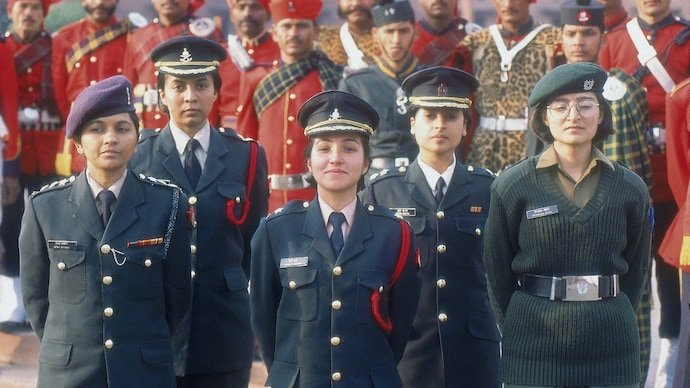
In a historic step toward gender equality in India’s armed forces, the Supreme Court on Tuesday ruled that women serving as Short Service Commission (SSC) officers are entitled to Permanent Commission. The decision marks a major victory for women officers who have long faced structural and institutional barriers in securing long-term Military careers.
Invoking its extraordinary powers under Article 142 of the Constitution, the apex court highlighted deep-rooted discrimination within the system. It found that women officers had been subjected to flawed evaluation methods, arbitrary limitations, and unequal opportunities compared to their male counterparts.
Arbitrary Cap and Institutional Bias Overturned
One of the key issues addressed by the court was the annual cap of 250 women officers eligible for Permanent Commission. The bench declared this limit arbitrary and unjustified, emphasizing that such restrictions cannot be treated as fixed or sacrosanct.
The ruling acknowledged that this cap, along with other systemic practices, created a discriminatory Environment that hindered the professional growth of women in the military.
| Issue Identified | Court’s Observation | Impact on Women Officers |
|---|---|---|
| 250 Officer Cap | Declared arbitrary and unjustified | Limited career opportunities |
| Evaluation Process | Biased and flawed | Unfair assessment outcomes |
| Career Opportunities | Restricted access | Hindered promotions and growth |
Understanding SSC vs Permanent Commission
Under the Short Service Commission, officers are initially appointed for a period of 10 years, which may be extended up to 14 years. However, without being granted Permanent Commission, they are required to exit service at the end of their tenure. This often results in limited career advancement and reduced retirement benefits.
In contrast, Permanent Commission allows officers to serve a full career—typically 20 years or more—enabling them to rise through the ranks, assume leadership roles, and receive pension and retirement benefits.
| Feature | Short Service Commission (SSC) | Permanent Commission (PC) |
|---|---|---|
| Service Duration | 10–14 years | 20+ years (till retirement) |
| Career Growth | Limited | Full advancement opportunities |
| Pension Benefits | Generally not available | Full pension and retirement benefits |
| Leadership Roles | Restricted | Eligible for senior positions |
Flawed Evaluation System Exposed
The Supreme Court strongly criticized the evaluation system used to assess women officers, particularly the Annual Confidential Reports (ACRs). It observed that these reports were often prepared casually and without proper consideration, reflecting a preconceived notion that women would not be granted Permanent Commission.
This bias significantly impacted their overall assessment and placed them at a disadvantage compared to male officers. The court noted that ACRs failed to reflect true merit and were not evaluated on a comparative basis.
Additionally, women officers were frequently denied access to career-enhancing courses and key appointments, further limiting their chances of progression within the armed forces.
Relief Measures and Benefits Ordered by the Court
To address the long-standing injustice, the Supreme Court directed that eligible women officers be granted Permanent Commission along with full benefits. Importantly, the court ruled that such officers would be deemed to have completed 20 years of qualifying service, making them eligible for pensions and related retirement benefits.
This relief also extends to women officers who were previously evaluated by Selection Boards but were denied Permanent Commission under the flawed system.
| Relief Granted | Details |
|---|---|
| Pension Eligibility | Deemed 20 years of service |
| Permanent Commission | Granted to qualified officers |
| Past Evaluations | Relief extended to previously rejected candidates |
Service-Wise Observations: Army, Navy, and Air Force
The court examined practices across all branches of the armed forces and issued tailored observations:
Army: The denial of Permanent Commission to women officers was found to be rooted in systemic discrimination and biased evaluation frameworks.
Navy: The court upheld the Navy’s “dynamic vacancy model” as reasonable but criticized the lack of transparency in selection criteria. It also ruled that women officers recruited after 2009 should be eligible for Permanent Commission, subject to medical fitness.
Air Force: The court emphasized that service length cannot be used against officers who were never given fair opportunities for career advancement. While reinstatement was not deemed practical, denial of benefits was also considered unjustified.
Exceptions and Clarifications
The ruling clarified that Permanent Commission granted by Selection Boards in 2019, 2020, and 2021 would remain unaffected. However, certain categories—such as women officers in the Army Education Corps (AEC) and Judge Advocate General (JAG) branches—were excluded from specific aspects of the relief.
Call for Systemic Reform
Beyond immediate relief, the Supreme Court directed a comprehensive review of evaluation systems across the armed forces. The aim is to eliminate entrenched biases and ensure that future assessments are fair, transparent, and merit-based.
The court’s strong remarks on the “casual approach” of the forces highlight the urgent need for institutional reform. It underscored that gender-based discrimination has no place in a modern military framework.
A Landmark Step Toward Gender Equality
This judgment represents a significant milestone in the fight for gender justice within India’s Defense services. By addressing both past discrimination and future safeguards, the Supreme Court has set a precedent that reinforces equality, fairness, and accountability.
As implementation begins, the ruling is expected to reshape career trajectories for women officers and pave the way for a more inclusive and equitable armed forces structure in India.
For breaking news and live news updates, like us on Facebook or follow us on Twitter and Instagram. Read more on Latest India on thefoxdaily.com.






COMMENTS 0