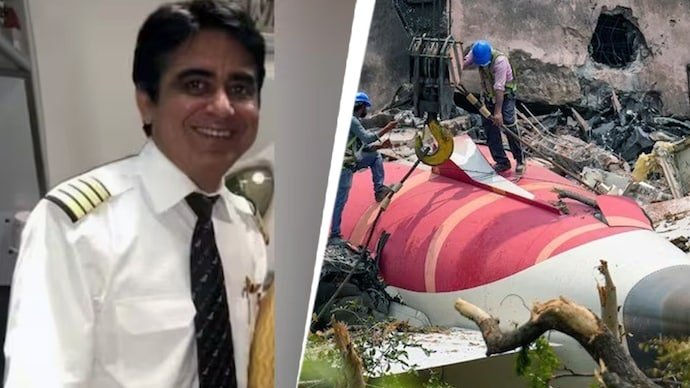
Following the Aircraft Accident Investigation Bureau (AAIB) summons of Captain Varun Anand, nephew of the late Captain Sumeet Sabharwal, in connection with the investigation into the crash of Air India Flight 171, the Federation of Indian Pilots (FIP) voiced strong objections. The FIP sent a legal notice to the AAIB, describing the action as “wholly unwarranted” and tantamount to harassment, highlighting concerns over procedural propriety and professional prejudice.
The summons, instructing Captain Anand to appear on January 15, was communicated to him via his employer, Air India. The FIP emphasized that the notification failed to specify the legislative basis for the summons, its purpose, relevance, or the capacity in which Captain Anand was required to participate. The pilots’ federation stressed that this lack of clarity caused undue stress for the pilot and raised questions about fairness.
“It is completely unjustified to summon Capt. Varun Anand, especially because he has no connection to the incident and was not given adequate notice,” the FIP wrote in a letter to AAIB officials. “It exposes our client to professional and reputational prejudice and amounts to harassment and distress in the aftermath of a tragic loss.”
Despite these objections, Captain Anand has consented to participate in a video conference, offering to answer any questions from the investigators, reflecting his willingness to cooperate while maintaining professional dignity.
Background of the Air India Flight 171 Crash
The investigation traces back to June 12 last year, when an Air India Boeing 787-8 Dreamliner bound for London crashed shortly after departing from Sardar Vallabhbhai Patel International Airport in Ahmedabad. The tragic accident claimed 241 of the 242 people on board, including former Gujarat Chief Minister Vijay Rupani, when the aircraft hit a hostel complex at BJ Medical College in Meghani Nagar.
Following the catastrophe, the Directorate General of Civil Aviation (DGCA) mandated increased safety inspections of Air India’s fleet of 787-8 and 787-9 Dreamliners. The Tata Group, Air India’s parent company, announced compensation of Rs 1.25 crore for the families of the victims. The AAIB continues to investigate the exact causes of the crash, which remains one of the deadliest aviation disasters in modern Indian history.
Preliminary Findings and Technical Observations
A preliminary investigation published in July suggested that the disaster occurred due to an interruption in fuel supply to both engines immediately after takeoff. While some commentators have raised questions about pilot error, the report did not clarify whether the fuel switch modifications were deliberate or accidental. Multiple reports reiterate this technical observation, confirming that both engines experienced fuel cut-off moments after takeoff, directly contributing to the crash.
The repetition of this observation across preliminary studies underscores the complexity of the incident and the need for careful, unbiased investigation. At this stage, no conclusions have been drawn assigning blame to any party, and the AAIB continues to analyze mechanical, operational, and human factors comprehensively.
The summoning of Captain Anand, despite his lack of direct involvement in the accident, highlights the sensitive nature of post-crash investigations and the need to balance thorough inquiry with professional and personal rights. The case continues to draw attention from aviation authorities, legal experts, and the public as the investigation progresses.
For breaking news and live news updates, like us on Facebook or follow us on Twitter and Instagram. Read more on Latest India on thefoxdaily.com.

COMMENTS 0