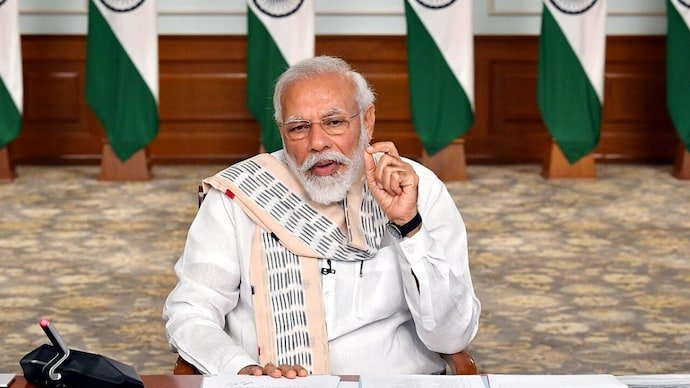
As the ongoing conflict in West Asia enters its fifth week, India is stepping up efforts to safeguard its energy and commodity supply chains. In this backdrop, Prime Minister Narendra Modi is set to hold a crucial virtual meeting with Chief Ministers to ensure coordinated action between the Centre and the states.
The meeting comes at a time when disruptions caused by tensions involving Iran, particularly around the Strait of Hormuz, pose potential risks to global oil supply. Since India depends heavily on imports for its energy needs, maintaining stability across states has become a top priority.
States are expected to play a key role in implementing central measures aimed at minimising the impact of any supply disruptions. The virtual conference will focus on ensuring uninterrupted availability of petroleum products and essential commodities across the country.
‘Team India’ Approach Revived for National Coordination
Prime Minister Modi has once again emphasised the importance of the “Team India” approach, highlighting the need for strong cooperation between the Union government and state administrations. Referring to past experiences, he pointed out that collaborative governance is essential to tackle large-scale crises effectively.
The concept reflects India’s unique political structure, which is federal in form but operates with a unified national spirit during emergencies. The current situation, triggered by geopolitical tensions, is being seen as another test of this cooperative framework.
| Key Focus Area | Details |
|---|---|
| Meeting Objective | Ensure coordination between Centre and states |
| Main Concern | Energy and commodity supply stability |
| Trigger | West Asia conflict and Strait of Hormuz tensions |
| Strategy | Revival of “Team India” cooperative model |
| Participants | Prime Minister and all Chief Ministers |
Lessons from COVID-19: How ‘Team India’ Worked
The “Team India” model gained prominence during the COVID-19 pandemic, when Prime Minister Modi held frequent virtual meetings with Chief Ministers to coordinate nationwide efforts. The first such meeting took place on March 20, 2020, just days before India entered a nationwide lockdown.
Over the following months, multiple discussions were held to ensure effective collaboration on testing, tracking, and treatment strategies. The Centre and states worked closely to manage healthcare resources and contain the spread of the virus.
During this period, the Prime Minister repeatedly stressed that teamwork was essential in tackling the crisis. This cooperative approach allowed states to share feedback and adapt policies according to local conditions.
Balanced Strategy During Unlock Phase and Vaccination Drive
As India gradually moved into the “unlock” phase in mid-2020, the government adopted a balanced strategy that focused on both Public health and economic recovery. Decisions regarding reopening were taken after consultations with state governments, ensuring flexibility in implementation.
The spirit of collaboration continued during the nationwide vaccination drive launched on January 16, 2021. The Centre played a key role in ensuring vaccine availability while working with states to expand coverage.
To reduce the financial burden on states, the Union government later announced free vaccination for all adults above 18 years of age. This move further strengthened the cooperative framework between the Centre and states.
Evolution of ‘Team India’ as a Governance Model
By mid-2021, Prime Minister Modi highlighted the success of this collaborative governance model, noting that states had managed economic challenges effectively despite the global slowdown caused by the pandemic.
He emphasised that India avoided a “one size fits all” approach and instead relied on a flexible system that allowed states to respond according to their specific needs. This approach was described as a partnership-based model of governance driven by shared responsibility.
The Prime Minister also praised state governments for supporting policy reforms and ensuring smooth implementation of initiatives aimed at benefiting citizens during the crisis.
Renewed Relevance Amid Global Uncertainty
With the current geopolitical tensions in West Asia posing fresh challenges, the revival of the “Team India” approach underscores the importance of unity in governance. The Centre’s strategy relies heavily on active participation from states to maintain economic and supply chain stability.
As India navigates the potential fallout from disruptions in Global energy markets, coordinated decision-making between the Union and state governments will be crucial in ensuring resilience.
The upcoming meeting between the Prime Minister and Chief Ministers is expected to set the tone for India’s response, reinforcing the idea that collective action remains the country’s strongest tool in times of crisis.
For breaking news and live news updates, like us on Facebook or follow us on Twitter and Instagram. Read more on Latest India on thefoxdaily.com.





COMMENTS 0