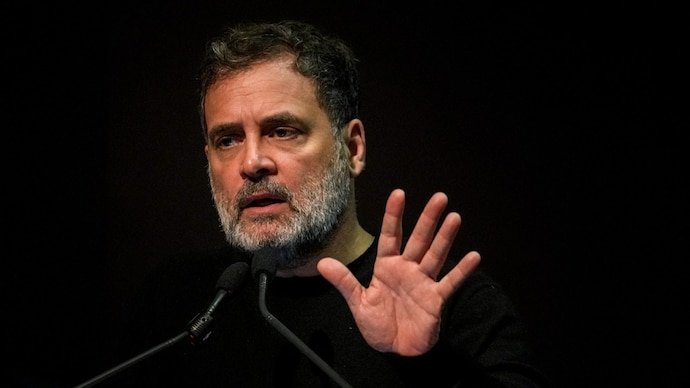
The Bombay High Court has reserved its order on a petition filed by congress leader Rahul Gandhi seeking to quash a criminal defamation complaint related to remarks he allegedly made about Prime Minister Narendra Modi in 2018. The development marks a significant moment in an ongoing legal battle that has drawn national political attention.
The matter was heard by a single-judge bench of Justice NR Borkar, who listened extensively to arguments from both sides before reserving the judgment. The case revolves around comments allegedly made by Gandhi during a public rally in Rajasthan and subsequent Social Media posts.
Background of the Defamation Complaint
The criminal defamation complaint was filed on August 28, 2019, in the Girgaon Metropolitan Magistrate Court by Mahesh Shrishrimal, a member of the Bharatiya Janata Party (BJP). According to the complaint, Gandhi referred to Prime Minister Modi as a “commander-in-thief” while addressing a public gathering in Rajasthan in September 2018.
The complainant further alleged that the Congress leader used similar language on social media platforms, reinforcing the allegedly defamatory statement. Shrishrimal claimed that such remarks not only targeted the Prime Minister but also amounted to labeling members of the BJP and, by extension, citizens who support the party as thieves.
Rahul Gandhi’s Legal Argument
Rahul Gandhi challenged the magistrate court’s decision to issue summons, calling the complaint “frivolous” and “vexatious.” In his plea before the High Court, Gandhi argued that the complaint was politically motivated and lacked legal merit.
His legal team relied heavily on provisions under the Code of Criminal Procedure (CrPC) and the Indian Penal Code (IPC) to contest the maintainability of the complaint.
| Legal Provision | Section | Argument Presented by Gandhi’s Counsel |
|---|---|---|
| Code of Criminal Procedure (CrPC) | Section 199(2) | Only a Sessions Court can take cognisance of offences alleged against a public servant in relation to official duties. |
| Indian Penal Code (IPC) | Section 499 (Explanation 2) | A political party does not qualify as a determinate body of individuals capable of filing a defamation suit. |
According to Gandhi’s counsel, Section 199(2) of the CrPC clearly prescribes that when an offence is alleged against a public servant in respect of conduct in the discharge of official functions, cognisance must be taken by a Sessions Court. Therefore, they argued, the complaint filed directly before the magistrate was not legally sustainable.
Additionally, Gandhi’s legal team cited Explanation 2 of Section 499 of the IPC, which deals with defamation. They contended that a political party cannot be treated as a specific and identifiable group for the purpose of filing a defamation case. On this basis, they argued that Shrishrimal was barred from filing a complaint on behalf of BJP members.
Complainant’s Counter-Arguments
Opposing the petition, the complainant asserted that he had established a prima facie case by submitting supporting evidence and deposing before the magistrate court. He maintained that he was personally aggrieved by the remarks.
Shrishrimal clarified that he filed the complaint in his individual capacity as a member of the BJP’s Maharashtra unit. He argued that the alleged statement directly harmed his reputation and that of party members, thereby giving him the legal standing to pursue the defamation claim.
Political and Legal Implications
The case has broader implications beyond the immediate legal question. It touches upon the limits of political speech, the scope of criminal defamation law in India, and procedural safeguards for public servants under criminal law.
Legal experts note that the High Court’s decision could provide clarity on the application of Section 199(2) of the CrPC and whether individual political party members can initiate defamation proceedings over remarks directed at party leadership.
For now, all eyes remain on the Bombay High Court as it prepares to deliver its order on whether the defamation complaint against Rahul Gandhi will proceed or be quashed. The ruling is expected to have significant ramifications in the ongoing legal and political discourse surrounding defamation law and political accountability in India.
For breaking news and live news updates, like us on Facebook or follow us on Twitter and Instagram. Read more on Latest India on thefoxdaily.com.






COMMENTS 0