- What Rajnath Singh Said - And Why It Matters
- Operation Sindoor: The Reference Point
- Why Now?
- Pakistan’s Strategic Calculations
- The Afghanistan Angle
- Middle East Conflict and Its Ripple Effect
- Preventive Signaling in Modern Warfare
- Analysis: What Could “Misadventure” Mean?
- Comparing India’s Military Responses
- Quotes That Define the Moment
- Global Perspective: Why This Matters Beyond India
- The Road Ahead: What to Watch
- Conclusion: A Warning Meant to Prevent, Not Provoke
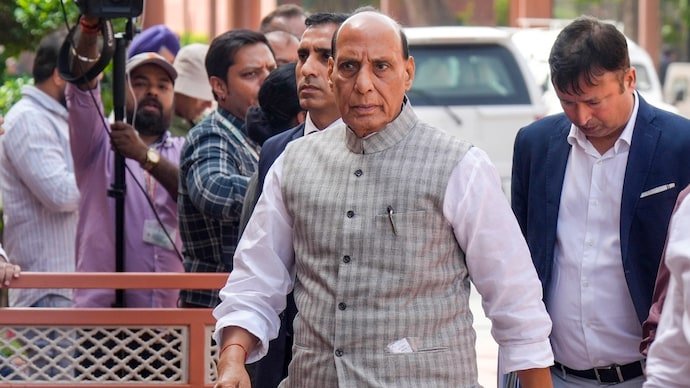
India’s Defence Minister Rajnath Singh has issued a stern warning to Pakistan, cautioning against any “misadventure” amid the ongoing conflict in Iran and the broader instability in the Middle East. Speaking at the Sainik Samman Sammelan in Kerala, Singh made it clear that India would respond in a “decisive” and “unprecedented” manner if provoked.
The statement comes at a sensitive time. The region is witnessing heightened geopolitical tensions, and India is approaching the first anniversary of the 2025 Pahalgam terror attack – an incident that led to a major military response known as Operation Sindoor. Against this backdrop, Singh’s remarks signal both caution and preparedness.
The key questions are clear: Why has India issued this warning now? What is the strategic context? And how does the Iran war factor into South Asia’s security landscape?
What Rajnath Singh Said – And Why It Matters
In his address, Rajnath Singh did not mince words. He suggested that Pakistan might attempt to exploit the current global turmoil to create instability in India.
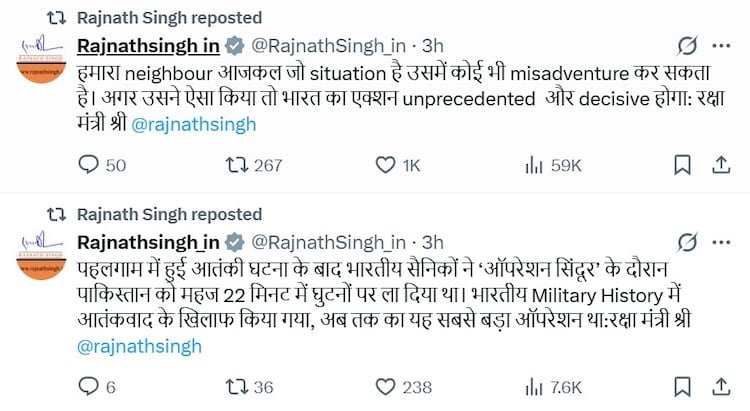
“Our neighbour, given the current situation, could attempt some kind of misadventure. If that happens, India’s response will be unprecedented and decisive.”
This warning is significant because it highlights India’s concern that regional instability – particularly in the Middle East – could spill over into South Asia.
Singh also emphasized that Operation Sindoor is not fully over, signaling continued vigilance and readiness on India’s part.
Operation Sindoor: The Reference Point
To understand the weight of Singh’s warning, one must look at Operation Sindoor. The operation was launched after the deadly Pahalgam attack in April 2025, where 25 tourists were killed by terrorists linked to Pakistan-based groups.
India responded with a swift and targeted military campaign.
- Multiple terror camps were destroyed across the border
- Key military installations were targeted
- The operation lasted three days before a ceasefire was reached
According to Singh, the operation demonstrated India’s capability to respond rapidly and effectively.
“Whether it was surgical strikes after Uri, air strikes after Pulwama, or Operation Sindoor – we have delivered strong blows to terrorism.”
This historical reference is not accidental. It serves as both a reminder and a warning.
Why Now?
Timing is crucial in Geopolitics, and Singh’s statement comes amid a complex international situation.
The ongoing Iran conflict has expanded tensions across the Middle East, drawing in multiple countries and creating uncertainty. In such scenarios, countries often reassess their strategic positions.
India’s concern appears to be that Pakistan might attempt to take advantage of this distraction.
While no specific intelligence was publicly cited, the warning itself suggests heightened alertness.
Pakistan’s Strategic Calculations
Recent developments indicate that Pakistan is navigating a complicated geopolitical landscape.
On one hand, it has attempted to position itself as a mediator in the Iran conflict. On the other, its actions – including tensions with Afghanistan – suggest a broader strategic recalibration.
Experts believe Pakistan is trying to balance multiple pressures:
- A fragile domestic economy
- Regional security challenges
- Strategic partnerships, particularly in the Gulf
This balancing act increases unpredictability – something India is clearly factoring into its security posture.
The Afghanistan Angle
Another important factor is Pakistan’s recent escalation with Afghanistan. Despite a ceasefire in place, tensions suddenly rose, leading to what was described as an “open war.”
This move surprised many analysts and raised questions about Pakistan’s broader strategy.
One interpretation is that Pakistan is trying to manage its exposure to the Iran conflict by redirecting attention and resources.
If true, this adds another layer of complexity – and risk – to the region.
Middle East Conflict and Its Ripple Effect
The war involving Iran has already begun to reshape geopolitical alignments. Countries across the region are reassessing their roles, alliances, and security strategies.
Saudi Arabia’s potential involvement adds another dimension. Given its defence ties with Pakistan, any escalation could draw Islamabad deeper into the conflict.
This creates a chain reaction:
- Middle East tensions increase
- Regional alliances activate
- South Asia faces indirect impact
India’s warning can be seen as a preemptive measure in this evolving scenario.
Preventive Signaling in Modern Warfare
Rajnath Singh’s statement is an example of what analysts call “preventive signaling.”
This involves issuing strong warnings not because an attack is imminent, but to ensure that one does not happen.
The logic is straightforward:
- Signal readiness
- Demonstrate capability
- Deter potential action
In many cases, such signaling helps maintain stability by raising the cost of aggression.
It is diplomacy backed by military credibility.
Analysis: What Could “Misadventure” Mean?
The term “misadventure” is intentionally broad. It could refer to a range of actions, including:
- Cross-border infiltration or terror activity
- Military provocation along the Line of Control
- Cyber or hybrid warfare tactics
By not specifying, India keeps its response flexible while maintaining strategic ambiguity.
This ambiguity can be a powerful tool. It forces the other side to consider multiple risks rather than a single predictable response.
Comparing India’s Military Responses
India’s recent history shows a pattern of calibrated responses to security threats:
| Event | Response | Outcome |
|---|---|---|
| Uri Attack | Surgical Strikes | Targeted terror infrastructure destroyed |
| Pulwama Attack | Air Strikes | Cross-border escalation with controlled response |
| Pahalgam Attack | Operation Sindoor | Multiple camps and bases neutralised |
This pattern reinforces Singh’s warning – India has acted before, and it is prepared to act again.
Quotes That Define the Moment
“India’s response will be unprecedented and decisive.”
This line underscores the seriousness of the warning.
“Operation Sindoor is not over yet.”
This suggests ongoing vigilance and readiness.
Global Perspective: Why This Matters Beyond India
While the warning is directed at Pakistan, its implications are broader.
In today’s interconnected world, regional tensions can have global consequences. Increased instability in South Asia could impact:
- Trade routes and economic activity
- Energy markets already under pressure
- International diplomatic alignments
Thus, India’s stance is not just about national security – it is part of a larger global equation.
The Road Ahead: What to Watch
The coming weeks will be crucial. Key factors to monitor include:
- Developments in the Iran conflict
- Pakistan’s military and diplomatic moves
- Any increase in cross-border activity
- India’s defence posture and responses
Each of these elements will shape the trajectory of the situation.
Conclusion: A Warning Meant to Prevent, Not Provoke
Rajnath Singh’s warning is not just rhetoric – it is a strategic signal aimed at maintaining stability during a volatile period.
By emphasizing decisive action, India is making it clear that it will not tolerate any attempts to exploit global turmoil for regional advantage.
At the same time, the statement reflects a broader reality: in times of global uncertainty, vigilance becomes essential.
Because in geopolitics, the best way to handle a crisis is often to ensure it never begins.
For breaking news and live news updates, like us on Facebook or follow us on Twitter and Instagram. Read more on Latest India on thefoxdaily.com.






COMMENTS 0