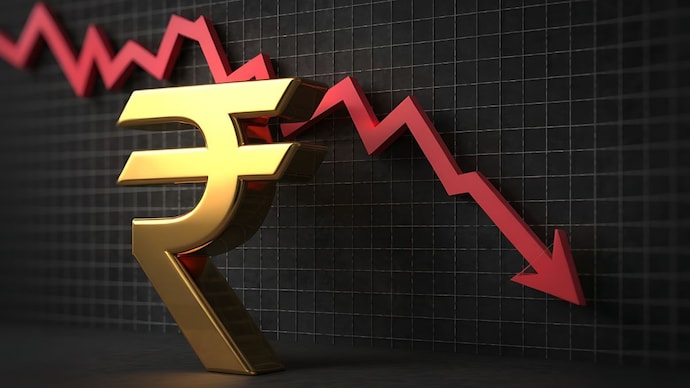
When the Indian rupee slipped past the Rs 90 mark against the US dollar in mid-December, it quickly dominated headlines and sparked concern among households and businesses alike. For many Indians, the impact was immediate and tangible—higher dollar-linked EMIs, costlier overseas travel, and rising expenses for international education.
Yet beneath the surface-level anxiety lay a far more nuanced story. The rupee’s weakness was not rooted in deteriorating domestic fundamentals, but in powerful global forces—volatile capital flows, elevated global yields, and a recalibration of investor risk preferences.
By most measures, India’s macroeconomic health remains robust. The government has stayed committed to its fiscal glide path, inflation has largely remained within the Reserve Bank of India’s (RBI) comfort zone, and growth projections for FY26 hover between 7% and 8%. RBI Governor Sanjay Malhotra recently described the domestic economy as being in a “Goldilocks moment”—neither overheated nor sluggish, but just right.
India also enjoys a formidable external buffer. Foreign exchange reserves stand close to $693 billion, enough to cover nearly a year’s worth of imports—an enviable position among emerging markets. Despite this strength, the rupee has depreciated by more than 6% over the past year, making it one of Asia’s weaker-performing currencies. The central question, therefore, is not about India’s fundamentals, but why the rupee remains under pressure despite them.
As Finance Minister Nirmala Sitharaman and her team consult stakeholders ahead of the Union Budget 2026–27, investors are closely watching how India balances fiscal credibility with the need to deepen markets and generate stable long-term returns. The challenge is twofold: boosting domestic demand while navigating the constraints imposed by unpredictable global capital movements.
Policy decisions—whether related to green bonds, sovereign debt issuance, or market-friendly instruments—are now scrutinized not just for their domestic impact, but also for how they shape India’s attractiveness to long-term foreign investors seeking stability and clarity.
Most market participants agree that the primary drivers of the rupee’s depreciation lie beyond India’s borders. In an era of hyper-mobile capital, global investors respond swiftly to yield differentials and perceived safety. Foreign portfolio investors, in particular, have turned cautious—not due to doubts about India’s economy, but because higher returns and lower risk beckon elsewhere.
The US Federal Reserve’s “higher-for-longer” stance has kept 10-year US Treasury yields near the 5% mark. When risk-free US assets offer such returns, capital naturally gravitates westward. In comparison, India’s 10-year government bond yields of around 6.5–6.6% appear less compelling once currency risk is factored in.
The RBI has responded with calibrated interventions. In late December, it conducted a $10 billion three-year dollar-rupee swap and injected nearly Rs 2 lakh crore into the banking system through government bond purchases. These steps eased liquidity pressures, stabilized short-term rates, and ensured uninterrupted credit flow. While they marginally increased rupee supply in the short term, they prevented a far more damaging financial squeeze.
Trade dynamics have added to the pressure. India’s current account deficit remains manageable at around 1.3% of GDP, supported by strong services exports nearing $270 billion and remittances exceeding $110 billion. However, persistent imports—particularly of crude oil, gold, and electronics—create a structural demand for dollars. Monthly trade deficits above $25 billion keep the rupee sensitive to external shocks.
Regional and global shifts are also reshaping capital allocation. China has signaled plans to issue ultra-long government bonds worth nearly 2 trillion yuan (about $280 billion) in early 2026 to fund infrastructure and strategic projects. These policy-backed, long-duration instruments are highly attractive to institutional investors, potentially diverting funds away from other emerging markets, including India.
Japan, too, has re-entered the global equation. In December, the Bank of Japan raised its policy rate to 0.75%, the highest level in three decades. For years, Japanese investors borrowed at near-zero rates to invest in higher-yielding emerging market assets. As domestic yields rise in Japan, some of this capital may return home, reducing liquidity inflows to markets like India.
West Asian sovereign wealth funds represent another critical influence. Funds from Saudi Arabia, the UAE, and Qatar collectively manage trillions of dollars and are increasingly deploying capital strategically across infrastructure, technology, energy transition, and large-scale acquisitions. While Asia remains on their radar, these funds are selective, favoring markets that offer scale, regulatory clarity, and alignment with long-term strategic goals—raising the competition for India.
Taken together, these global developments explain the rupee’s continued weakness despite India’s strong domestic position. This is not a currency crisis, nor a sign of policy mismanagement, but a reflection of global capital repricing in an environment where money is costlier and investors are more discerning.
India’s resilience, however, remains evident. External debt levels are modest, largely long-term and private-sector driven. Foreign exchange reserves provide a crucial safety net, and the financial system remains stable. Foreign direct investment continues to flow steadily, averaging around $58 billion in the first half of FY26, even as portfolio flows remain volatile.
Looking ahead, India must closely monitor external variables—from US monetary policy and China’s bond issuance to Japan’s rate trajectory and West Asian capital allocation strategies. Domestically, maintaining fiscal discipline, clarity in debt management, and innovation through instruments like green bonds and longer-dated sovereign securities will be key to attracting patient, long-term capital.
| Key Factors Influencing the Rupee | Impact on India |
|---|---|
| US Federal Reserve Policy | Higher US yields draw capital away from emerging markets |
| China’s Ultra-Long Bond Issuance | Diverts institutional funds seeking safe, long-duration assets |
| Japan’s Interest Rate Hike | Reduces carry trade flows into emerging markets |
| West Asian Sovereign Wealth Funds | Increases competition for long-term global capital |
| India’s Trade Deficit | Sustains structural demand for dollars |
India’s challenge in this evolving global financial landscape is clear: competing for capital in a world with more options than ever before. The rupee’s weakness is not a symptom of economic distress, but of a global environment where safer assets offer higher returns and capital is increasingly selective.
Strong fundamentals give India the capacity to endure these pressures, but sustaining growth, stabilizing inflows, and anchoring the currency will require continued credibility, transparency, and policy consistency. As 2025 has shown, in a world of mobile capital, credibility—not comfort—remains the most valuable currency of all.
For breaking news and live news updates, like us on Facebook or follow us on Twitter and Instagram. Read more on Latest India on thefoxdaily.com.





COMMENTS 0