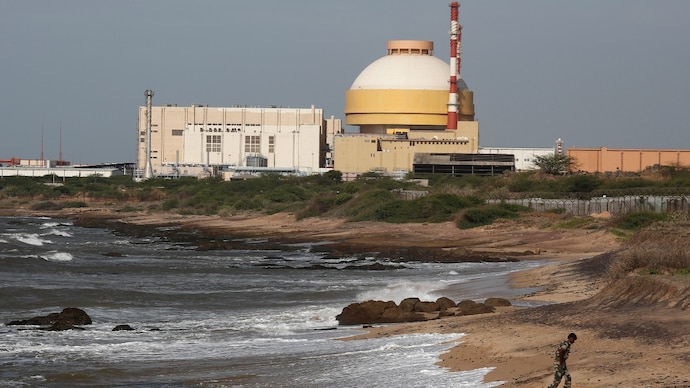
The Union government on Monday tabled the Sustainable Harnessing and Advancement of Nuclear Energy for Transforming India (SHANTI) Bill, 2025 in the Lok Sabha, signalling one of the most significant overhauls of India’s civil nuclear energy framework since independence.
If enacted, the Bill will fundamentally reshape how nuclear power is developed, regulated, and financed in India. It seeks to dismantle long-standing structural barriers that restricted nuclear power generation almost entirely to state-owned entities, while simultaneously addressing investor concerns around liability and regulation.
The legislation proposes the repeal of two cornerstone laws—the Atomic Energy Act, 1962 and the Civil Liability for Nuclear Damage Act, 2010—both of which have long been cited by domestic industry and foreign partners as major impediments to nuclear investment.
Presenting the Bill, Minister of State in the Prime Minister’s Office Jitendra Singh said, “The Bill seeks to provide for a pragmatic civil liability regime for nuclear damage and to confer statutory status to the Atomic Energy Regulatory Board.”
The government maintains that the SHANTI Bill aligns with India’s broader strategic goals: increasing the share of nuclear energy in the national power mix, accelerating innovation in nuclear science and technology, expanding non-power applications of atomic energy, and fulfilling international commitments on nuclear safety, security, and safeguards.
What Does the SHANTI Bill Propose?
The most consequential reform under the SHANTI Bill is the opening up of India’s nuclear power sector to Indian private companies. For the first time, eligible private firms will be allowed to apply for licenses to build, own, operate, and decommission nuclear power plants and reactors.
Until now, these activities were almost exclusively reserved for the Nuclear Power Corporation of India Limited (NPCIL) and a limited number of joint ventures involving other public sector undertakings.
The Bill also resolves a long-standing concern of global nuclear suppliers by restructuring liability provisions. It limits liability for nuclear accidents strictly to plant operators and explicitly exempts equipment suppliers, a move aimed at bringing India’s framework closer to international norms.
Under the proposed law, the maximum liability for any single nuclear incident will be capped at the rupee equivalent of 300 million Special Drawing Rights (SDRs), as defined by the International Monetary Fund.
Operators will be required to maintain insurance coverage or liability funds ranging from USD 11 million to USD 330 million, depending on the size and capacity of the reactor. Claims exceeding these limits will be met through a separate nuclear liability fund, after which the government will assume responsibility for further compensation.
The Bill also broadens the scope of permissible activities for Indian private firms, allowing them to participate in:
- Fabrication of nuclear fuel
- Transportation and storage of nuclear and spent fuel
- Import and export of prescribed nuclear equipment, technology, and software
However, companies incorporated outside India or controlled by foreign entities will not be eligible for licenses. Moreover, strategically sensitive functions such as heavy water production, uranium enrichment, and spent fuel reprocessing will remain strictly under government control.
Key Features of the SHANTI Bill at a Glance
| Aspect | What the SHANTI Bill Proposes |
|---|---|
| Sector Participation | Allows Indian private companies to build, own, and operate nuclear plants |
| Liability Framework | Caps liability at 300 million SDRs; suppliers exempted |
| Insurance Requirement | USD 11 million to USD 330 million based on reactor size |
| Foreign Companies | Foreign-controlled entities barred from licensing |
| Regulatory Authority | Statutory status granted to Atomic Energy Regulatory Board (AERB) |
| Strategic Activities | Fuel enrichment and reprocessing remain with government |
Why Is the SHANTI Bill Significant?
The SHANTI Bill is closely tied to India’s long-term climate and energy commitments. India has set an ambitious target of reaching 100 gigawatts of nuclear power capacity by 2047, up from the current level of about 8.2 GW, as part of its broader goal of achieving net-zero emissions by 2070.
To achieve this scale, the government argues that India must better leverage domestic nuclear resources, attract private capital, and integrate itself more deeply into the global nuclear energy ecosystem.
Several global nuclear technology providers—including Westinghouse, GE-Hitachi, France’s EDF, and Russia’s Rosatom—have expressed interest in partnering with Indian firms. At the same time, major Indian conglomerates such as Tata Power, Adani Power, and Reliance Industries have indicated willingness to invest in nuclear energy under a more predictable policy regime.
The Bill also outlines specific exclusions from liability. Operators will not be held responsible for damage to the under-construction nuclear plant itself, other installations located at the same site, associated on-site property, or vehicles transporting radioactive material at the time of an incident.
Safety, Regulation, and Oversight
To strengthen safety and regulatory oversight, the SHANTI Bill grants statutory status to the Atomic Energy Regulatory Board (AERB), which currently operates through an executive order rather than a dedicated law.
The Bill also proposes the creation of an Atomic Energy Redressal Advisory Council to address disputes and grievances related to licensing, safety compliance, and liability.
Penalties for violations are significantly enhanced. Minor infractions may attract fines of up to Rs 5 lakh, while serious breaches can result in penalties of up to Rs 1 crore. All operators—public or private—will be required to secure government licenses and AERB safety clearances.
Foreign-controlled entities will remain ineligible for nuclear operating licenses, reinforcing the government’s emphasis on strategic control and National Security.
A Turning Point for India’s Nuclear Future
If passed, the SHANTI Bill would mark a decisive shift in India’s nuclear energy policy. By opening the sector to private investment while reinforcing safety and regulatory mechanisms, the government aims to unlock billions of dollars in capital and position nuclear power as a cornerstone of India’s long-term clean energy strategy.
The legislation has the potential to redefine India’s role in the global nuclear landscape—moving it from a tightly controlled state-led model to a more diversified, investment-driven ecosystem, without compromising on safety or sovereignty.
For breaking news and live news updates, like us on Facebook or follow us on Twitter and Instagram. Read more on Latest India on thefoxdaily.com.


COMMENTS 0