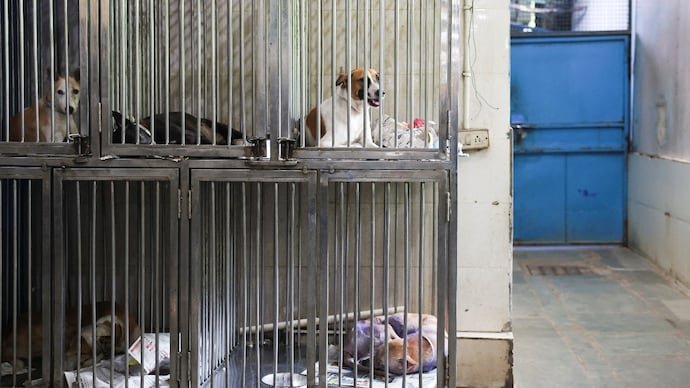
Hyderabad: The large-scale killing of street dogs continues unabated in Telangana, with more than 1,200 canines reported dead over the past month, most of them allegedly poisoned through oral substances or lethal injections. Animal welfare organisations and activists warn that the actual toll could be significantly higher, citing under-reporting and limited access to remote villages.
Alongside dogs, at least 10 monkeys are also believed to have been killed in similar incidents. The brutality and scale of these killings have raised alarm across civil society, prompting questions about governance, law enforcement, and the state’s adherence to animal protection laws.
Activists and local residents have linked the killings to gram panchayat Elections held in November and December last year. According to animal rights groups, several local leaders had promised voters that stray dogs and monkeys would be “eliminated” if they were elected—a pledge that is now allegedly being carried out through illegal and inhumane means.
The issue of street dogs is not limited to Telangana. Across India, the presence of stray animals has sparked intense public debate, with rising cases of dog bites and rabies-related deaths adding to public anxiety. However, despite judicial clarity on the matter, consensus on humane and lawful solutions remains elusive.
Over the past year, the Supreme Court has heard multiple petitions related to street dogs. Judges have remarked that they have rarely encountered as many petitions on any other Human Rights-related issue as those concerning stray animals. The court has repeatedly emphasised that cruelty cannot be a solution.
The apex court has directed local authorities to capture, sterilise, vaccinate, and rehabilitate stray dogs, especially in areas around schools, hospitals, and high-traffic zones. It has also instructed states to remove animals from highways to prevent accidents. However, ground reports suggest that these directives are routinely ignored.
200 Dogs Allegedly Poisoned in One Telangana Village
The situation in Telangana has drawn particular concern. In Pathipaka village of Hanumakonda district, around 200 street dogs were allegedly poisoned to death. Though the killings reportedly began nearly a month ago, the incident came to light only on January 25, when locals alerted animal activists about buried dog carcasses found near the village.
“It is criminal cruelty that local controlling authorities in Telangana killed nearly 900 stray dogs by injecting them to death and burying them,” wrote Prasanna Viswanathan, an IT professional who tracks urbanisation and infrastructure issues. “Stray dogs are a challenge, but Animal Birth Control (ABC), vaccination, and sheltering are the only legal and scientific solutions. Lynching animals to project ‘action’ degrades US as a society.”
The scale of the killings has shocked not only animal lovers but also ordinary citizens.
“I’m not an activist, a PETA supporter, or even a dog lover—I’m just a human with empathy,” wrote Shiva, a verified user on X. “This is what incompetent, corrupt authorities do when funds meant for sterilisation and vaccination are already spent. Killing animals becomes the easiest and most inhumane option. What kind of society does that make us?”
This marks the second major incident reported this month under the jurisdiction of Shayampet police station.
Earlier, on January 9, police registered a case following the discovery of 300 dead dogs in Arepally village. The village sarpanch, secretary, and others were booked under Section 325 of the Bharatiya Nyaya Sanhita (BNS) and Section 11(1)(a) of the Prevention of Cruelty to Animals Act, 1960, which deal with killing or poisoning animals by a group.
Similar incidents have been reported from other districts, including Kamareddy, Jagtial, Hanumakonda, Ranga Reddy, and Nagarkurnool.
In Thimmaipally village of Nagarkurnool district, around 100 dogs were reportedly killed by poisonous injections just two weeks ago, according to local activists.
Killings Linked to Gram Panchayat Election Promises
Animal welfare advocates say the pattern of killings strongly suggests political motivation. Following the gram panchayat elections, several newly elected representatives allegedly began fulfilling campaign promises to “remove” stray animals from villages.
Many of these killings reportedly occurred in broad daylight, underscoring the apparent lack of fear of legal consequences.
Activists believe several cases remain undocumented, particularly in remote rural areas where access to media and animal welfare networks is limited.
While official figures suggest over 1,000 dogs have been killed, independent estimates place the number between 1,200 and 1,500 since December 2025.
According to PTI, environmentalists and animal welfare groups organised a terahvi (13th-day prayer ceremony) in Delhi on January 27 to mourn the slain dogs and demand accountability. The gathering was attended by residents, lawyers, caregivers, and activists.
Participants said the incidents highlight the failure to enforce animal protection laws and reflect a worrying rise in violence against community animals.
Although police in some districts have initiated action, campaigners argue that enforcement remains inconsistent. They are calling for stricter implementation of the Animal Birth Control (ABC) Rules and severe punishment for those responsible.
Animal welfare experts stress that the only sustainable and lawful way to address the street dog issue is through large-scale sterilisation, rabies vaccination programmes, and public awareness, rather than resorting to illegal and inhumane killings.
For breaking news and live news updates, like us on Facebook or follow us on Twitter and Instagram. Read more on Latest India on thefoxdaily.com.





COMMENTS 0