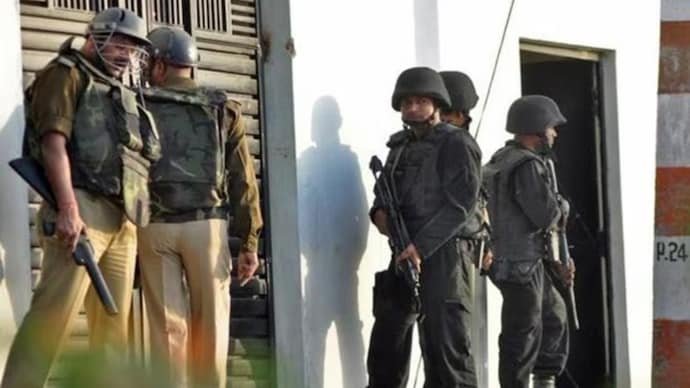
A Pakistan-linked terror module operating in Uttar Pradesh has been dismantled by the state’s Anti-terrorism Squad (ATS), revealing a complex network involving coded identities, Social Media recruitment, and the use of unsuspecting Hindu youths as operational cover. The case came to light following the arrest and interrogation of key accused individuals, including Shakib, who investigators say maintained direct contact with handlers based in Pakistan and a coordinator operating out of Dubai.
The module allegedly conducted reconnaissance of sensitive defence installations and religious locations across the state, using digital tools and ground operatives to relay information. Authorities believe the strategy was designed to evade suspicion while expanding a covert network aimed at anti-India activities. The case highlights a growing pattern of hybrid recruitment and digital radicalisation that Security agencies say is becoming increasingly sophisticated.
How the Plot Was Uncovered
The investigation gained momentum during the remand of Shakib, one of the central figures in the module. According to ATS officials, he received direct instructions from Pakistan-based handlers, including directives to remain undetected and continue working towards what they described as a long-term ideological mission.
During questioning, Shakib reportedly disclosed operational details, including recruitment strategies, communication methods, and reconnaissance activities. Authorities found that the module operated in a decentralised manner, with handlers providing location-specific instructions via digital platforms.
“The accused were in direct contact with foreign handlers and were working in a structured manner to avoid detection while expanding their network,” a senior ATS official stated.
This structured approach, officials say, reflects a shift from traditional terror cells to more flexible, digitally coordinated modules.
Use of Hindu Recruits as Operational Cover
One of the most striking revelations from the investigation is the deliberate use of Hindu recruits to bypass suspicion. According to officials, Shakib was instructed to recruit young Hindu men who could access areas with less scrutiny, particularly religious and public spaces.
Two individuals, identified as Vikas and Lokesh, were allegedly recruited into the network. Investigators say they were lured with financial incentives and influenced through targeted messaging. To maintain secrecy, the recruits were assigned coded identities—Lokesh was referred to as “Salim,” while Vikas was called “Zahid.”
This tactic allowed the module to operate under a layer of deception, making it harder for authorities to identify patterns based on identity or background.
Security experts note that such strategies are not entirely new but are being adapted in more nuanced ways.
“The use of local recruits from different backgrounds is a known tactic, but the level of coordination and digital integration we are now seeing marks a significant evolution,” said a former intelligence officer.
Digital Platforms and Radicalisation
The investigation also revealed the role of social media platforms in recruitment and radicalisation. A key figure identified as Aaqib, believed to be operating from Dubai, allegedly acted as an intermediary between local operatives and Pakistan-based handlers.
According to officials, platforms such as Instagram and Telegram were used to share content designed to attract and influence young individuals. This included visuals of weapons, motivational messaging, and promises of financial rewards.
Such content, authorities say, is often crafted to normalise violence and create a sense of purpose among recruits. The use of encrypted messaging services further complicates efforts to track and intercept communications.
Experts highlight that digital radicalisation has become a major challenge for law enforcement agencies worldwide.
- Encrypted messaging apps reduce traceability
- Visual content increases engagement and influence
- Financial incentives lower entry barriers for recruits
- Cross-border coordination becomes easier
These factors combined create an ecosystem where recruitment can happen quickly and discreetly.
Surveillance of Sensitive Locations
According to the ATS, the module conducted reconnaissance of multiple defence installations and cantonment areas across Uttar Pradesh. Investigators found that precise locations were shared via digital tools, including map-based services.
Operatives would visit these locations, record videos, and send the footage back to handlers. In return, they reportedly received payments, indicating a transactional element to the operation.
There are also indications that the group gathered information on the movement and security arrangements of prominent religious figures and leaders.
This focus on surveillance suggests that the module was in a preparatory phase, potentially laying the groundwork for future activities.
| Aspect | Details |
|---|---|
| Recruitment Method | Social media and financial incentives |
| Communication Tools | Instagram, Telegram, encrypted apps |
| Operational Strategy | Use of coded identities and local cover |
| Target Areas | Defence sites, religious locations |
| Coordination | Pakistan-based handlers and Dubai intermediary |
Arrests and Legal Action
The Uttar Pradesh ATS has arrested multiple individuals in connection with the case, including Shakib alias Devil, Arbab, Vikas alias Raunak, and Lokesh alias Papla Pandit. Authorities have also named Aaqib in the FIR and are preparing further legal action.
Officials say the investigation is ongoing, with efforts focused on identifying additional links and determining the full extent of the network.
“We are examining all digital evidence and financial transactions to map the entire network and its connections,” an official said.
A Pattern That Raises Concern
Investigators have noted that the modus operandi observed in this case is not isolated. In recent months, several similar modules linked to foreign handlers have been uncovered across Uttar Pradesh.
In one instance, a student was arrested for allegedly promoting extremist ideology and recruiting members through online platforms. In another case, a group was accused of planning acts of sabotage and arson, using social media for coordination.
Authorities also foiled a plot targeting railway Infrastructure, where operatives were reportedly in contact with handlers based abroad. The plan involved disrupting signalling systems, raising concerns about potential large-scale accidents.
These cases collectively point to a recurring pattern:
- Use of digital platforms for recruitment and coordination
- Direct links to handlers outside India
- Focus on critical infrastructure and public safety
- Decentralised and adaptive operational structures
Analysis: A Shift in Strategy
The latest case underscores a broader shift in how such networks operate. Traditional hierarchical structures are being replaced by decentralised systems that rely heavily on digital tools and local recruits.
This approach offers several advantages to those orchestrating these networks:
- Reduced risk of detection
- Greater flexibility in operations
- Faster recruitment cycles
- Ability to exploit local dynamics
However, it also presents new challenges for security agencies, which must adapt to an Environment where threats are less visible and more dispersed.
At the same time, the use of deception—such as assigning coded identities and recruiting individuals from different backgrounds—adds another layer of complexity. It blurs traditional indicators and requires more nuanced intelligence gathering.
Insight: Why This Matters
The significance of this case goes beyond the immediate arrests. It highlights the evolving nature of security threats in an increasingly connected world.
While the use of Technology has brought numerous benefits, it has also created new avenues for misuse. The same platforms that enable communication and innovation can be exploited for harmful purposes.
For authorities, the challenge lies in balancing security with privacy, while ensuring that preventive measures keep pace with changing tactics.
For the public, awareness becomes crucial. Understanding how such networks operate can help individuals recognise and avoid potential risks.
A Measured Perspective
It is important to approach such developments with clarity and caution. While the tactics used in this case are concerning, they also demonstrate the effectiveness of investigative agencies in identifying and disrupting potential threats.
Security experts often emphasise that vigilance, coordination, and timely intervention are key to preventing escalation. In this instance, the ATS’s actions appear to have disrupted a network before it could carry out any major activity.
And if there’s one understated takeaway here, it’s this: in today’s world, threats don’t always look like threats. Sometimes, they arrive quietly, through a message, a video, or even a casual online interaction.
That doesn’t mean panic—it means awareness.
Conclusion
The Uttar Pradesh terror module case sheds light on a complex and evolving landscape of security challenges. From the use of coded identities and local recruits to the role of digital platforms and international coordination, the case reflects a shift in operational strategies that demands equal adaptability from law enforcement agencies.
As investigations continue, authorities are likely to uncover more details about the network and its connections. For now, the case serves as a reminder of the importance of vigilance, informed analysis, and responsible reporting in addressing sensitive issues.
In an era where information travels faster than ever, staying grounded in verified facts—and a bit of common sense—remains the best defence.
For breaking news and live news updates, like us on Facebook or follow us on Twitter and Instagram. Read more on Latest India on thefoxdaily.com.






COMMENTS 0