- JAISHANKAR: “STRATEGIC AUTONOMY IS DEEPLY INGRAINED IN INDIA”
- WASHINGTON’S CLAIMS AND INDIA’S SILENCE
- TARIFF ROLLBACK AND TRADE REALIGNMENT
- RUSSIA REJECTS CLAIM OF ANY ASSURANCE
- INDIA’S ENERGY SECURITY: DIVERSIFICATION IN ACTION
- CALL FOR UN REFORMS AND GLOBAL GOVERNANCE RESET
- India’s Broader Strategic Message
In the wake of fresh US sanctions targeting Russian oil exports, India has delivered a clear and calibrated message to the international community: its energy decisions will be guided by availability, affordability, and risk assessment — not by external political pressure. The statement comes amid claims from Washington that New Delhi has agreed to reduce or halt further purchases of Russian crude.
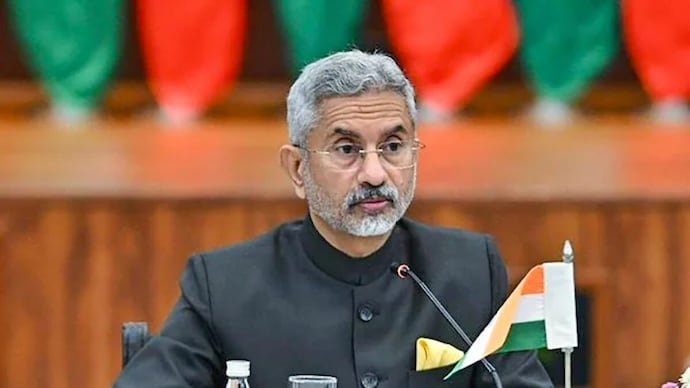
Speaking at the prestigious Munich Security Conference, External Affairs Minister S Jaishankar firmly underscored that India’s foreign policy remains anchored in strategic autonomy, a doctrine deeply embedded in the country’s diplomatic history and decision-making framework.
The remarks followed statements attributed to US Secretary of State Marco Rubio and US President Donald Trump, who suggested that India had committed to scaling back additional imports of Russian oil after the latest round of American sanctions on Moscow’s energy sector.
However, India has neither formally confirmed nor publicly endorsed any such commitment.
JAISHANKAR: “STRATEGIC AUTONOMY IS DEEPLY INGRAINED IN INDIA”
Addressing global leaders alongside German Foreign Minister Johann Wadephul, Jaishankar made it clear that India’s foreign policy compass will not be redirected by transient geopolitical winds.
“Strategic autonomy is very important to us. It is deeply ingrained in our history and development. We are, in many ways, married to it,” he stated, emphasizing that this principle transcends party politics and ideological divisions within India.
On the subject of energy procurement, Jaishankar described the global oil market as “complex,” explaining that oil companies — whether in India, Europe, or elsewhere — evaluate decisions based on commercial logic.
“Availability, pricing, and risk are central to these decisions. Companies make choices they believe are in their best interest,” he noted.
Responding directly to whether India would cease buying Russian oil under the framework of a broader trade understanding with the United States, Jaishankar remained unequivocal:
“Would I remain independent-minded and make my decisions — even if they may not align with your thinking? Yes, that can happen.”
The statement reinforced India’s long-standing position: sovereign decisions will not be outsourced.
WASHINGTON’S CLAIMS AND INDIA’S SILENCE
According to reports quoted by Russian news agency Tass, Marco Rubio stated at the conference that Washington had secured a commitment from India to refrain from purchasing additional Russian oil following the latest sanctions.
President Donald Trump had earlier framed the development as a diplomatic breakthrough, asserting that India had agreed to reduce Russian oil purchases and instead increase imports from the United States.
Despite these claims, New Delhi has maintained strategic silence — neither validating nor rejecting Washington’s assertions. This calibrated response reflects India’s careful diplomatic balancing amid rising global tensions.
TARIFF ROLLBACK AND TRADE REALIGNMENT
Energy diplomacy unfolded alongside significant trade developments between India and the United States. Following a recent phone conversation between President Trump and Prime Minister Narendra Modi, both sides indicated progress on tariff disputes.
US tariffs on certain Indian imports were reportedly reduced from 50% to 18%, marking a substantial de-escalation of trade friction. Notably, the 25% tariff imposed in August last year — linked directly to India’s continued purchase of Russian crude — was lifted as part of the recalibration.
The trade dispute had intensified during the Ukraine conflict, with Washington urging New Delhi to reduce its Russian oil imports. At one stage, Trump sharply criticized India’s position, accusing it of being indifferent to the human toll of the war.
India, however, consistently defended its stance by citing economic stability, energy affordability, and national energy security as overriding priorities.
RUSSIA REJECTS CLAIM OF ANY ASSURANCE
Amid conflicting narratives, Russian Foreign Minister Sergey Lavrov categorically denied that India had offered any assurance regarding curtailing oil imports.
Lavrov stated that neither the Indian government nor US officials had communicated any such commitment to Moscow. The Russian response added another layer of complexity to an already sensitive geopolitical equation.
The divergent claims illustrate the tightrope India continues to walk — preserving long-standing ties with Moscow while simultaneously deepening strategic and economic engagement with Western powers.
INDIA’S ENERGY SECURITY: DIVERSIFICATION IN ACTION
Since the onset of the Ukraine conflict, discounted Russian crude has accounted for nearly 35% of India’s total oil imports — a dramatic increase driven by global supply disruptions and price volatility triggered by Western sanctions.
At the same time, India has actively diversified its energy basket. Approximately 10% of its crude imports now come from the United States, and Indian public sector refiners have signed one-year agreements to procure American liquefied petroleum gas (LPG).
Beyond hydrocarbons, India is also expanding long-term energy resilience. Parliament recently passed the Sustainable Harnessing and Advancement of Nuclear Energy for Transforming India (SHANTI) Bill, 2025, opening the highly regulated nuclear sector to greater private participation — a move aligned with broader clean energy and strategic cooperation objectives.
This multi-pronged approach reflects a clear policy trajectory: diversification without dependency.
CALL FOR UN REFORMS AND GLOBAL GOVERNANCE RESET
While in Munich, Jaishankar widened the strategic lens beyond energy and trade. He argued that a series of global disruptions — from the Covid-19 pandemic to the Ukraine war, escalating Middle East tensions, and the rapid rise of china — have exposed structural weaknesses in the current international order.
He reiterated India’s long-standing call for reforms in the United Nations system, advocating for a governance structure that better reflects contemporary geopolitical realities rather than post-World War II alignments.
India’s Broader Strategic Message
The overarching signal from New Delhi is unmistakable.
Trade tensions may ease. Energy flows may shift. Strategic partnerships may deepen. But India’s final decisions — whether on oil imports, trade alignments, or global governance — will remain guided by its sovereign national interest.
As geopolitical fault lines widen and global power equations evolve, India continues to assert that engagement does not equal alignment, and cooperation does not imply compromise.
In an increasingly polarized world, New Delhi’s doctrine of strategic autonomy remains not just a policy choice – but a defining principle of its global posture.
For breaking news and live news updates, like us on Facebook or follow us on Twitter and Instagram. Read more on Latest India on thefoxdaily.com.






COMMENTS 0